

PCB Flip Conveyor Product Features and Functions
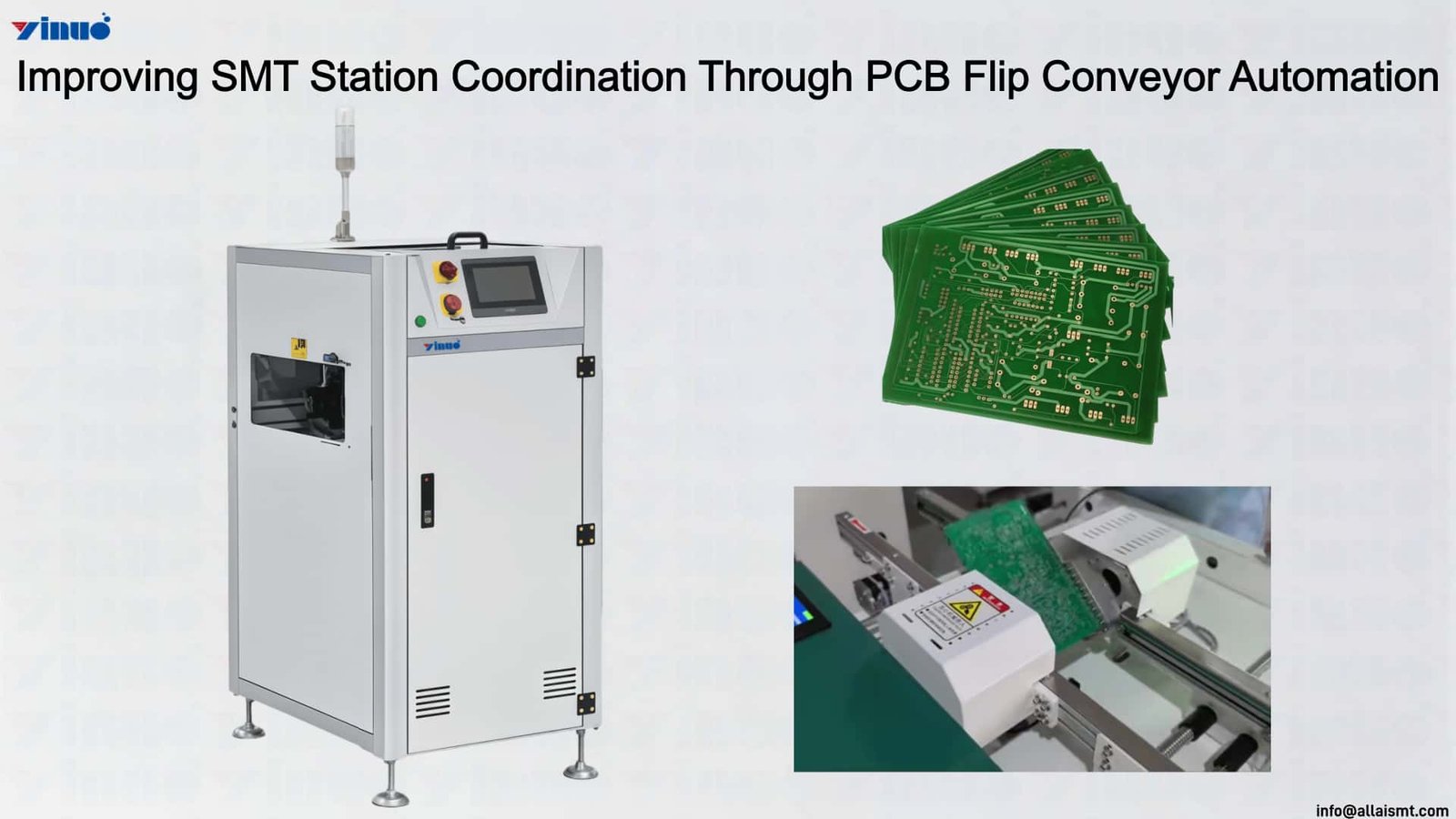
Orientation control is an important consideration whenever an SMT production route assigns different operations to opposite PCB surfaces. A PCB Flip Conveyor addresses this requirement through a dedicated inversion assembly that changes the board’s face-up direction by 180 degrees. The operation creates a physical transition between two processing states, allowing the same assembly to proceed toward equipment that requires access to the other side. This capability is particularly relevant to products whose circuit layouts, connector positions, and component populations differ between the upper and lower faces.
One technical consideration is the relationship between cycle timing and upstream board delivery. An inverter must receive the PCB, complete its programmed movement, and release the assembly in time for the following station to accept it. If the conveyor’s cycle exceeds the available production interval, boards may accumulate before the machine or downstream equipment may wait for the next release. Yinuo’s inverter has an approximate cycle time of 10 seconds according to the supplied product information. Actual throughput depends on board dimensions, operating mode, transfer conditions, and the timing requirements of neighboring machines, so the complete line cycle should be evaluated before installation.
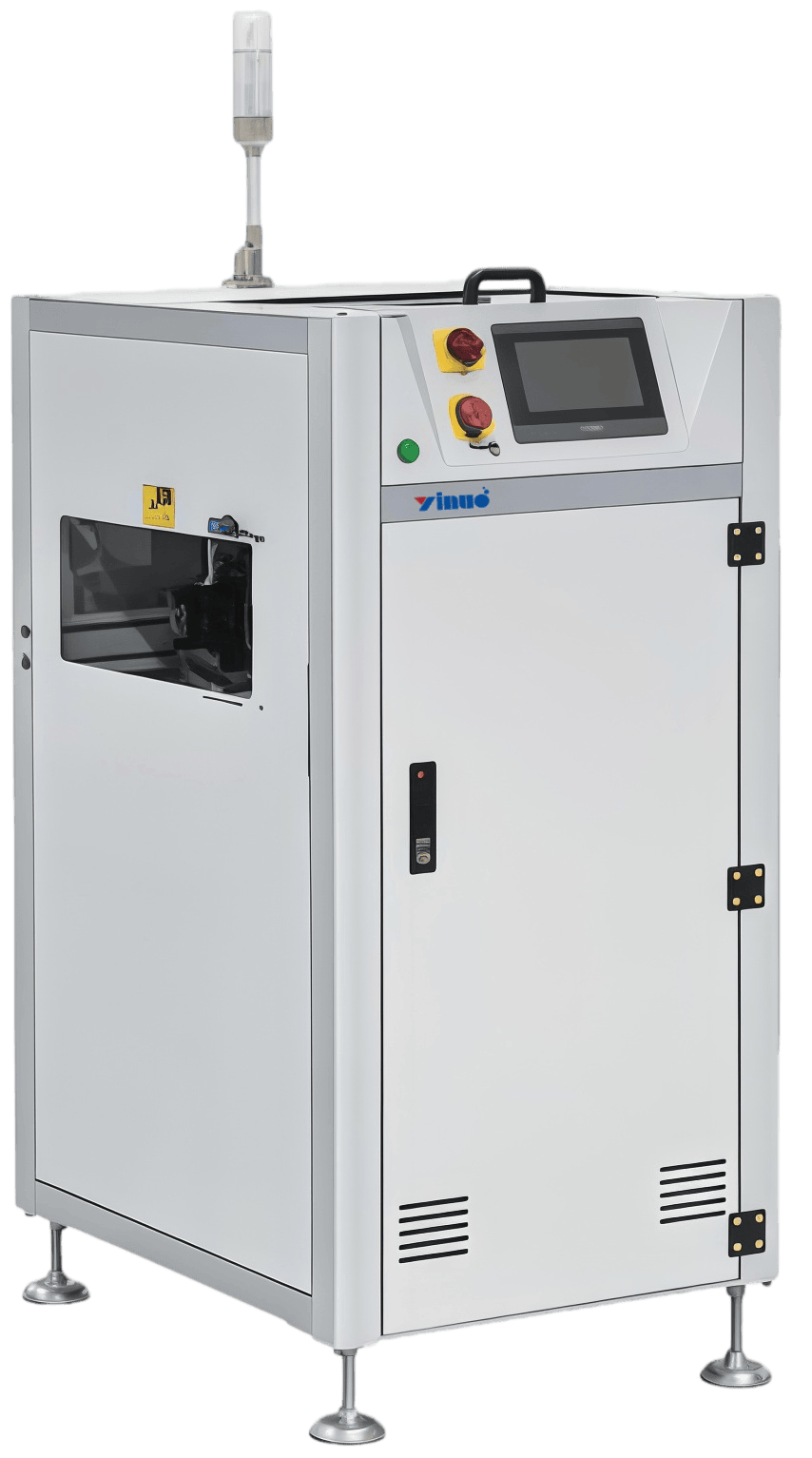
The machine’s control and safety-related mechanical provisions also influence day-to-day operation. Sensor feedback helps establish board-position conditions, while PLC logic coordinates the inversion sequence. A touchscreen provides an operator interface for selecting available functions, and a torque limiter provides a mechanical means of limiting transmitted torque under applicable overload conditions. The enclosed machine body helps define the operating area around the moving assembly. These features address different aspects of operation and should be evaluated alongside maintenance access, installation clearances, and the intended working environment.
PCB Flip Conveyor
PCB Flip Conveyor Applications in SMT Manufacturing
LED electronics production offers a useful example of orientation-dependent handling. An LED controller or lighting-control PCB may require components on both faces, with the second assembly pass scheduled after completion of the first-side process. The PCB Flip Conveyor changes the board’s presentation before it enters the next production stage. This allows the line designer to assign a specific location for the inversion task rather than requiring an operator to intervene between processing machines. Board dimensions and protruding components must still fall within the selected model’s permitted handling envelope.
In automotive electronics plants, inverter placement can be assessed around the routing requirements of battery-management boards, onboard charger controls, and other electronic modules. Where the production plan includes underside inspection or a second-side assembly sequence, the conveyor can establish the necessary orientation before the receiving station. The line designer must also consider connector height, component retention, board support, and the transfer interfaces between machines. For these products, the suitability of an inverter depends on the assembled PCB profile and the process sequence, not simply on whether the bare board fits the conveyor.
A different application occurs when production engineering teams validate new PCB models before full-rate manufacturing. The inverter can be incorporated into a trial route to evaluate how a board moves between assembly, inspection, and repair stations. Operators can check whether the chosen orientation is correct at discharge and whether the next machine receives the board at its required transfer position. Yinuo’s available operating modes give engineers a basis for assessing alternative movement sequences. This preliminary evaluation can expose layout conflicts or handling restrictions before the process is released for routine production.
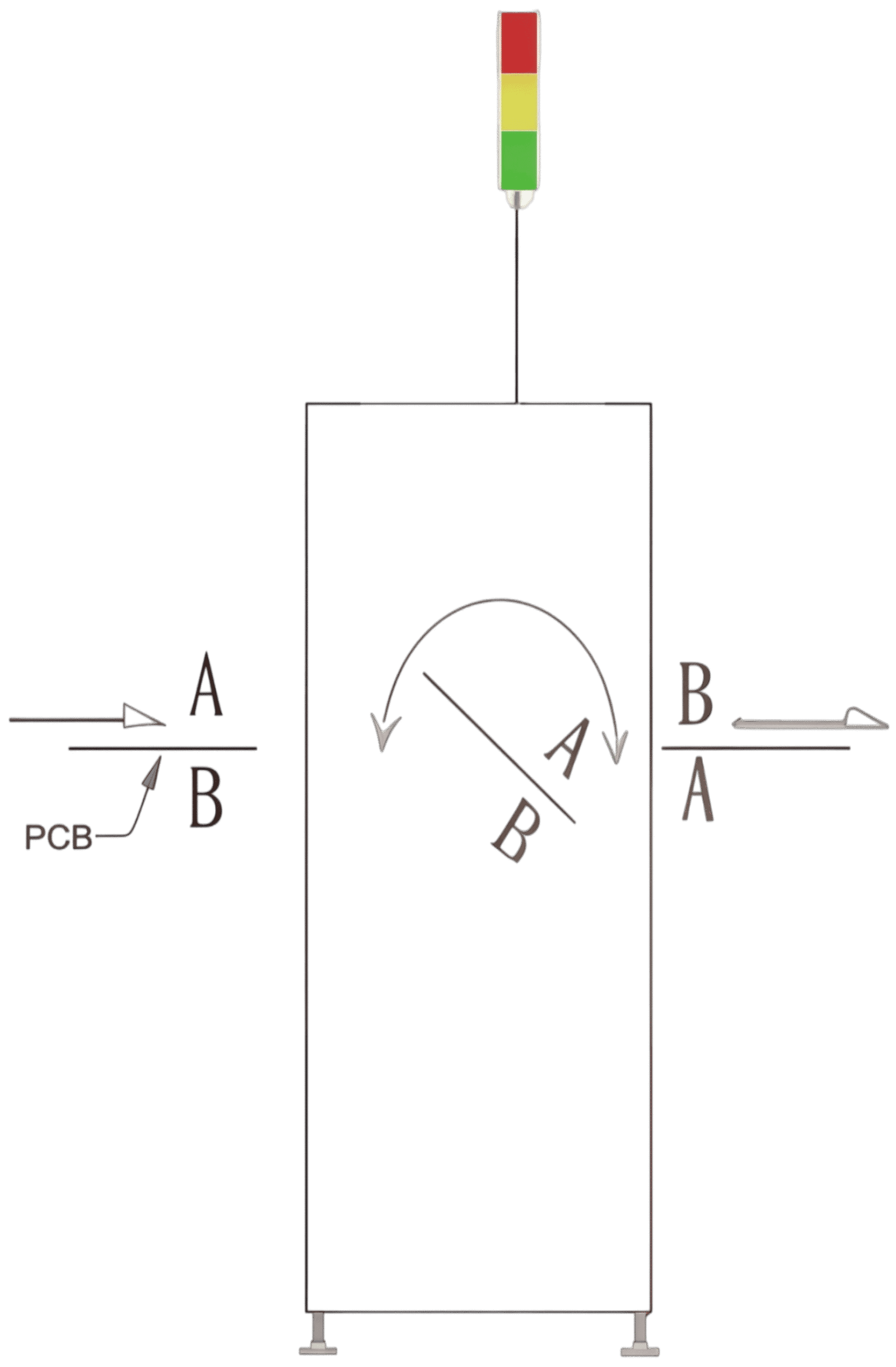
Specifications
| Model | YF-350 | YF-460 |
| Dimension(mm) | 500*725*1250 | 600*856*1250 |
| PCB Size(mm) | 50*50-445*350 | 50*50-550*460 |
| Cycle Time | Approx. 10 seconds | |
| Belt Type | Oblate Belt | |
| Power Supply | AC 1P 110V/220V; Max 150VA | |
| Air pressure | 4-6bar, 1.1 ltr/min Max | |
| Transport Height | 900±20mm(or customized) | |
| Transport Direction | From left to right or right to left | |
| Weight(KG) | 120 | 160 |
FQA
1.Q:What is the main function of a PCB Flip Conveyor?
A:It automates PCB orientation changes between SMT production stages.
2.Q:Can a PCB Flip Conveyor handle double-sided assembly?
A:Yes. It helps present the opposite PCB surface for the next assembly stage.
3.Q:How does the conveyor control the inversion process?
A:PLC control and sensors coordinate the operating sequence and board positioning.
4.Q:Can operators select different operating modes?
A:Yes. Available modes include pass-through, invert, and invert-back, depending on the machine configuration.
5.Q:Why choose Yinuo’s PCB Flip Conveyor?
A:Yinuo offers automated inversion, PLC-based control, sensor coordination, and selectable operating modes for SMT production applications.
Yinuo Electronics Co., Limited specializes in SMT and PCB assembly equipment, offering a range of solutions for electronics manufacturing. Our product portfolio supports different stages of the production process, helping manufacturers select suitable equipment for their operational needs. We are committed to providing practical products and professional assistance to customers worldwide.
Our website is: www.esmte.com | Contact email: info@allaismt.com | Video channel: https://www.youtube.com/@allaismt/videos | WhatsApp: +8613760481664