

PCB Inverter Conveyor Product Introduction
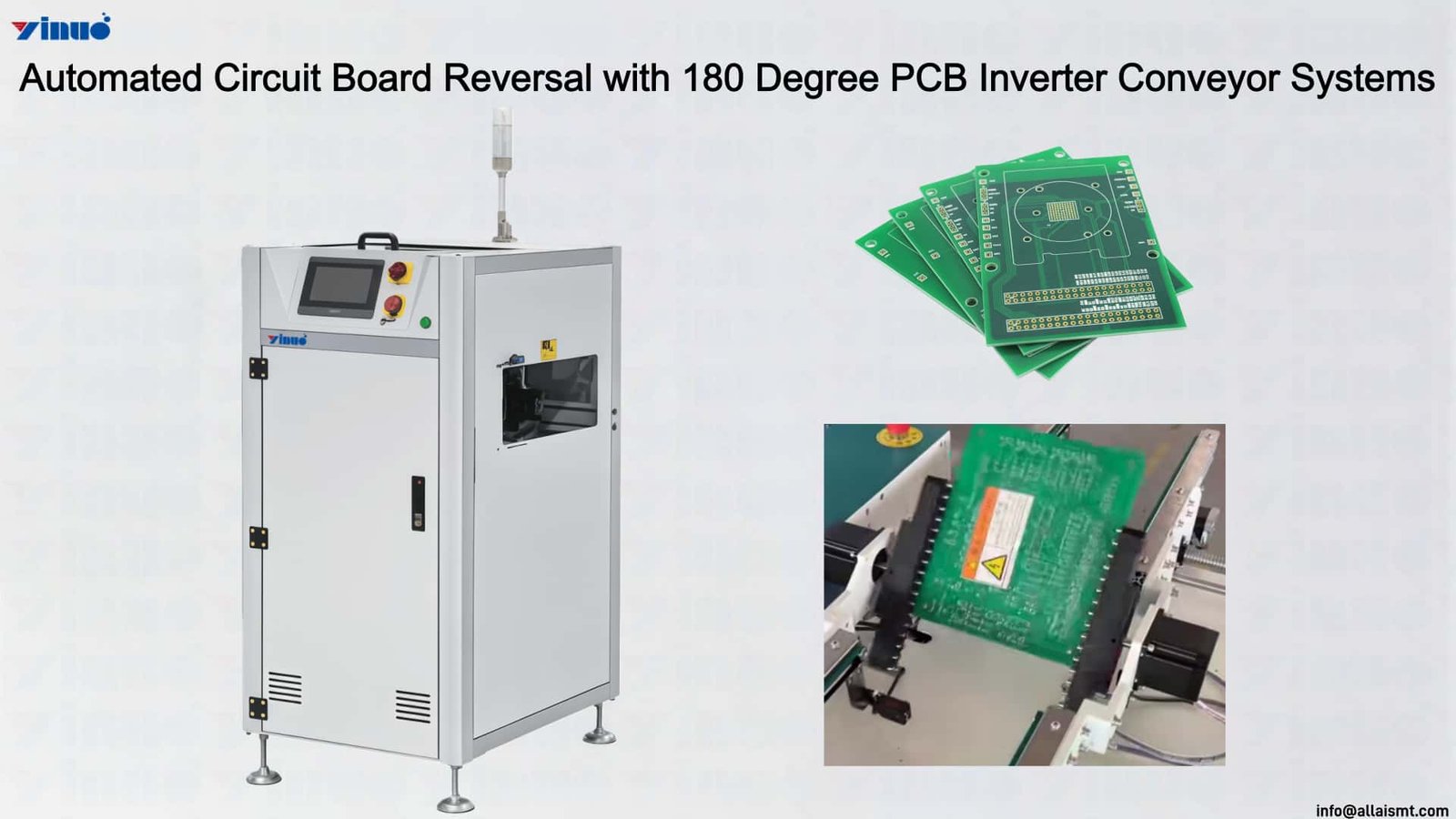
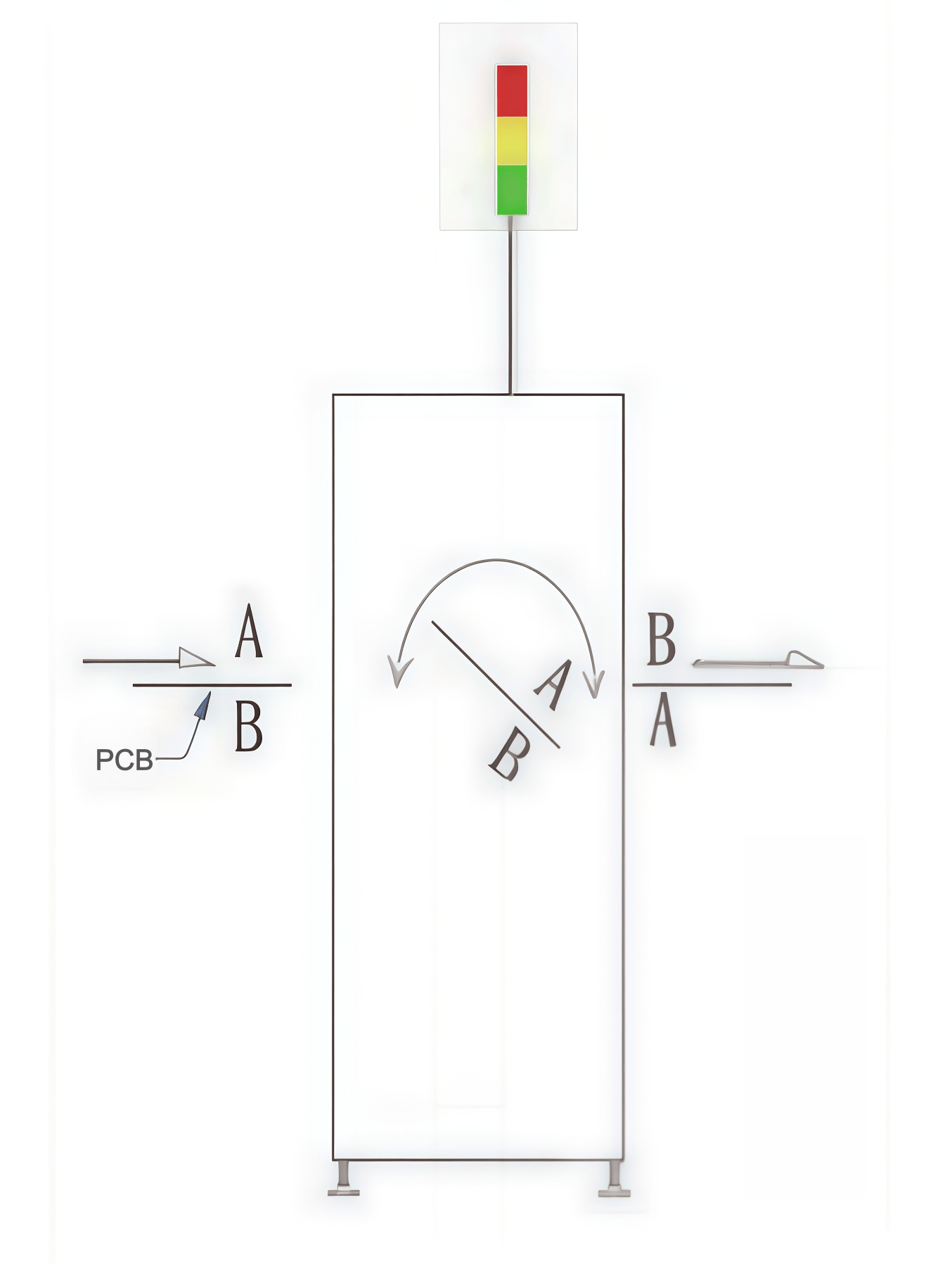
The PCB Inverter Conveyor is a dedicated SMT material handling unit for applications in which a printed circuit board must be presented with its opposite surface facing the next production station. Its primary role is to accommodate the change from first side to second side assembly after the initial printing, component placement, and reflow stages have been completed. By performing this task within the conveyor route, the equipment helps establish an orderly board transfer sequence without making manual inversion a routine requirement between operations.
From an equipment planning perspective, the inverter should be evaluated as part of the complete PCB transfer path. Its receiving and discharge positions need to correspond with the adjoining machines, while board dimensions and mounted component geometry determine the clearance required for handling. A board carrying tall connectors or components near its edges may present different handling conditions from a flat assembly. Checking representative PCBs before installation helps manufacturers establish whether the conveyor arrangement suits their actual product range and production layout.
The PCB Inverter Conveyor can also serve manufacturing processes in which the underside must be exposed for inspection, repair, or a subsequent treatment step. Its function is to alter board orientation, not to determine whether solder joints are acceptable or whether a coating has cured. This distinction is important when planning automated production: the inverter manages the physical movement of the PCB, while inspection systems, repair stations, and treatment equipment perform their respective process tasks.
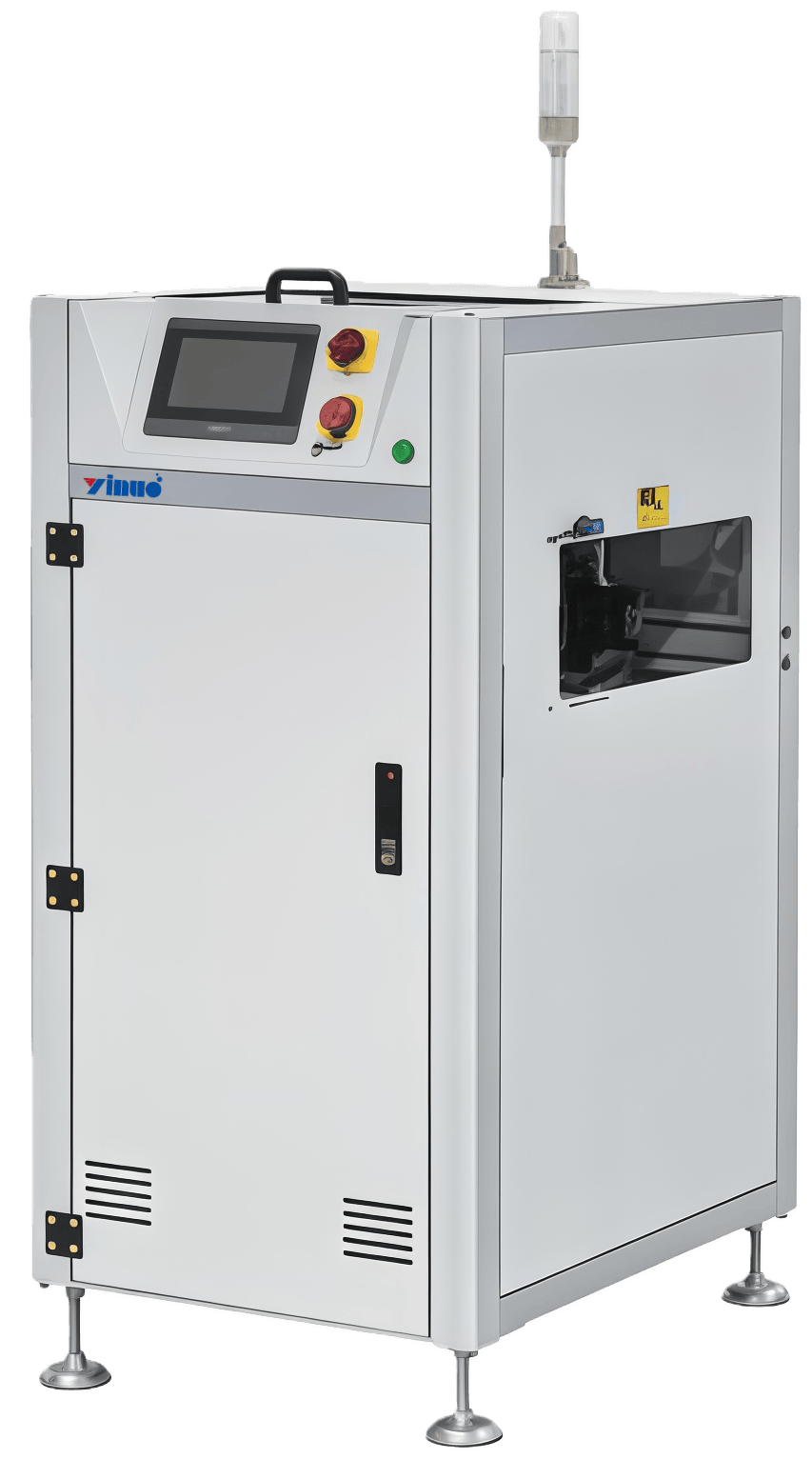
PCB Inverter Conveyor
PCB Inverter Conveyor Applications
Second Side Processing in Electronics Contract Manufacturing
Contract manufacturers may assemble multiple board types for industrial automation, communication equipment, and electronic control products. When a production order requires components on both PCB surfaces, the PCB Inverter Conveyor can be placed between the first side reflow stage and the equipment responsible for second side assembly. The orientation change allows the next process to receive the board with the required surface facing upward. For manufacturers handling different board models, each route should be checked against component placement, board dimensions, and the machine interfaces involved in the changeover.
Post Reflow Examination of Soldered Assemblies
Some manufacturing defects are associated with solder joints that are difficult to view while the PCB remains in its original orientation. The PCB Inverter Conveyor can transfer the board into a position that allows a suitable AOI station or inspection operator to examine the reverse surface. This is relevant when evaluating underside terminals, connectors, or other mounted components after reflow soldering. The actual inspection coverage depends on the camera arrangement, board presentation, and inspection method; the inverter contributes by making the required surface accessible.
Board Orientation During Surface Treatment
Adhesive dispensing and conformal coating may require access to a particular PCB surface, followed by a handling sequence that exposes another area or prepares the board for the next station. The PCB Inverter Conveyor can form part of this route when the process calls for an orientation change. Before choosing its position, manufacturers should account for adhesive setting time, coating condition, curing requirements, and potential contact between treated surfaces and handling components. These considerations are especially important for assemblies with exposed coating areas or materials that remain susceptible to disturbance after application. Proper process sequencing helps determine when board inversion is appropriate and how the equipment should connect with the subsequent operation.
Specifications
| Model | YF-350 | YF-460 |
| Dimension(mm) | 500*725*1250 | 600*856*1250 |
| PCB Size(mm) | 50*50-445*350 | 50*50-550*460 |
| Cycle Time | Approx. 10 seconds | |
| Belt Type | Oblate Belt | |
| Power Supply | AC 1P 110V/220V; Max 150VA | |
| Air pressure | 4-6bar, 1.1 ltr/min Max | |
| Transport Height | 900±20mm(or customized) | |
| Transport Direction | From left to right or right to left | |
| Weight(KG) | 120 | 160 |
FQA
1.Q:How does a PCB Inverter Conveyor work?
A:The equipment receives a PCB from an upstream station, performs the required orientation change, and transfers the board toward the next production station. Its operation must correspond with the transfer direction, conveyor height, and board handling requirements of the connected equipment.
2.Q:Can a PCB Inverter Conveyor help with PCB defect inspection and repair?
A:Yes. When a soldering defect is suspected on the underside of a PCB, the inverter can change the board orientation to improve access for inspection or repair. Defect identification and corrective work are performed by the inspection system or repair technician, not by the conveyor itself.
3.Q:What types of PCBs can a PCB Inverter Conveyor handle?
A:Its suitability depends on the equipment configuration and the physical characteristics of the PCB. Board dimensions, thickness, component height, edge features, and overall assembly structure should be checked to determine whether a particular board can be transferred and inverted safely.
4.Q:Can a PCB Inverter Conveyor be connected to an existing SMT production line?
A:It can be considered for an existing line if its transfer interface and operating requirements are compatible with the surrounding equipment. Conveyor height, board transfer direction, available floor space, PCB dimensions, and upstream and downstream machine requirements should be evaluated before installation.
5.Q:How can manufacturers determine whether a PCB Inverter Conveyor is suitable for their production line?
A:Manufacturers should review their PCB dimensions, component layouts, existing conveyor interfaces, and intended process sequence. Sharing representative board information and the requirements of the connected machines with the supplier helps establish equipment compatibility and identify installation considerations before purchase.
Yinuo Electronics Co., Limited specializes in SMT and PCB assembly equipment, offering a range of solutions for electronics manufacturing. Our product portfolio supports different stages of the production process, helping manufacturers select suitable equipment for their operational needs. We are committed to providing practical products and professional assistance to customers worldwide.
Our website is: www.esmte.com | Contact email: info@allaismt.com | Video channel: https://www.youtube.com/@allaismt/videos | WhatsApp: +8613760481664