

Introduction
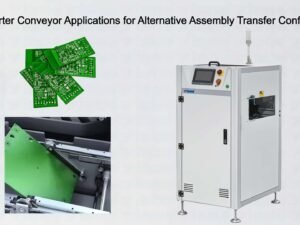
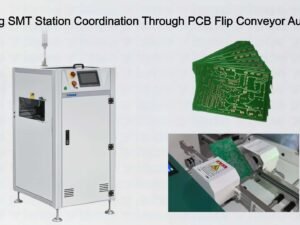
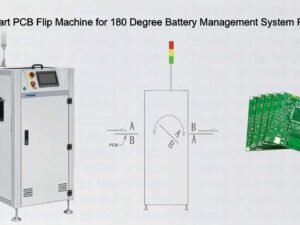
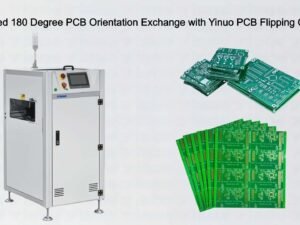
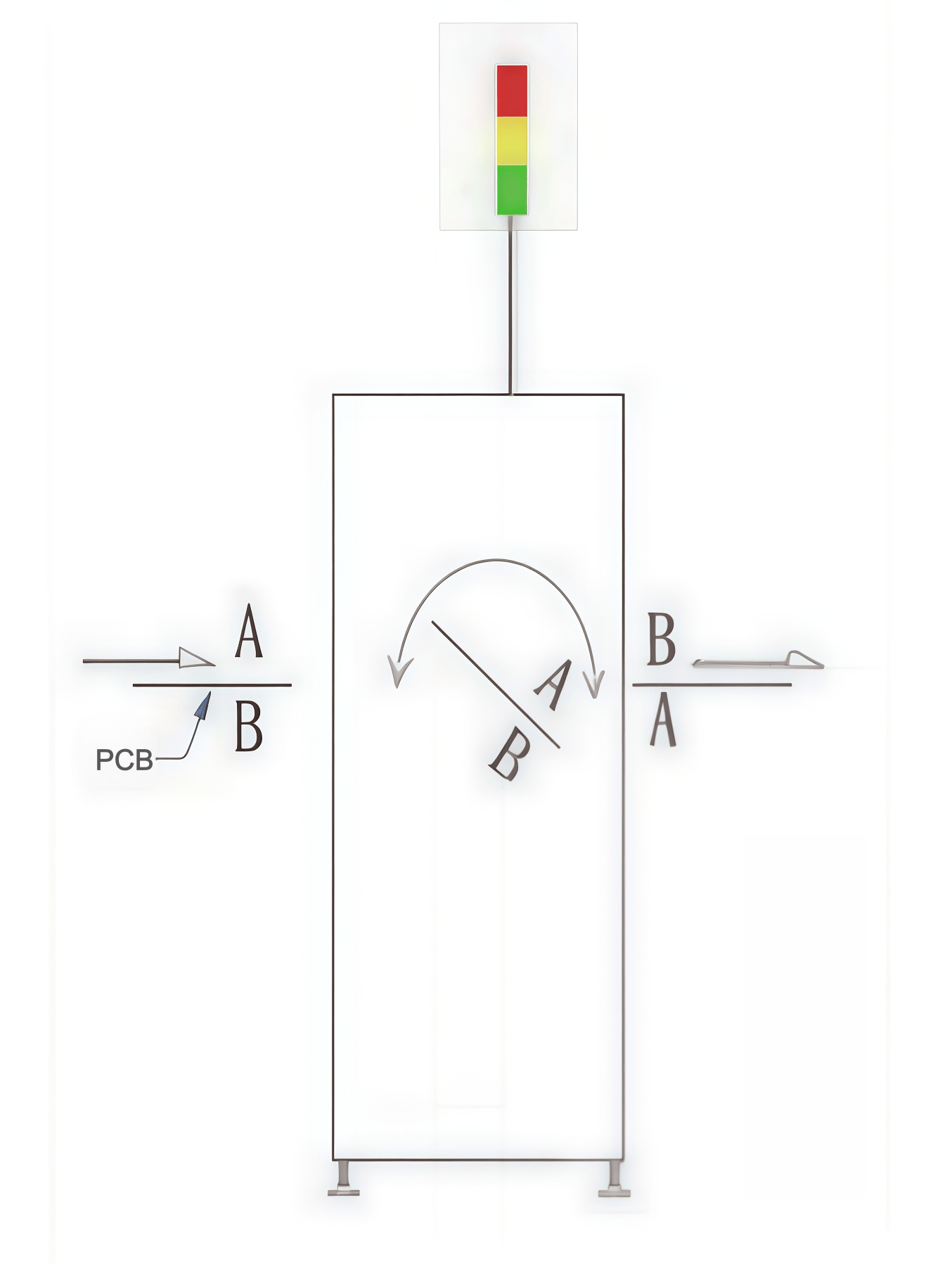
Yinuo’s Automatic PCB Inverter Conveyor addresses the mechanical demands associated with rotating an assembled circuit board through 180 degrees. During inversion, the PCB occupies changing positions within the turning space, making the relationship between the board’s overall envelope and the mechanism’s movement range an important consideration. The equipment’s role extends beyond transporting a flat substrate; it must accommodate the assembled product as a physical unit throughout the rotation. This makes the inverter particularly relevant to applications where the PCB profile influences the available movement space.
The mechanical assessment involves more than measuring board length and width. Component bodies, tall devices, projecting terminals, and connectors can create different clearance requirements at different points in the rotation cycle. A board that fits within the conveyor’s nominal transport dimensions may require additional consideration once its orientation changes. Yinuo’s equipment selection approach can take these assembly characteristics into account, helping manufacturers evaluate the suitability of an inverter for their intended PCB range before establishing the operating arrangement.
The 180-degree turning function also provides flexibility in how the board is presented at the equipment outlet. Depending on the application, the required exit orientation may be determined by a downstream machine’s receiving geometry or by the physical arrangement of the next processing station. The inverter therefore serves as a mechanical orientation-changing unit rather than a simple transport section. With its dedicated automatic rotation capability, Yinuo offers manufacturers a focused solution for applications where PCB geometry, movement clearance, and discharge presentation must be considered together.
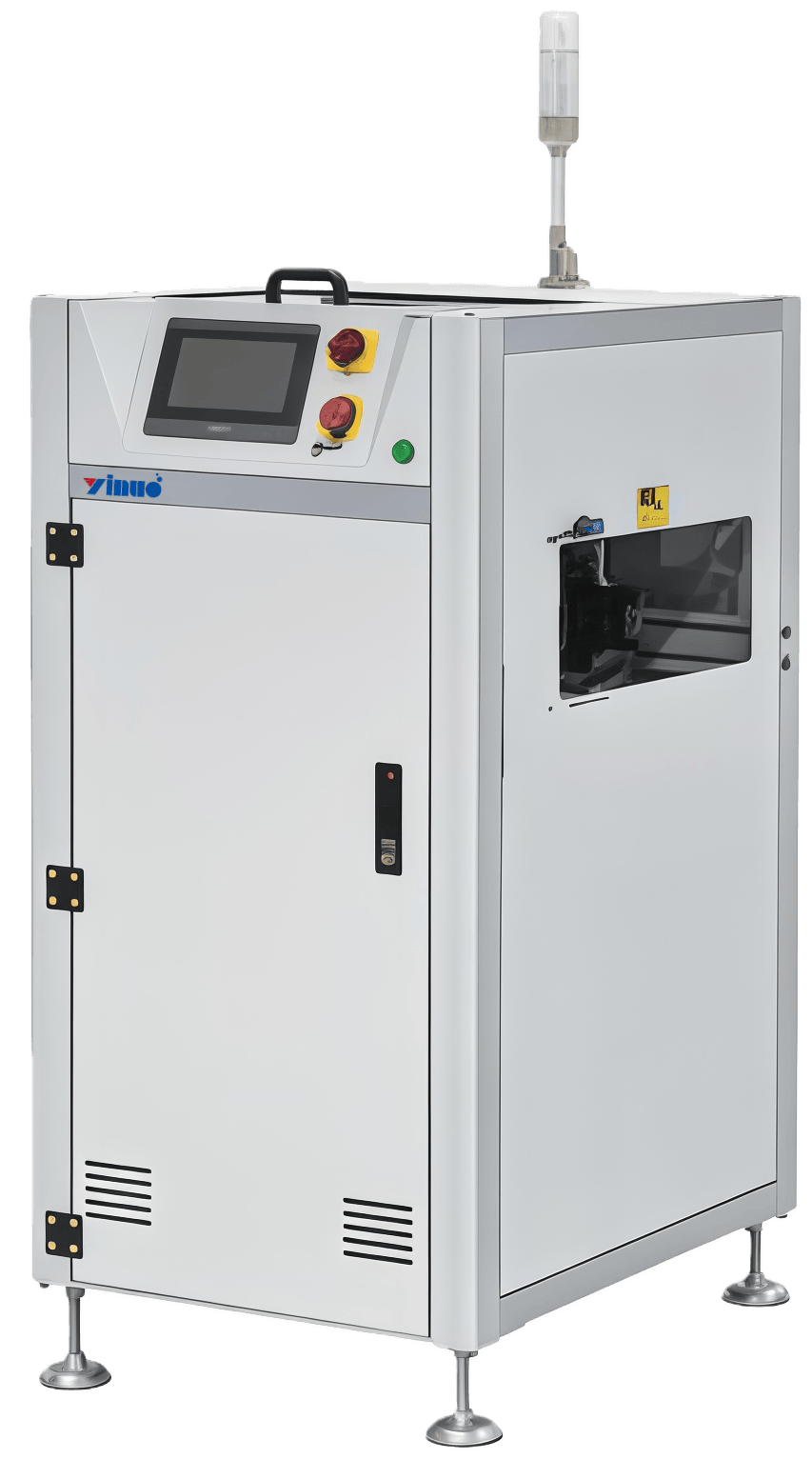
Automatic PCB Inverter Conveyor
Advanced LED Control PCB Handling with Automatic PCB Inverter Conveyor Technology
LED electronics factories often manufacture control boards for intelligent lighting, dimming systems, and commercial lighting equipment. These assemblies may pass through several stations, each requiring a specific board orientation for machine access or subsequent handling. The Automatic PCB Inverter Conveyor performs a 180-degree inversion when the production sequence calls for the opposite PCB surface to face the next station. Its automatic operation makes orientation changes part of the equipment-based transfer route rather than a separate manual handling task.
The board’s assembled condition is an important factor in selecting an inverter. LED control PCBs may include terminal blocks, communication connectors, tall capacitors, or other components extending above the substrate. During inversion, these features must remain within the permitted mechanical clearance. Manufacturers should assess representative assembled boards, not just bare PCB dimensions, when checking equipment suitability. This approach helps identify potential interference associated with component placement and board construction before the machine enters production.
Another benefit is the ability to assign board inversion to a dedicated station within the manufacturing layout. The Automatic PCB Inverter Conveyor can be positioned between compatible handling sections when their required board orientations differ. For LED lighting control production, this arrangement can help organize transitions between assembly, inspection, and other downstream operations. Its contribution lies in mechanical repositioning and transfer coordination; the connected machines remain responsible for their respective processing or inspection functions.
Specifications
| Model | YF-350 | YF-460 |
| Dimension(mm) | 500*725*1250 | 600*856*1250 |
| PCB Size(mm) | 50*50-445*350 | 50*50-550*460 |
| Cycle Time | Approx. 10 seconds | |
| Belt Type | Oblate Belt | |
| Power Supply | AC 1P 110V/220V; Max 150VA | |
| Air pressure | 4-6bar, 1.1 ltr/min Max | |
| Transport Height | 900±20mm(or customized) | |
| Transport Direction | From left to right or right to left | |
| Weight(KG) | 120 | 160 |
FQA
1.Q:What is the main function of an Automatic PCB Inverter Conveyor?
A:It changes PCB orientation to meet the handling or processing requirements of the next production station.
2.Q:Can it be used for double-sided PCB assembly?
A:Yes. It can invert a PCB after one side has been processed so the opposite side can face the next assembly station.
3.Q:How is an Automatic PCB Inverter Conveyor used in LED factories?
A:It can reposition LED driver boards, lighting control PCBs, and LED power supply boards between compatible production stages.
4.Q:What should be considered when selecting an Automatic PCB Inverter Conveyor?
A:Important factors include PCB dimensions, component height, edge clearance, board thickness, and compatibility with adjacent equipment.
5.Q:What is the advantage of automatic PCB inversion?
A:It reduces the need for manual board flipping and provides a dedicated orientation-change stage in compatible automated production lines.
Yinuo Electronics Co., Limited specializes in SMT and PCB assembly equipment, offering a range of solutions for electronics manufacturing. Our product portfolio supports different stages of the production process, helping manufacturers select suitable equipment for their operational needs. We are committed to providing practical products and professional assistance to customers worldwide.
Our website is: www.esmte.com | Contact email: info@allaismt.com | Video channel: https://www.youtube.com/@allaismt/videos | WhatsApp: +8613760481664