

PCB Inverter Conveyor Product Introduction
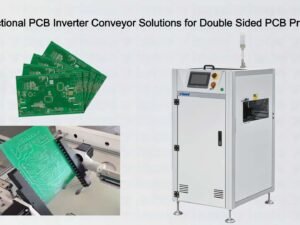
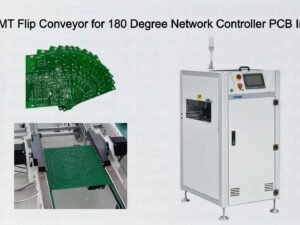
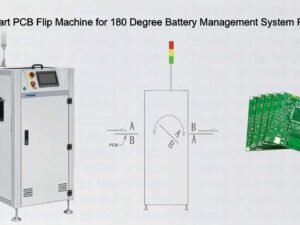
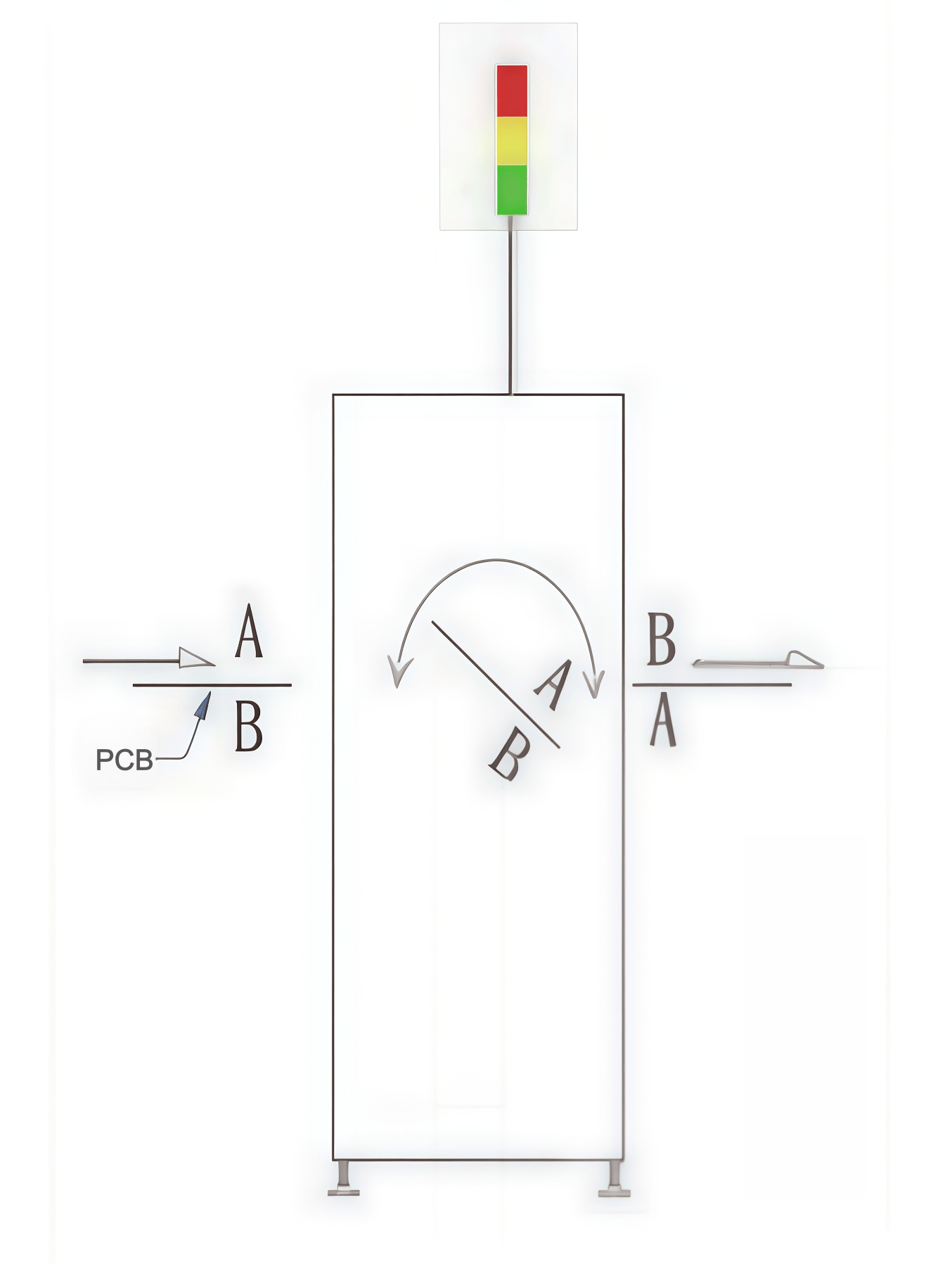
The PCB Inverter Conveyor is a specialized handling device whose principal operating action is a 180 degree change in PCB orientation. During this cycle, the board is repositioned so that its opposite surface faces the direction required after discharge. This capability makes the equipment relevant wherever board presentation is part of the manufacturing specification. Its function is mechanical rather than electrical or diagnostic, focusing on the physical movement and orientation of the circuit board.
A major consideration in evaluating the equipment is how the PCB behaves as a complete assembly during the inversion cycle. Components located near the perimeter, projecting connectors, and variations in board construction can influence the clearance envelope. The handling arrangement must also suit the board’s entry position and the intended discharge position. Reviewing these factors with actual production assemblies provides a more reliable basis for equipment selection than evaluating the PCB outline alone.
The PCB Inverter Conveyor establishes a repeatable mechanical stage for changing board orientation within a defined handling route. Its 180 degree inversion differentiates it from equipment that only transports PCBs in their existing position. The required operating arrangement depends on the assembly profile, the specified direction of rotation, and the physical interface with connected machinery. These factors define the equipment’s practical role and provide a basis for assessing its suitability for a particular manufacturing application.
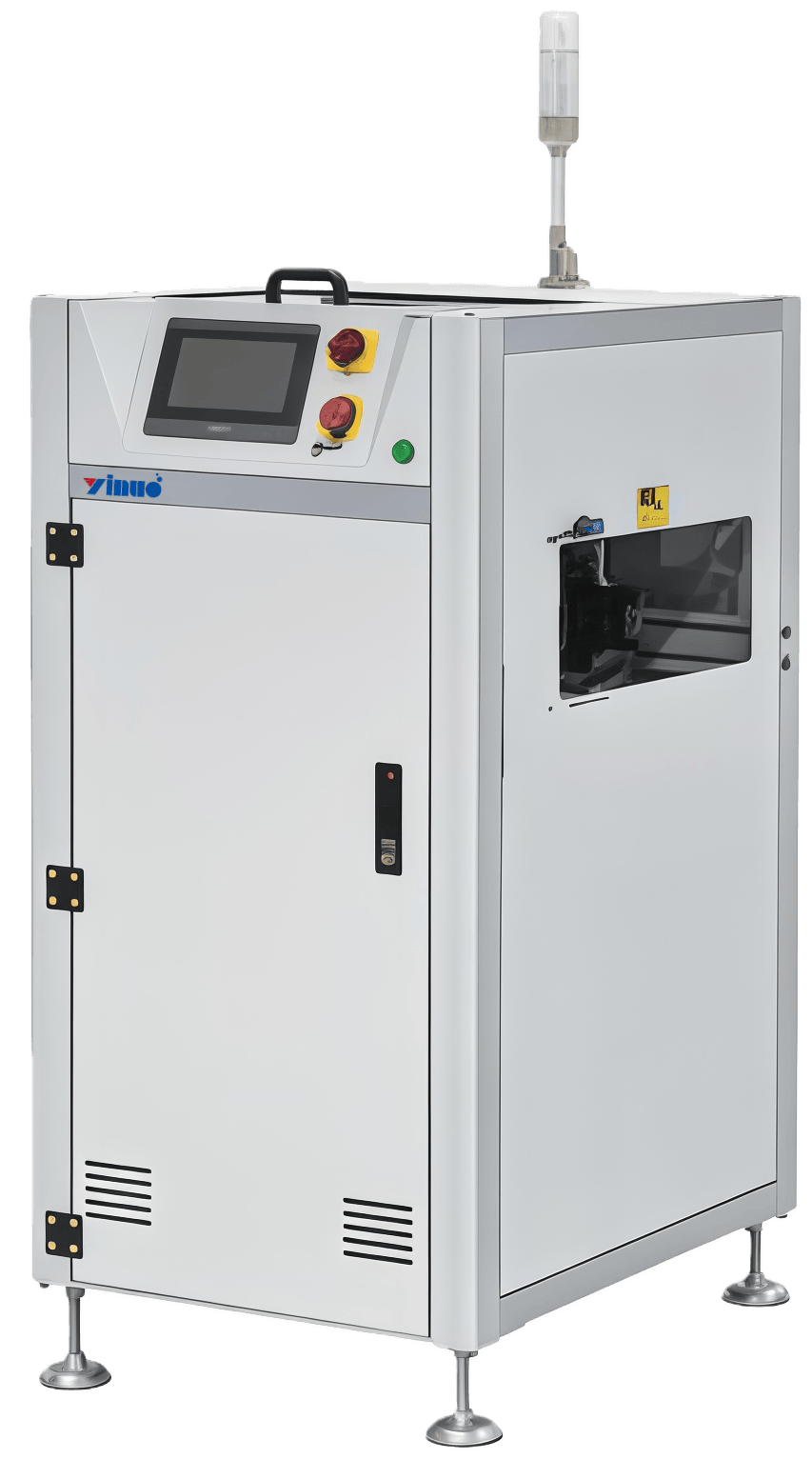
PCB Inverter Conveyor
PCB Inverter Conveyor Applications
Handling PCB Assemblies with Different Board Outlines
Manufacturers may process circuit boards with rectangular, elongated, or irregular outlines. Differences in edge geometry can affect the support and clearance required during a 180 degree inversion. A PCB Inverter Conveyor can be evaluated against the actual outline and assembled profile of each intended product to determine handling suitability. This is particularly useful when a production line accommodates several PCB models and the equipment must be assessed for the range of board formats rather than a single reference assembly.
Preparing PCB Orientation for Fixture Loading
In manufacturing processes that use dedicated fixtures, the PCB may need to enter with a particular side or edge aligned to the fixture’s loading arrangement. Where this requires a 180 degree change in board orientation, the PCB Inverter Conveyor can perform the repositioning before the loading stage. The fixture design, PCB datum features, and required discharge orientation should be considered together. This helps ensure that the mechanical inversion supports the intended loading procedure without implying that the conveyor itself performs fixture alignment or testing.
Board Repositioning in Multi Stage Assembly Cells
A manufacturing cell may include separate stations for component installation, visual examination, mechanical assembly, and final handling. If a PCB must face the opposite direction before entering one of these stations, the PCB Inverter Conveyor can provide the required orientation change between stages. Its position should be selected according to the movement path, the board’s physical profile, and the receiving station’s entry conditions. This allows the inversion function to be evaluated as a dedicated part of the cell layout rather than an informal handling task.
Specifications
| Model | YF-350 | YF-460 |
| Dimension(mm) | 500*725*1250 | 600*856*1250 |
| PCB Size(mm) | 50*50-445*350 | 50*50-550*460 |
| Cycle Time | Approx. 10 seconds | |
| Belt Type | Oblate Belt | |
| Power Supply | AC 1P 110V/220V; Max 150VA | |
| Air pressure | 4-6bar, 1.1 ltr/min Max | |
| Transport Height | 900±20mm(or customized) | |
| Transport Direction | From left to right or right to left | |
| Weight(KG) | 120 | 160 |
FAQ
1.Q:What is the main function of a PCB Inverter Conveyor?
A:Its main function is to reposition PCBs automatically so the opposite board surface can face the next processing machine.
2.Q:Where is a PCB Inverter Conveyor used?
A:It is commonly used in SMT assembly lines, inspection stations, rework areas, and other PCB handling processes.
3.Q:Can a PCB Inverter Conveyor be used before AOI inspection?
A:Yes. It can reposition a PCB to present the required surface for inspection by a compatible AOI system.
4.Q:What should be considered when selecting a PCB Inverter Conveyor?
A:Check PCB dimensions, board thickness, component clearance, conveyor height, and compatibility with adjacent equipment.
5.Q:Does a PCB Inverter Conveyor reduce manual board handling?
A:Yes. Automatic board inversion can reduce the need for operators to flip PCBs manually between suitable production stages.
Yinuo Electronics Co., Limited specializes in SMT and PCB assembly equipment, offering a range of solutions for electronics manufacturing. Our product portfolio supports different stages of the production process, helping manufacturers select suitable equipment for their operational needs. We are committed to providing practical products and professional assistance to customers worldwide.
Our website is: www.esmte.com | Contact email: info@allaismt.com | Video channel: https://www.youtube.com/@allaismt/videos | WhatsApp: +8613760481664