Introduction
The New K-Type Axial Feeder reconceives the operator-feeder relationship by embedding workflow intelligence directly into the platform’s human-machine interface architecture. At the core of this reconception is a context-aware touchscreen HMI that dynamically reconfigures its display hierarchy based on the feeder’s current operational state — presenting setup guidance during initialization, real-time feed-quality telemetry during production, and guided diagnostic trees during fault recovery. This context-driven interface eliminates the cognitive overload that conventional static-menu HMIs impose, where operators must navigate hierarchical menu structures to locate the information relevant to their immediate task regardless of whether that task is splicing, recipe loading, or fault isolation.
The physical interaction layer of the K-Type is equally refined. Tape loading and splicing are executed through a toolless docking mechanism where the carrier tape is inserted into a self-aligning channel that automatically indexes the feed position and tensions the tape to the recipe-specified baseline. Reel changes are accomplished through a quick-release hub that decouples the spent reel, accepts the replacement, and re-locks in a single motion sequence — no fasteners, no alignment pins, no torque sequences. This toolless interaction philosophy extends to the feeder’s service architecture, where wear-critical subassemblies are packaged as drop-in cartridge modules that self-orient during insertion and electronically self-identify to the control system, enabling component-level replacement without manual calibration or firmware reconfiguration.
Error recovery — the operational phase where conventional feeders impose the greatest hidden cost — is addressed through a guided recovery protocol that diagnoses the fault, isolates the affected subassembly, and presents the operator with a sequential recovery procedure illustrated on the HMI. Rather than displaying a cryptic fault code that requires a manual lookup, the K-Type communicates the nature of the fault, the specific component involved, and the corrective action in a single interface frame. This recovery intelligence transforms downtime from an unstructured troubleshooting exercise into a procedural task, compressing mean-time-to-recovery and removing the operator-experience dependency that makes conventional feeder uptime so variable across shifts and personnel.
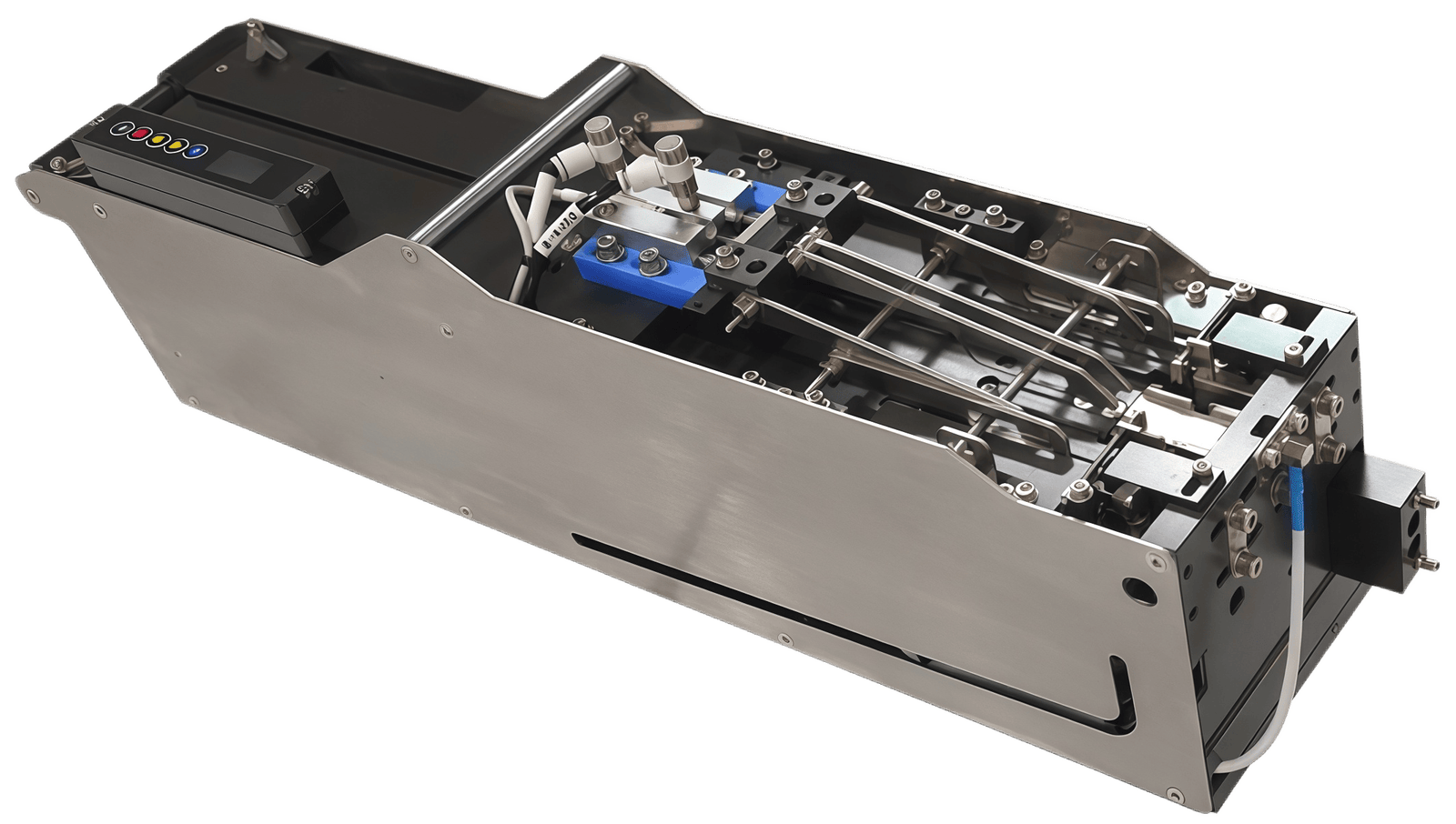
New K-Type Axial Feeder
New K Type Axial Feeder Active Quality Preservation for EV Power Controller Board Reliability
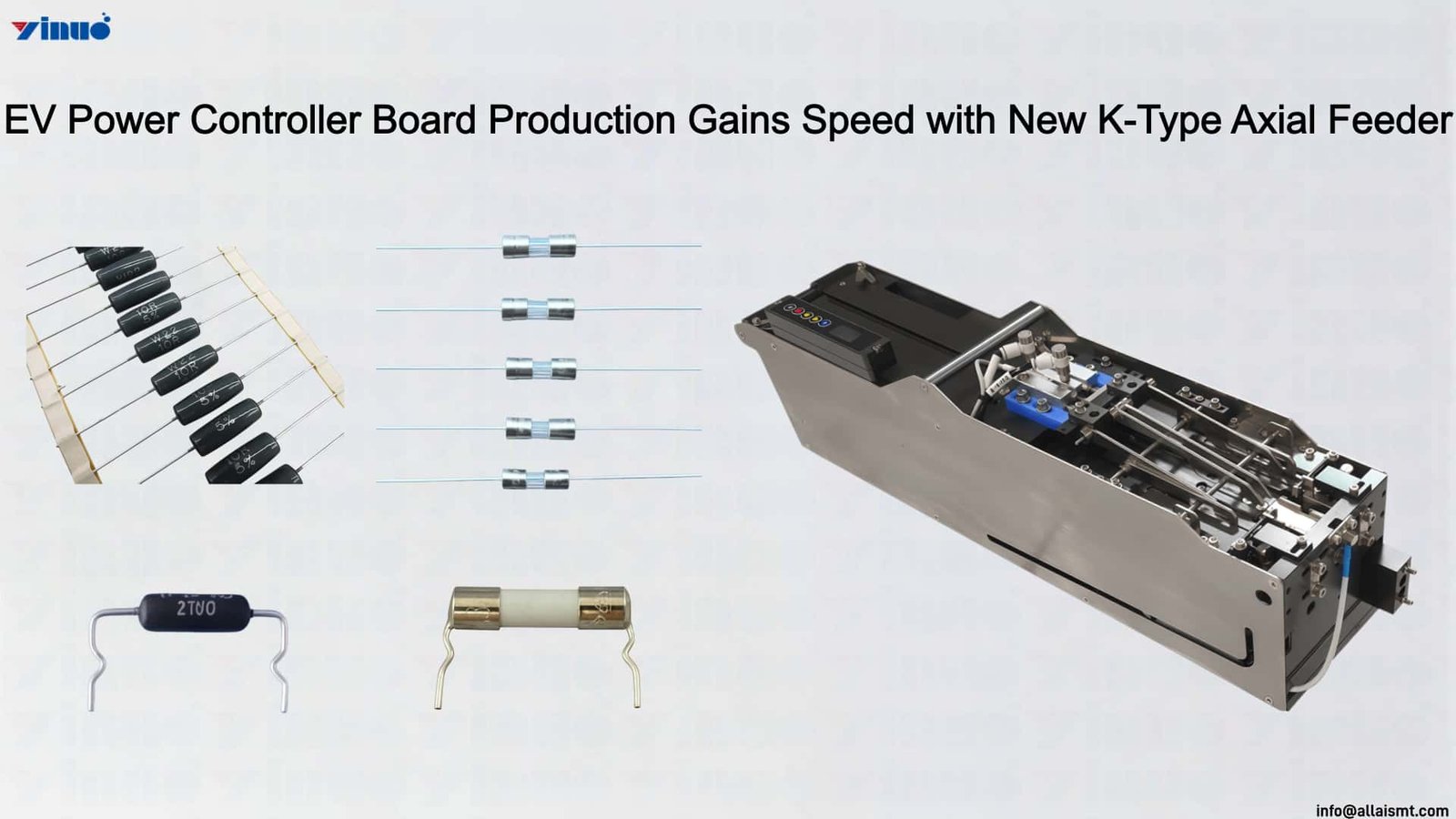
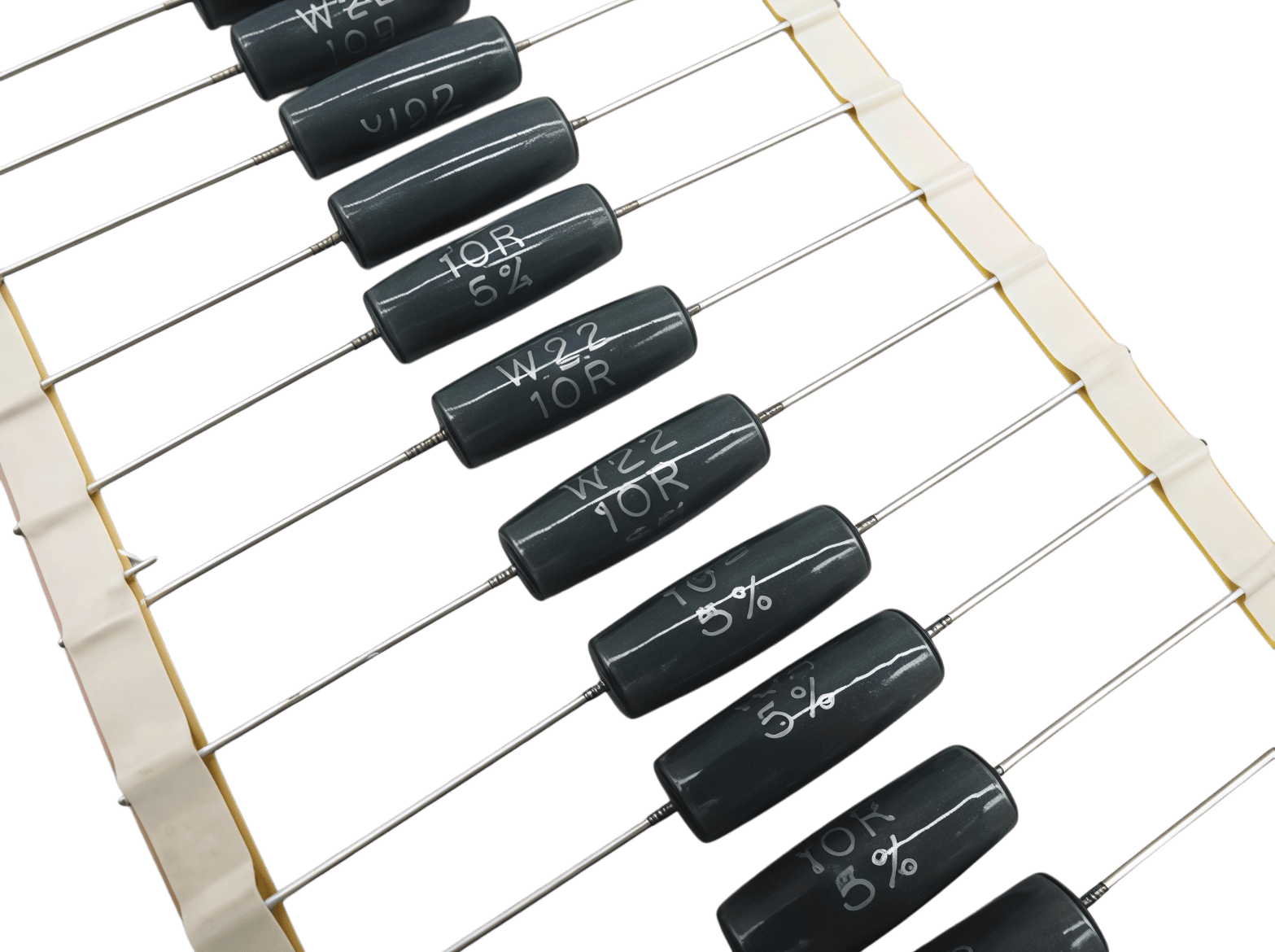
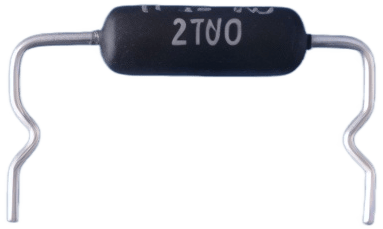
In the new energy electronics factory producing EV power controllers, the New K-Type Axial Feeder is deployed at the axial component placement station where current-sense resistors, bus-clamp diodes, and snubber capacitors are fed to the pick-and-place head for deposition onto high-current power PCBs. The feeder’s servo-driven stepping architecture advances carrier tape through polynomial motion-law cam profiles, presenting components at the pickup window with positional repeatability that EV power-controller pad geometries demand. When the placement head acquires a current-sense resistor whose pad-to-pad tolerance governs shunt-measurement accuracy of battery management interface, the K-Type’s feed-pitch stability ensures the resistor body lands centered on solder paste deposits — not drifted by inertial overshoot that conventional ratchet-advanced feeders introduce during high-cadence operation.
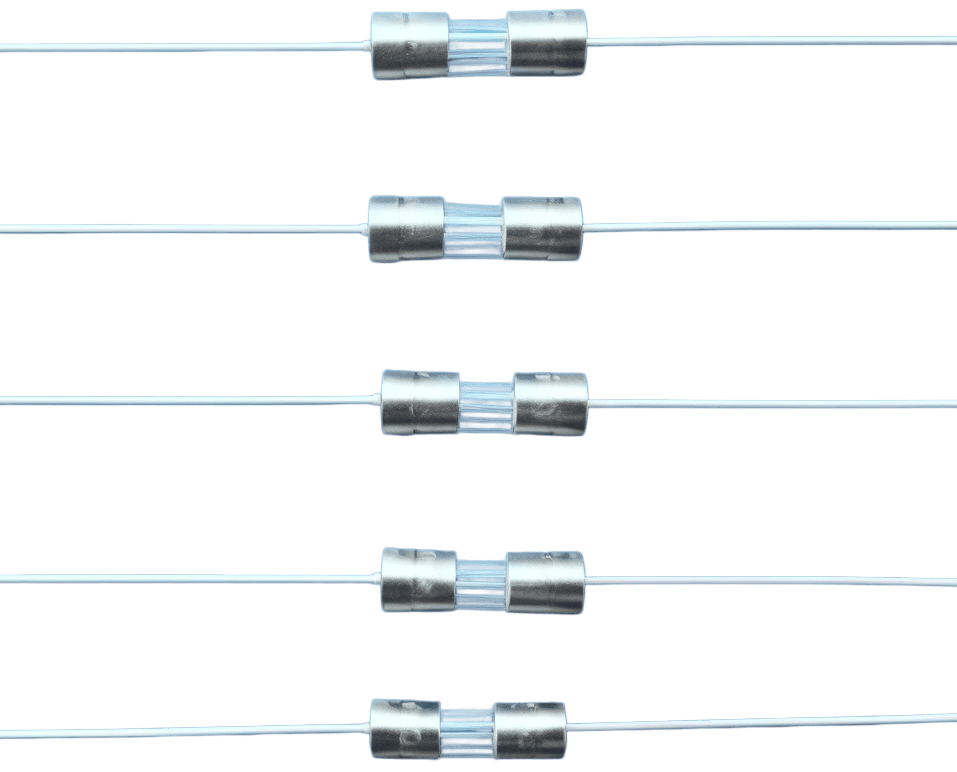
The New K-Type Axial Feeder‘s role extends beyond mere delivery into active quality preservation through its adaptive tension-modulation module, which continuously senses tape-back tension and adjusts clamping force to accommodate the mixed component populations that EV power-controller boards require within a single feed reel. When the production sequence transitions from glass-encapsulated clamping diodes to ceramic-bodied current-sense resistors, the K-Type’s closed-loop tension governance prevents the lead-scuffing and body-microfracture that fixed-tension systems induce during material transitions. This capability directly reduces the first-pass defect rate on power-controller boards where a single micro-cracked diode can compromise the entire overvoltage protection chain, translating feeder-level intelligence into board-level reliability and factory-level yield protection.
The market value of this precision-feeding capability manifests in the K-Type’s ability to consolidate what previously required two or three conventional feeders into a single unified feeding node. By eliminating the parallel feeder stations that EV power-controller lines traditionally deploy for different axial component categories, the K-Type reduces capital equipment expenditure, shrinks the axial feeding footprint within the placement zone, and removes the alignment-variability penalty that multi-feeder configurations impose on placement quality. For new energy electronics manufacturers operating on thin margins where first-pass yield directly determines profitability, the K-Type’s contribution to defect-rate reduction and equipment-consolidation represents a total-cost-of-ownership advantage that compounds across every board produced.
Specifications
| Model | YN-A2412 |
| Dimensions (Length * Width * Height Unit: mm) |
536×109×140.5mm |
| Weight | 9KG |
| Operating Voltage | DC 24V |
| Air Supply Required | 0.5–0.7Mpa |
| Maximum Current | 1.3A |
| Feeding Speed | 2s/Pcs |
| Drive Mode | Pneumatic |
| Operation Panel | 0.96-inch TFT color screen, 80 * 160 pixels |
| Material Pitch Error | ±0.4mm |
| Applicable Tape Width | 63-90 mm |


https://www.youtube.com/@allaismt
For more information about the New K-Type Axial Feeder, please send an email to
We will respond to your inquiry promptly and provide you with detailed information about our products and services.