

Introduction
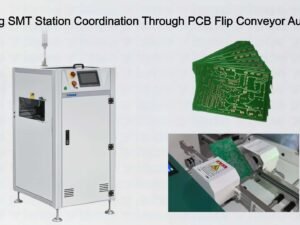
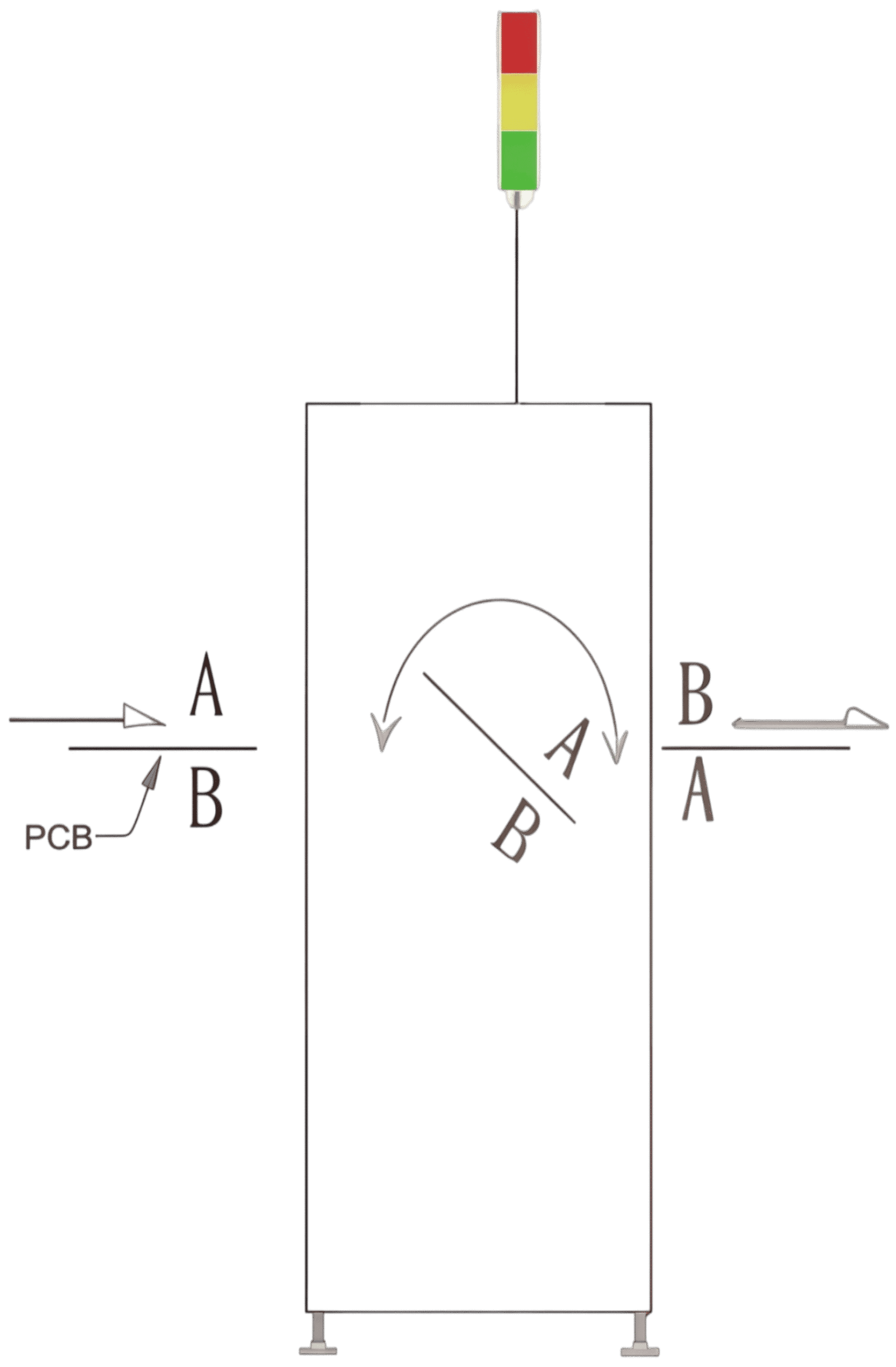
Every change in PCB orientation creates a specific requirement for the next production station: the board must arrive with the correct surface facing upward and in a position suitable for transfer. Yinuo’s SMT Flip Conveyor performs this task through automated 180-degree PCB inversion, giving production engineers a dedicated method of managing board presentation along the SMT route. This equipment is particularly relevant when a manufacturing sequence alternates between operations on opposite surfaces. Assigning the orientation change to a designated machine establishes a clear handling procedure and reduces dependence on repeated manual repositioning.
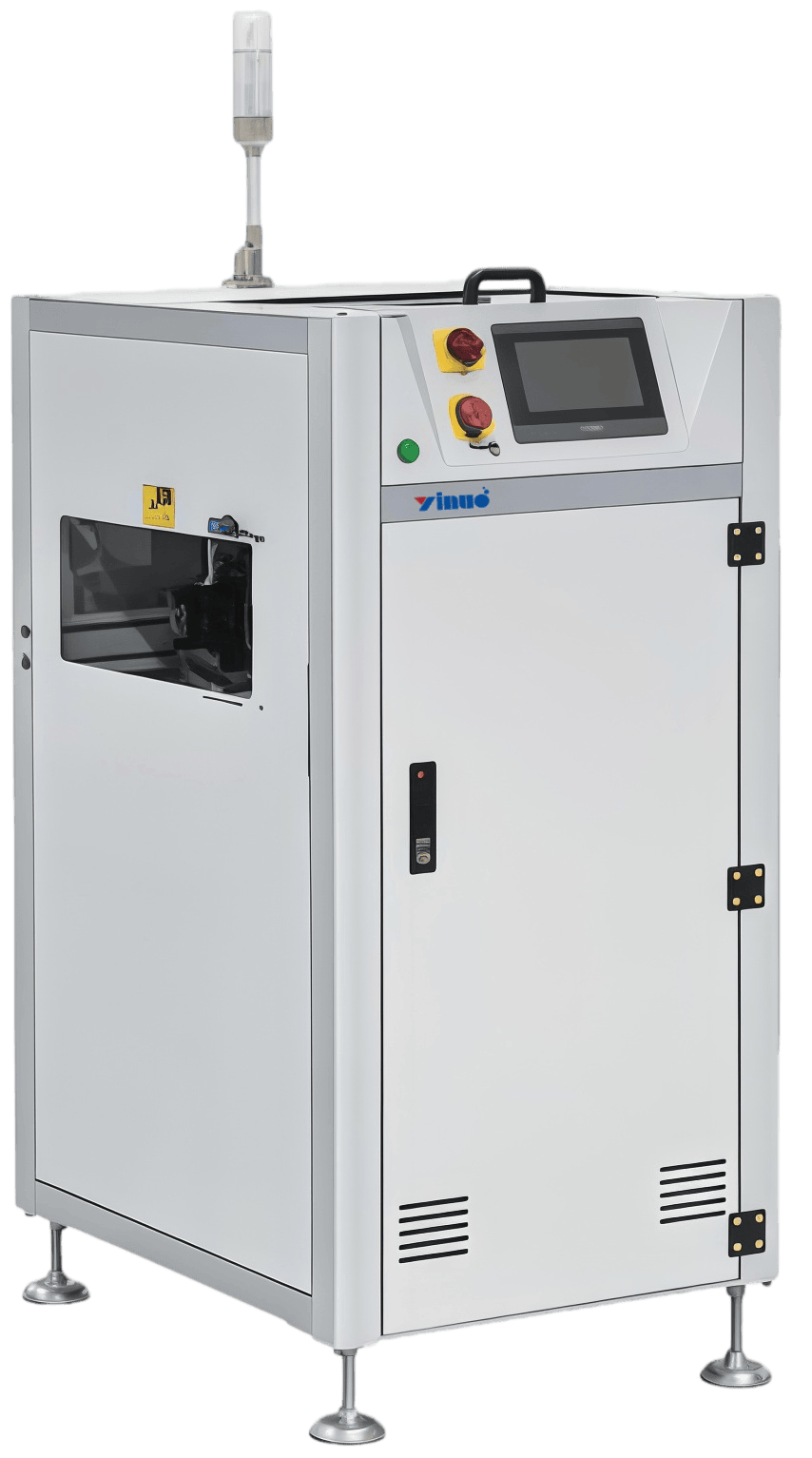
Control visibility is an important consideration when operators manage automated equipment. Yinuo’s PLC-based control system coordinates the inversion sequence, while sensors provide position-related signals for machine operation. The touchscreen interface provides access to supported functions, including pass-through, invert, and invert-back modes. With an approximate cycle time of 10 seconds, the SMT Flip Conveyor provides a measurable operating interval that engineers can compare with upstream delivery and downstream acceptance requirements. Actual line performance depends on PCB format, transfer intervals, operating mode, and the cycle requirements of neighboring equipment, so timing should be validated under real production conditions.
During production-line planning, the inverter’s physical arrangement should be assessed against the full geometry of the assembled board. Component height, edge clearance, PCB thickness, and available installation space can influence equipment placement and handling suitability. Yinuo offers the YF-350 and YF-460 models for evaluation against these requirements. The enclosed body surrounds the moving mechanism, while the torque limiter provides a mechanical means of limiting transmitted torque under applicable overload conditions. For double-sided assembly, underside inspection, or electronic controller production, reviewing PCB geometry, transfer alignment, and machine interfaces helps manufacturers select an appropriate SMT Flip Conveyor configuration.
SMT Flip Conveyor
Communication Module Reorientation and Transfer Control with SMT Flip Conveyor
Wireless access points, base stations, network controllers, and communication infrastructure devices rely on electronic assemblies that connect processing, power regulation, and signal management functions. When these PCBs require assembly on both surfaces, the SMT Flip Conveyor serves as a dedicated orientation-control station within the manufacturing route. After the first-side components pass through placement and reflow soldering, the conveyor rotates the board through 180 degrees so the reverse surface can be presented for its assigned operation. This sequence establishes a defined mechanical transition between production stages and reduces the need for repeated manual intervention.
In network infrastructure production, transfer timing can influence how smoothly boards move between machines. The inverter receives an incoming PCB, executes the programmed movement, and releases it for downstream acceptance. Yinuo’s equipment has an approximate cycle time of 10 seconds, giving production engineers a practical reference for line-balancing calculations. PLC sequencing and sensor feedback coordinate machine operation, while the touchscreen interface provides access to supported handling modes. Actual output depends on board format, transfer intervals, operating mode, and neighboring equipment, so cycle timing should be validated under real production conditions.
The equipment can also support quality inspection workflows for communication control boards. If an AOI station or manual inspection bench requires access to solder joints on the reverse surface, the SMT Flip Conveyor can present that side before the PCB reaches the inspection point. When production teams introduce a revised board design, they can verify whether component projections, board support, and transfer alignment remain compatible with the selected machine. Yinuo offers the YF-350 and YF-460 models for assessment according to these requirements. Reviewing PCB geometry, conveyor height, and downstream interfaces helps communication equipment manufacturers determine a suitable arrangement for double-sided assembly and inspection processes.
Specifications
| Model | YF-350 | YF-460 |
| Dimension(mm) | 500*725*1250 | 600*856*1250 |
| PCB Size(mm) | 50*50-445*350 | 50*50-550*460 |
| Cycle Time | Approx. 10 seconds | |
| Belt Type | Oblate Belt | |
| Power Supply | AC 1P 110V/220V; Max 150VA | |
| Air pressure | 4-6bar, 1.1 ltr/min Max | |
| Transport Height | 900±20mm(or customized) | |
| Transport Direction | From left to right or right to left | |
| Weight(KG) | 120 | 160 |
FQA
1.Q:What is the main function of an SMT Flip Conveyor?
A:It automatically inverts a PCB by 180 degrees to present the opposite surface for the next process.
2.Q:How does the machine control PCB inversion?
A:PLC sequencing and sensor feedback coordinate the operating cycle.
3.Q:Can it handle communication equipment PCBs?
A:Yes. It can support suitable PCB handling sequences for routers, network controllers, and base station electronics.
4.Q:What should be checked before installation?
A:PCB dimensions, component clearance, conveyor height, and transfer alignment.
5.Q:How should the YF-350 and YF-460 be selected?
A:Compare the assembled PCB dimensions and handling requirements with each model’s specifications.
Yinuo Electronics Co., Limited specializes in SMT and PCB assembly equipment, offering a range of solutions for electronics manufacturing. Our product portfolio supports different stages of the production process, helping manufacturers select suitable equipment for their operational needs. We are committed to providing practical products and professional assistance to customers worldwide.
Our website is: www.esmte.com | Contact email: info@allaismt.com | Video channel: https://www.youtube.com/@allaismt/videos | WhatsApp: +8613760481664