


مقدمة
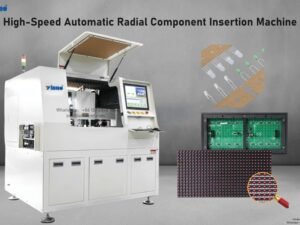
ال PCB Eyelet Press Insertion Machine features a pneumatically assisted press mechanism that delivers stable insertion force across extended production cycles. The press head accommodates multiple eyelet sizes through a quick-change tooling system, allowing rapid switching between eyelet specifications. Each insertion cycle is monitored by a closed-loop force sensor that verifies the eyelet is fully seated and properly flared against the board surface, preventing incomplete insertions that could compromise electrical continuity in through-hole assemblies.
The feeding mechanism utilizes a vibration bowl sorter combined with a linear track delivery system, ensuring a continuous supply of eyelets to the insertion station without interruptions. Board clamping fixtures hold panels firmly during pressing, eliminating movement-induced offset errors. The control system stores insertion profiles for frequently produced board types, reducing setup time for recurring orders. Real-time counters and shift reports provide operators with visibility into output volume, insertion yield, and defect rates, supporting data-driven quality management.
Consistent eyelet seating reduces the risk of connection failures in environments subject to vibration, thermal cycling, and mechanical stress. The automated pressing process minimizes operator-dependent quality variation, making it suitable for manufacturers handling diverse specifications. With a design focused on uptime and low maintenance, the PCB Eyelet Press Insertion Machine supports continuous production without sacrificing insertion accuracy. For manufacturers seeking to improve through-hole assembly throughput, this machine addresses the mechanical challenges of eyelet installation on circuit boards.

PCB Eyelet Press Insertion Machine
How the PCB Eyelet Press Insertion Machine Mounts Rivets on PCB Boards
The rivet-to-PCB insertion cycle begins when a rivet exits the vibratory feed track and drops into the press head collet, which grips the body and aligns it coaxially with the press ram. The PCB is secured by a pneumatic hold-down fixture preventing lateral movement during the downward stroke. The ram engages, pushing the rivet through the pre-drilled aperture at a controlled velocity. Once the rivet head contacts the board surface, the ram continues with increased force to ensure full shank penetration. The lower die captures the rivet tail and forms a controlled flare that expands the barrel beyond the hole dimension, creating a mechanical lock that resists pull-out forces during thermal cycling and vibration.
Press force, ram speed, flare depth, and dwell duration are independently programmable parameters, allowing the machine to be tuned for specific rivet-and-board combinations without mechanical modification. The force monitoring subsystem samples continuously throughout the press stroke, generating a force-versus-displacement signature for each rivet. This data enables the machine to detect partial insertions, missing rivets, and board delamination in real time, segregating affected units before they enter soldering. The multi-rivet magazine supports sequential insertion of different rivet sizes within a single board program without tooling pauses.
The commercial advantage of automating PCB Eyelet Press Insertion Machine with this level of process control is a measurable increase in assembly yield and a decrease in warranty-related field failures. Manual rivet installation introduces force variability that operator training cannot fully eliminate. This PCB Eyelet Press Insertion Machine delivers deterministic insertion outcomes, where each riveted joint is verified by instrumented data rather than visual inspection alone. For facilities running high-mix through-hole assemblies, the PCB Eyelet Press Insertion Machine’s fast setup and programmable force profiles reduce changeover downtime, while sustained insertion accuracy lowers per-unit manufacturing cost across all batch sizes.
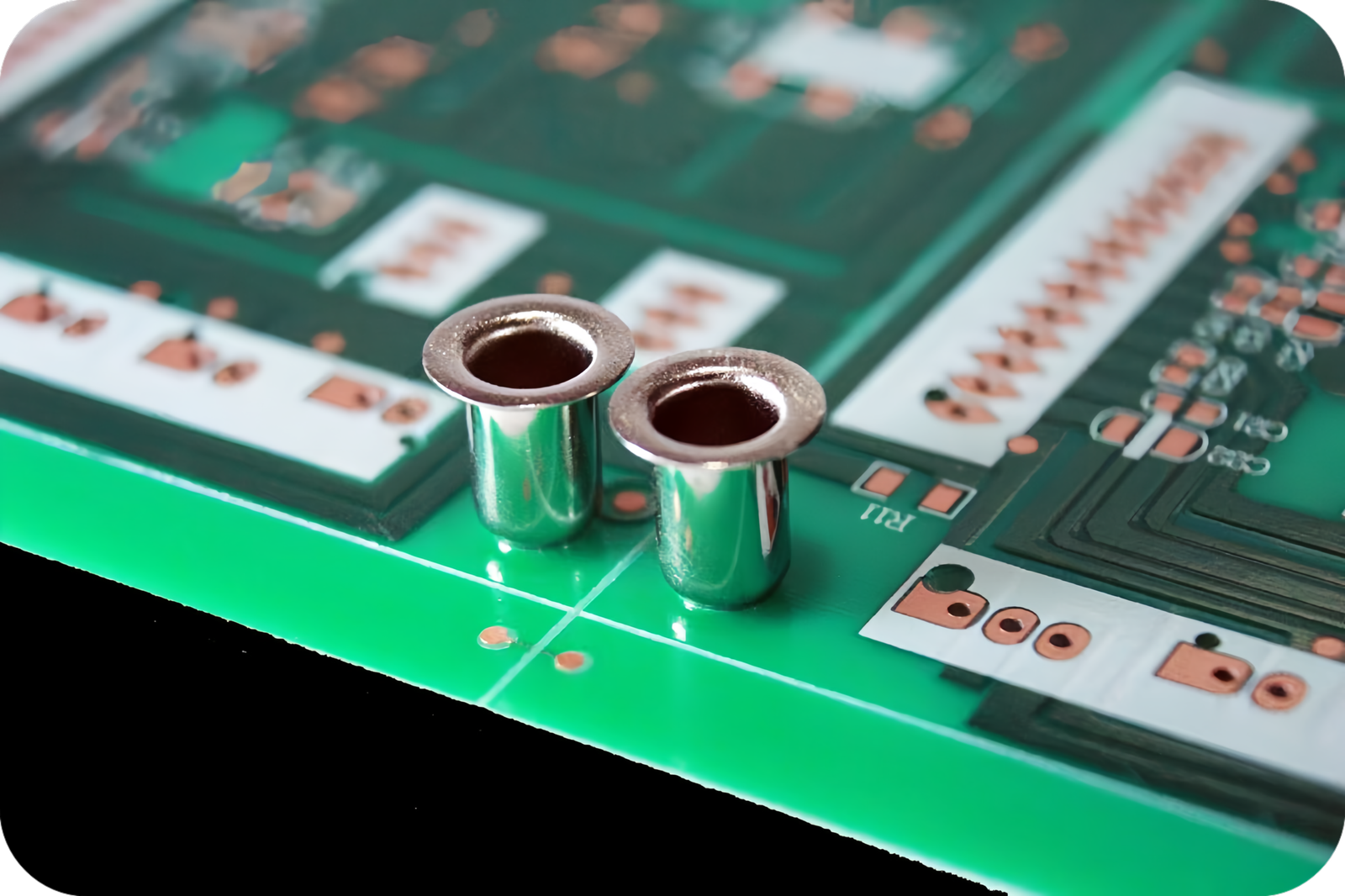
Rivet Component
تحديد
| نموذج | YT-7000 |
| الأبعاد الإجمالية | 2080 مم (طول) × 1230 مم (عرض) × 1600 مم (ارتفاع) |
| وزن | 1,000 كجم |
| الهواء | 6±0.5 كجم/سم² (استهلاك الهواء: 656 نيوتن/دقيقة) |
| قوة | تيار متردد 220 فولت، أحادي الطور 50/60 هرتز، 1.4 كيلوواط |
| الضوضاء | 80 ديسيبل |
| Operating Environment | 5-40 ميكرو |
| الرطوبة | 10-90%RH (يمكن استخدامه شريطة عدم وجود حبيبات بلورية في الهواء) |
| متطلبات البيئة المحيطة | لا توجد غازات تآكلية |
| البعد الحركي لمنضدة العمل | X680 مم، Y370 مم متعدد الاتجاهات؛ X580 مم، Y370 مم ثنائي الاتجاه |
| سرعة حركة طاولة العمل | 22.5 م/دقيقة |
| لوحة الدوائر الكهربائية (PCB) | 490×350 كحد أقصى |
| سرعة التوصيل | 200 قطعة/دقيقة |
| المدة اللازمة لتركيب لوحة الدوائر الكهربائية | 4 ثوانٍ |
| تم إدراج المكون | المسامير العادية مقاس 1.6-3.5 مم، والمسامير الطويلة، ومسامير «لاسي ريفيت» |
| عدد المقابس | 3 رؤوس |
| وضع تصحيح الثقوب | حسب نظام الزوايا الخاص بالآلة |
| نظام التحكم الحاسوبي | نظام التشغيل ويندوز |
| نظام العرض | شاشة LCD ملونة مقاس 17 بوصة |
| نظام التغذية | نظام تغذية كبير يعمل بالاهتزاز |
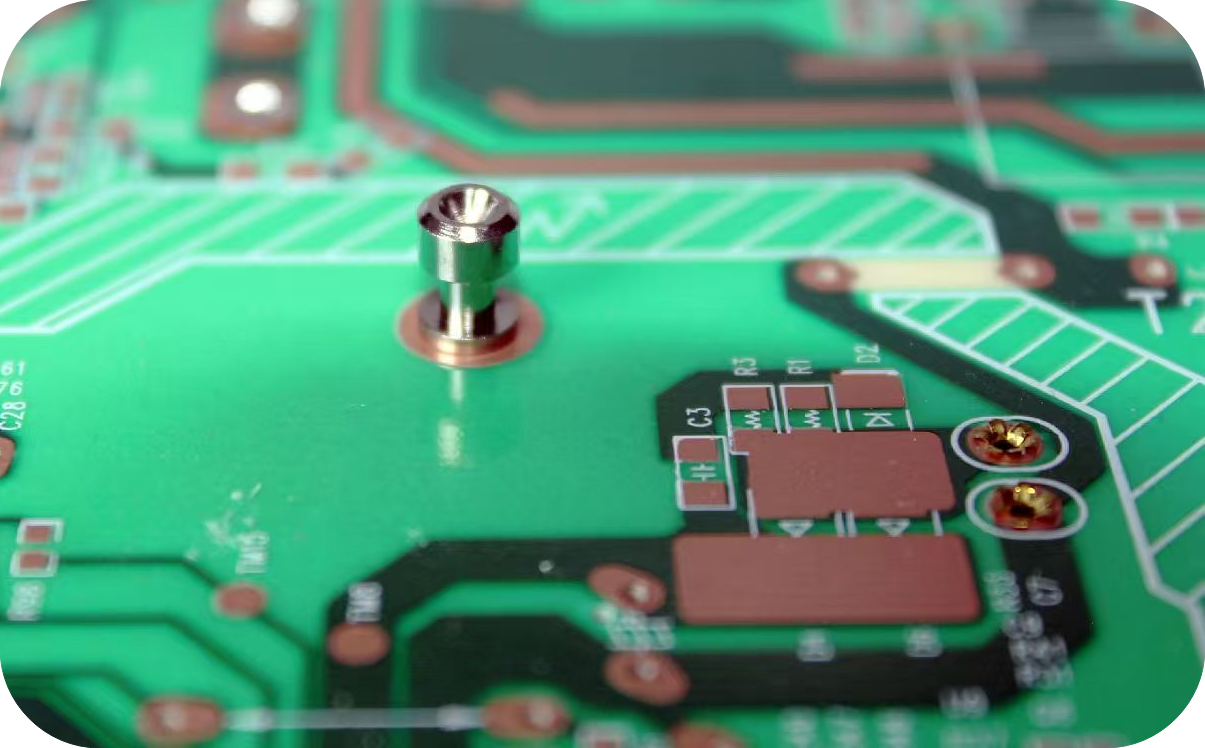
Rivet Component
https://www.youtube.com/@allaismt
For more information about the PCB Eyelet Press Insertion Machine, يرجى إرسال بريد إلكتروني إلى
سنرد على استفسارك على الفور وسنزودك بمعلومات مفصلة حول منتجاتنا وخدماتنا.