

Bevezetés
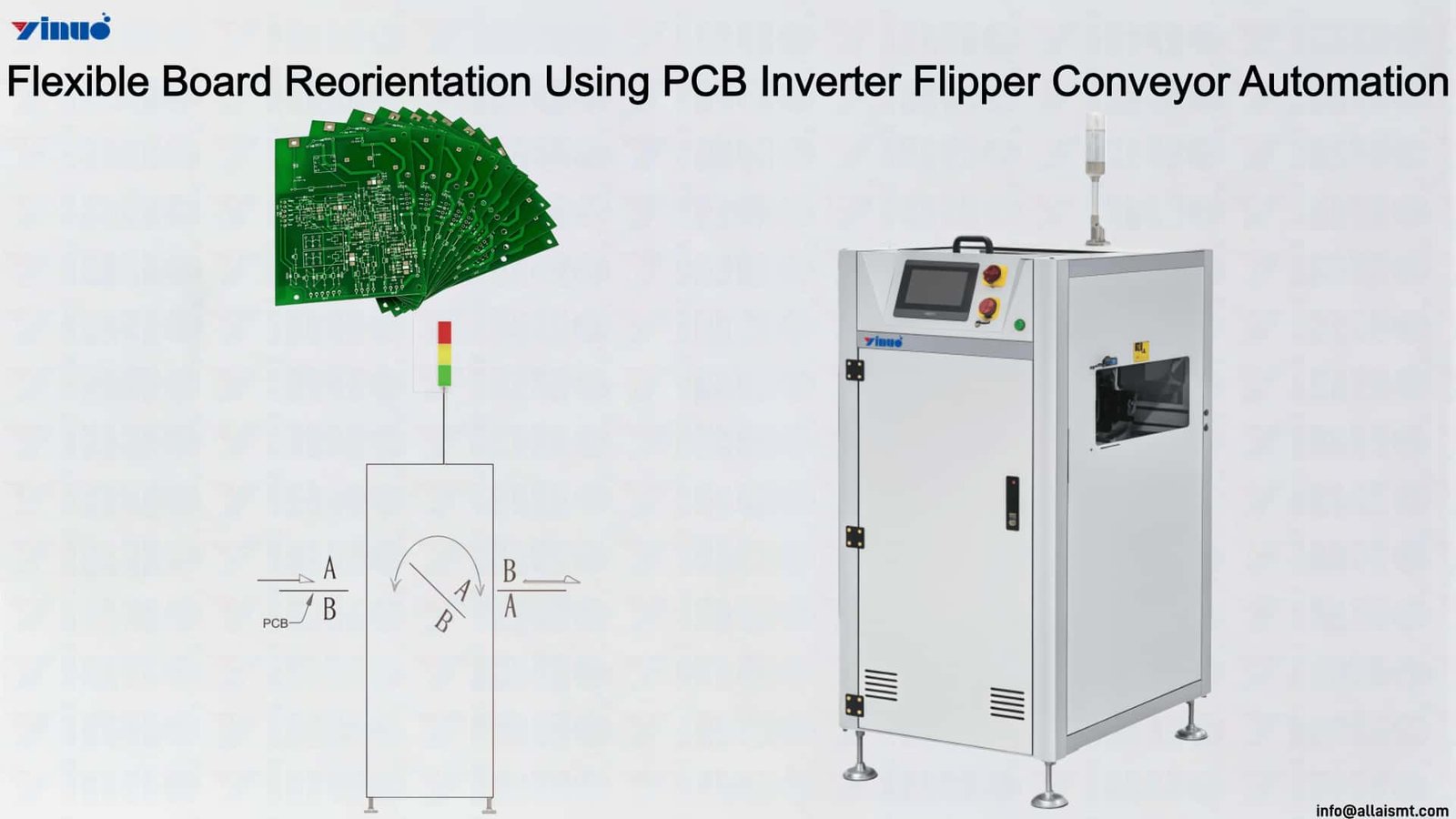
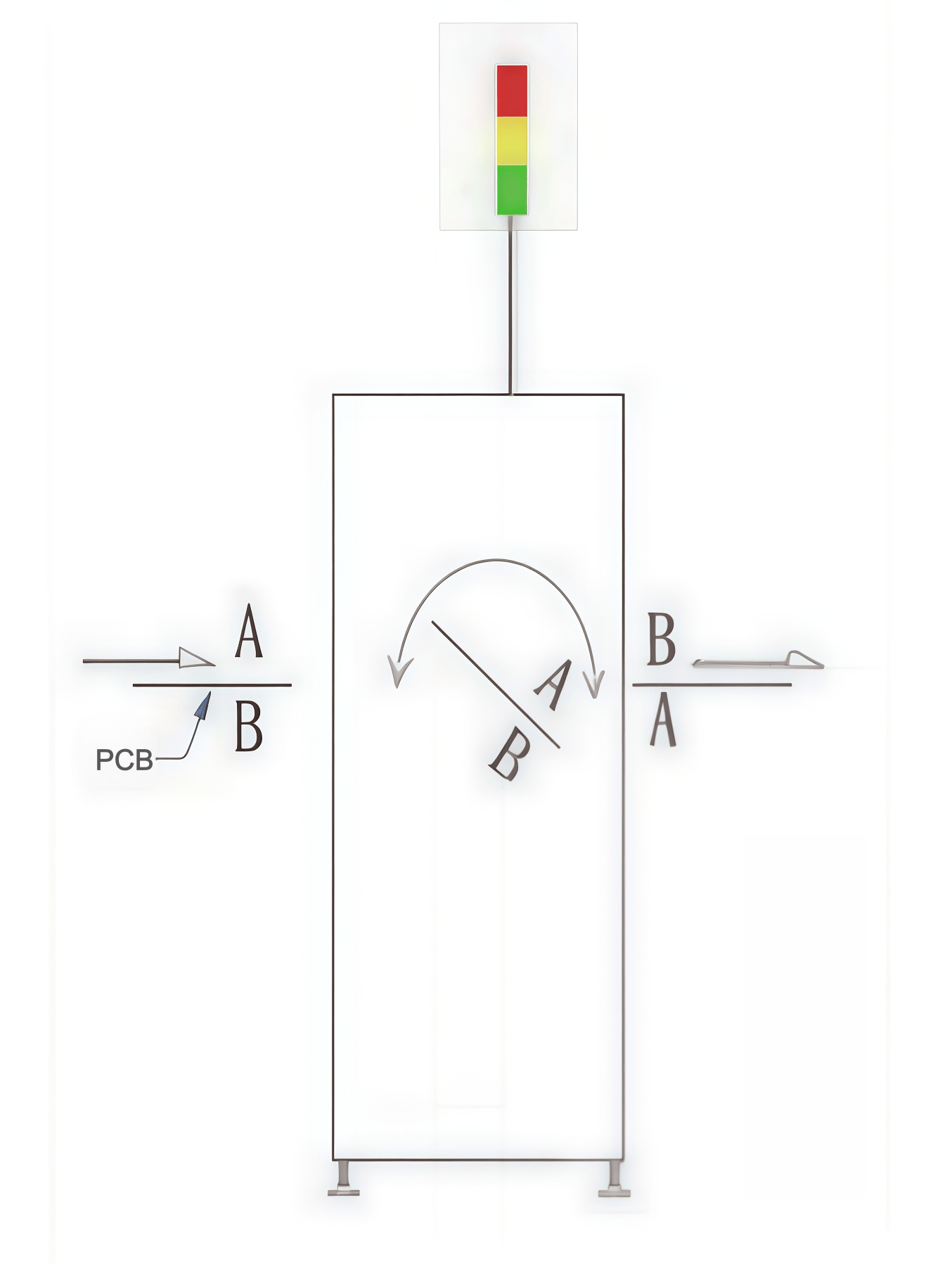
A PCB Inverter Flipper Conveyor provides an automated method of changing PCB orientation when manufacturing requires access to both sides of a circuit board. Its 180-degree inversion function allows the board to continue along the production route with the opposite surface facing upward, supporting double-sided assembly sequences without requiring operators to turn each board manually. PLC control governs the machine’s operating logic, while the turning assembly manages the mechanical movement involved in transferring a PCB from its incoming orientation to its outgoing position. YF-350 and YF-460 model options provide alternatives for different board-size requirements.
Mechanical coordination determines how effectively an inverter handles each PCB. The machine positions the incoming board, carries it through the programmed turning movement, and returns it to the conveyor rails for the next transfer. Sensor feedback helps establish the board’s position during the operating cycle, while selectable pass-through, inversion, and reverse-inversion functions allow operators to configure the equipment for different routing needs. With an approximate ten-second cycle under specified operating conditions, the unit can serve as an intermediate handling station in SMT lines where board orientation must change between processes.
The control and maintenance features further contribute to practical factory operation. A touchscreen gives operators access to machine commands and status information, while the enclosed body and torque-limiting protection help manage risks associated with moving mechanical parts. The top-cover access arrangement allows technicians to reach internal components for inspection and servicing. Screw-driven rail adjustment helps preserve parallel alignment when changing conveyor width, reducing the likelihood of board-transfer problems caused by uneven rail positioning. SMEMA communication enables coordination with compatible loaders, solder paste printers, placement machines, reflow ovens, AOI inspection equipment, and unloaders, making the PCB Inverter Flipper Conveyor a functional component of automated SMT production systems.
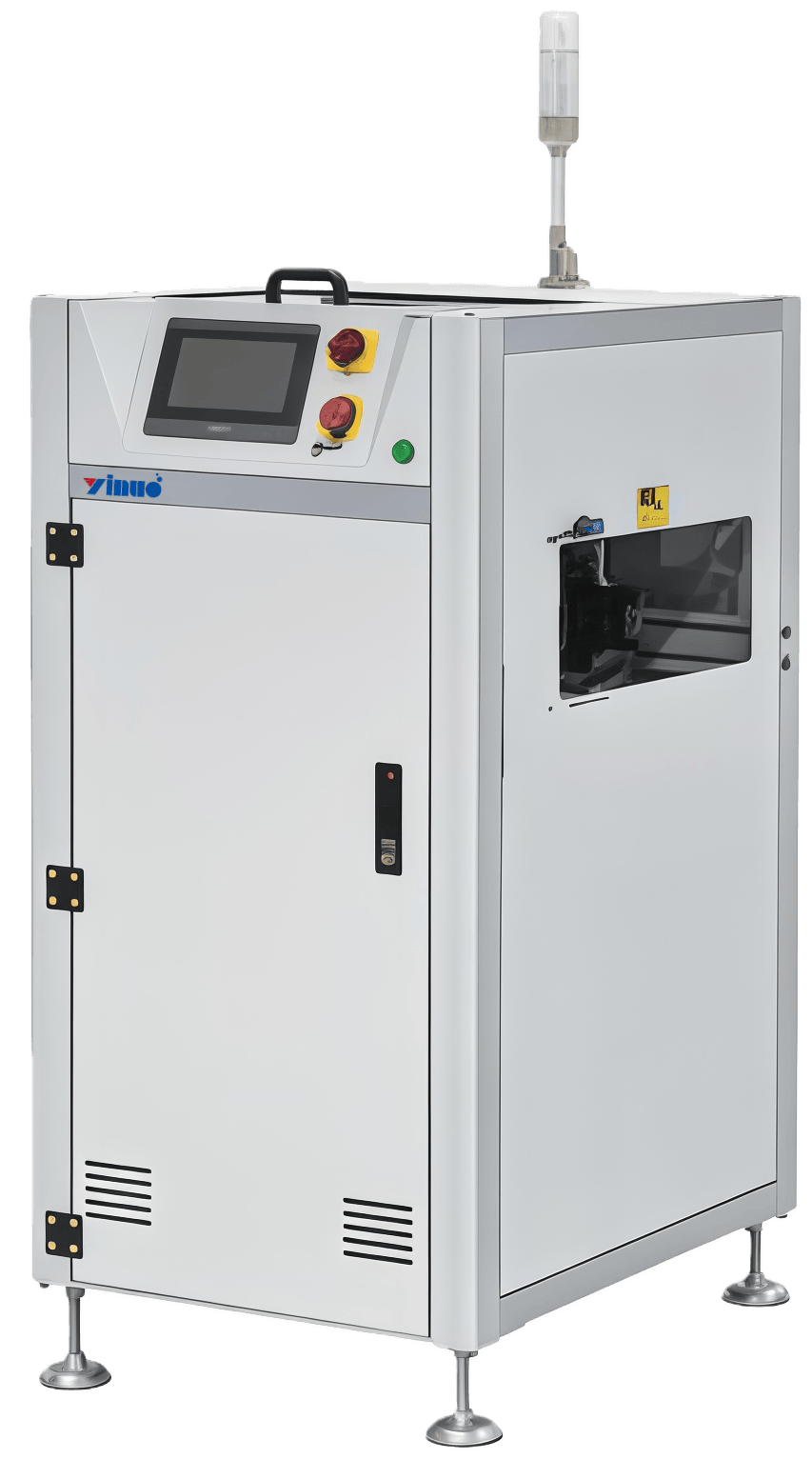
PCB Inverter Flipper Conveyor
Automotive Power Electronics Assembly with PCB Inverter Flipper Conveyor and Automated SMT Handling
Automotive power electronics manufacturers produce circuit boards for battery management systems, onboard chargers, DC-DC converters, and electric vehicle motor controllers. Depending on the electrical architecture, these assemblies may contain control circuits, sensing components, communication interfaces, and power-management devices distributed across both PCB surfaces. The PCB Inverter Flipper Conveyor helps accommodate these manufacturing requirements by turning the board through 180 degrees between designated SMT processes. Once the first surface has completed its assigned assembly stages, the machine reorients the PCB so that the opposite side can proceed through the next production sequence.
Power electronics boards often differ in mass distribution and component placement, making controlled handling important during inversion. The conveyor’s turning assembly carries the board through a defined rotational path, while its positioning system helps coordinate the movement before the PCB returns to the transfer rails. Operators can select the appropriate operating mode according to the board route, including standard inversion or pass-through when turning is unnecessary. For factories producing several types of automotive power-control assemblies, this flexibility helps accommodate different process requirements without relying entirely on manual board repositioning.
The machine also contributes to coordination across the wider manufacturing line. SMEMA-compatible communication supports signal exchange with connected equipment, including placement machines, reflow ovens, inspection stations, and transfer conveyors. Adjustable rail spacing allows the system to accommodate supported board widths, while touchscreen controls provide access to operating status and mode selection. The protective enclosure and torque-limiting mechanism help manage mechanical risks during operation. In electric vehicle electronics production, the PCB Inverter Flipper Conveyor therefore serves as a functional link between assembly stages that require different PCB surface orientations.
Specifikációk
| Modell | YF-350 | YF-460 |
| Méret (mm) | 500*725*1250 | 600*856*1250 |
| PCB Size(mm) | 50*50-445*350 | 50*50-550*460 |
| Cycle Time | Approx. 10 seconds | |
| Belt Type | Oblate Belt | |
| Tápegység | AC 1P 110V/220V; Max 150VA | |
| Air pressure | 4-6bar, 1.1 ltr/min Max | |
| Transport Height | 900±20mm(or customized) | |
| Transport Direction | From left to right or right to left | |
| Weight(KG) | 120 | 160 |
FQA
1.Q:What is the rotation angle of a PCB Inverter Flipper Conveyor?
A:It typically rotates the PCB by 180 degrees to change the upward-facing surface.
2.Q:Does a PCB Inverter Flipper Conveyor use PLC control?
A:Many models use PLC control to manage rotation sequences and operating modes.
3.Q:What is the typical cycle time of a PCB Inverter Flipper Conveyor?
A:Certain configurations have an approximate cycle time of 10 seconds, depending on operating conditions.
4.Q:Can it connect to an AOI inspection machine?
A:Yes. It can be installed near compatible AOI equipment when board orientation changes are required.
5.Q:Is a PCB Inverter Flipper Conveyor easy to maintain?
A:Accessible internal components and routine inspection procedures can simplify maintenance, depending on the machine design.
Yinuo Electronics Co., Limited specializes in SMT and PCB assembly equipment, offering a range of solutions for electronics manufacturing. Our product portfolio supports different stages of the production process, helping manufacturers select suitable equipment for their operational needs. We are committed to providing practical products and professional assistance to customers worldwide.
Our website is: www.esmte.com | Contact email: info@allaismt.com | Video channel: https://www.youtube.com/@allaismt/videos | WhatsApp: +8613760481664