


Bevezetés
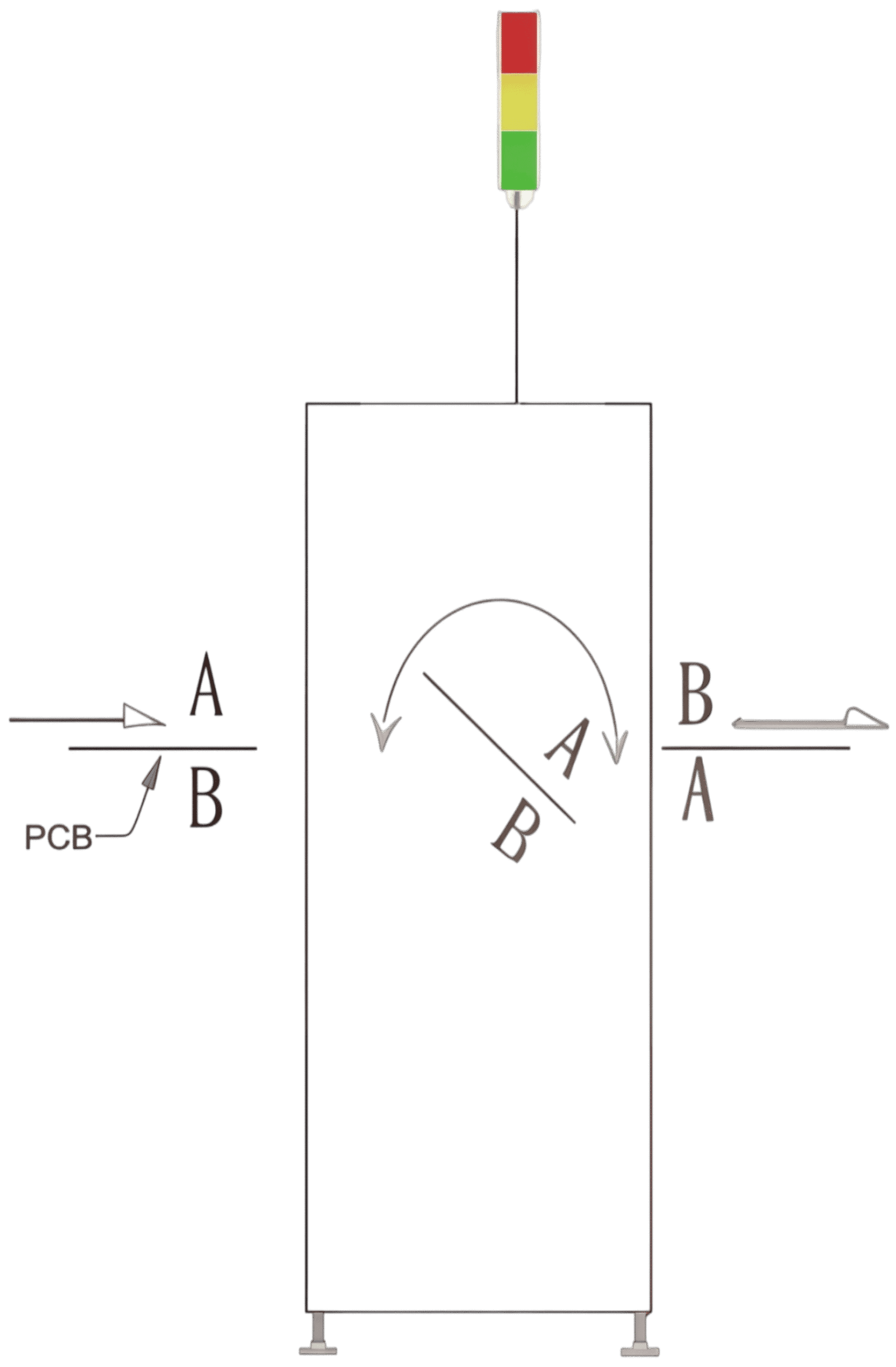
A PCB Flipping Conveyor influences how an SMT line manages orientation changes across different product recipes. When a factory switches from one controller board to another, the required board-facing direction may change according to the placement sequence, inspection arrangement, or downstream machine configuration. The conveyor introduces a dedicated inversion stage into this production logic, allowing a PCB to change orientation by 180 degrees before continuing along the line. With Yinuo’s PCB handling solutions, the inversion operation becomes a defined part of the equipment sequence rather than an additional task assigned to production personnel. This is particularly relevant to factories processing multiple board designs on shared assembly lines.
The relationship between the inversion mechanism and the board’s center of gravity also deserves attention. As components are mounted on different areas of a PCB, weight distribution can become uneven, especially on assemblies carrying transformers, shielding structures, or large connectors. These characteristics may influence how the board should be supported and how its movement should be evaluated during commissioning. Engineers should test representative assemblies rather than validate the equipment exclusively with empty panels. PCB dimensions, component distribution, edge clearance, and the permitted support areas all contribute to determining whether a selected machine configuration is suitable for the intended application.
Production flexibility must ultimately be evaluated against measurable operating requirements. Yinuo’s YF-350 and YF-460 models provide options for different board-handling envelopes, with an approximate 10-second operating cycle under applicable conditions. PLC control and touchscreen operation provide access to the machine’s configured handling functions, while sensor feedback supports the programmed sequence. For factories planning recipe changes or introducing new PCB models, the relevant selection criteria are the supported board dimensions, verified handling compatibility across product variants, and the ability to maintain the required orientation at the next production station.
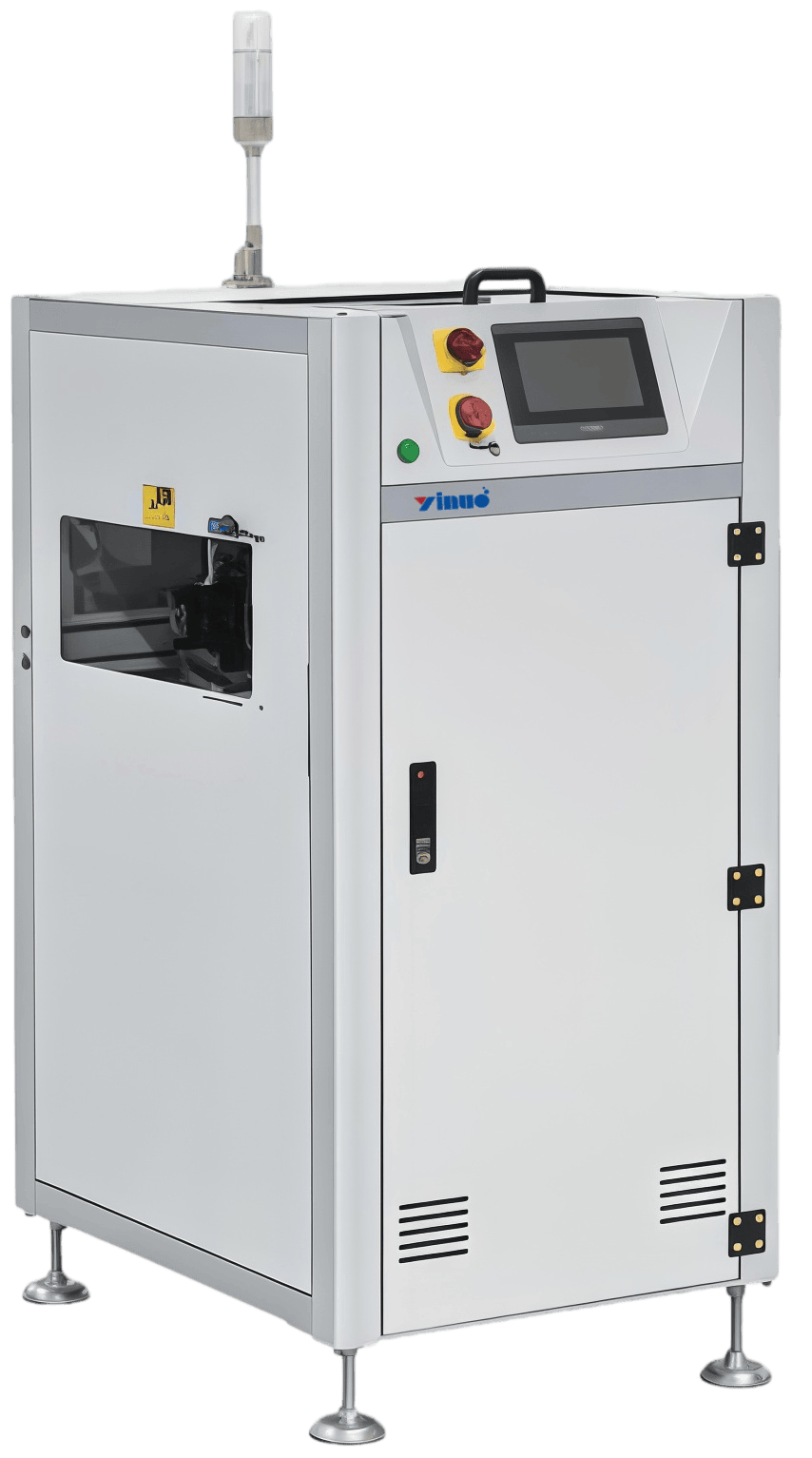
PCB Flipping Conveyor
Yinuo PCB Flipping Conveyor for Industrial Control Electronics Assembly
In an industrial electronics factory, a PCB Flipping Conveyor can be used as a transition station in the production of PLC control boards for machinery and factory automation systems. Following solder paste printing, component placement, and reflow soldering on the first side, the populated PCB moves onto the flipping conveyor. The machine performs a 180-degree inversion so that the opposite surface faces upward before the board enters the next assembly stage. Positioning the inverter between these operations allows the production line to maintain a defined sequence while reducing dependence on manual board repositioning.
Industrial sensor and measurement equipment offers another use case. Signal conditioning boards, data acquisition modules, and monitoring controllers may contain components on both sides of the substrate. After the first-side assembly process, the PCB Flipping Conveyor can reposition the board before it reaches a second-side placement station or an inspection point requiring underside access. Because these assemblies can include delicate connectors and components extending beyond the PCB surface, the line integrator must verify the permitted board envelope and mechanical clearance before production begins. The actual board configuration, rather than the product category alone, determines whether the equipment is suitable.
A third application involves industrial power supply and energy monitoring electronics. Circuit boards used in power distribution monitors, charging controllers, and DC-DC conversion systems may require a specific surface orientation at different stages of assembly and inspection. The conveyor provides the mechanical inversion needed to present the required side to the next machine. PLC-based sequencing, sensor feedback, and touchscreen operation help coordinate the handling cycle, while compatible SMEMA communication can support transfer coordination with neighboring SMT equipment.
Yinuo supplies YF-350 and YF-460 models for PCB inversion applications, with an approximate 10-second cycle under applicable operating conditions. Industrial manufacturers should evaluate the system by checking three points: whether the populated board fits the inversion mechanism, whether the next station can receive the board in the required orientation, and whether the handling cycle fits the line’s planned production rate.
Specifikációk
| Modell | YF-350 | YF-460 |
| Méret (mm) | 500*725*1250 | 600*856*1250 |
| PCB Size(mm) | 50*50-445*350 | 50*50-550*460 |
| Cycle Time | Approx. 10 seconds | |
| Belt Type | Oblate Belt | |
| Tápegység | AC 1P 110V/220V; Max 150VA | |
| Air pressure | 4-6bar, 1.1 ltr/min Max | |
| Transport Height | 900±20mm(or customized) | |
| Transport Direction | From left to right or right to left | |
| Weight(KG) | 120 | 160 |

FQA
1.Q:What is the main function of a PCB Flipping Conveyor?
A:It automatically inverts a PCB by 180 degrees to change its facing direction.
2.Q:Can a PCB Flipping Conveyor handle populated circuit boards?
A:Yes, provided the board dimensions and component clearances meet the machine’s specifications.
3.Q:Which industries use PCB Flipping Conveyors?
A:Industrial electronics, automotive electronics, consumer electronics, and LED manufacturing.
4.Q:Is the conveyor suitable for mixed PCB production?
A:It can be used for different PCB models when their dimensions and handling requirements are compatible.
5.Q:How can manufacturers choose between the YF-350 and YF-460?
A:Compare the supported PCB dimensions and operating requirements with the specifications of each model.
Yinuo Electronics Co., Limited specializes in SMT and PCB assembly equipment, offering a range of solutions for electronics manufacturing. Our product portfolio supports different stages of the production process, helping manufacturers select suitable equipment for their operational needs. We are committed to providing practical products and professional assistance to customers worldwide.
Our website is: www.esmte.com | Contact email: info@allaismt.com | Video channel: https://www.youtube.com/@allaismt/videos | WhatsApp: +8613760481664