Introducción
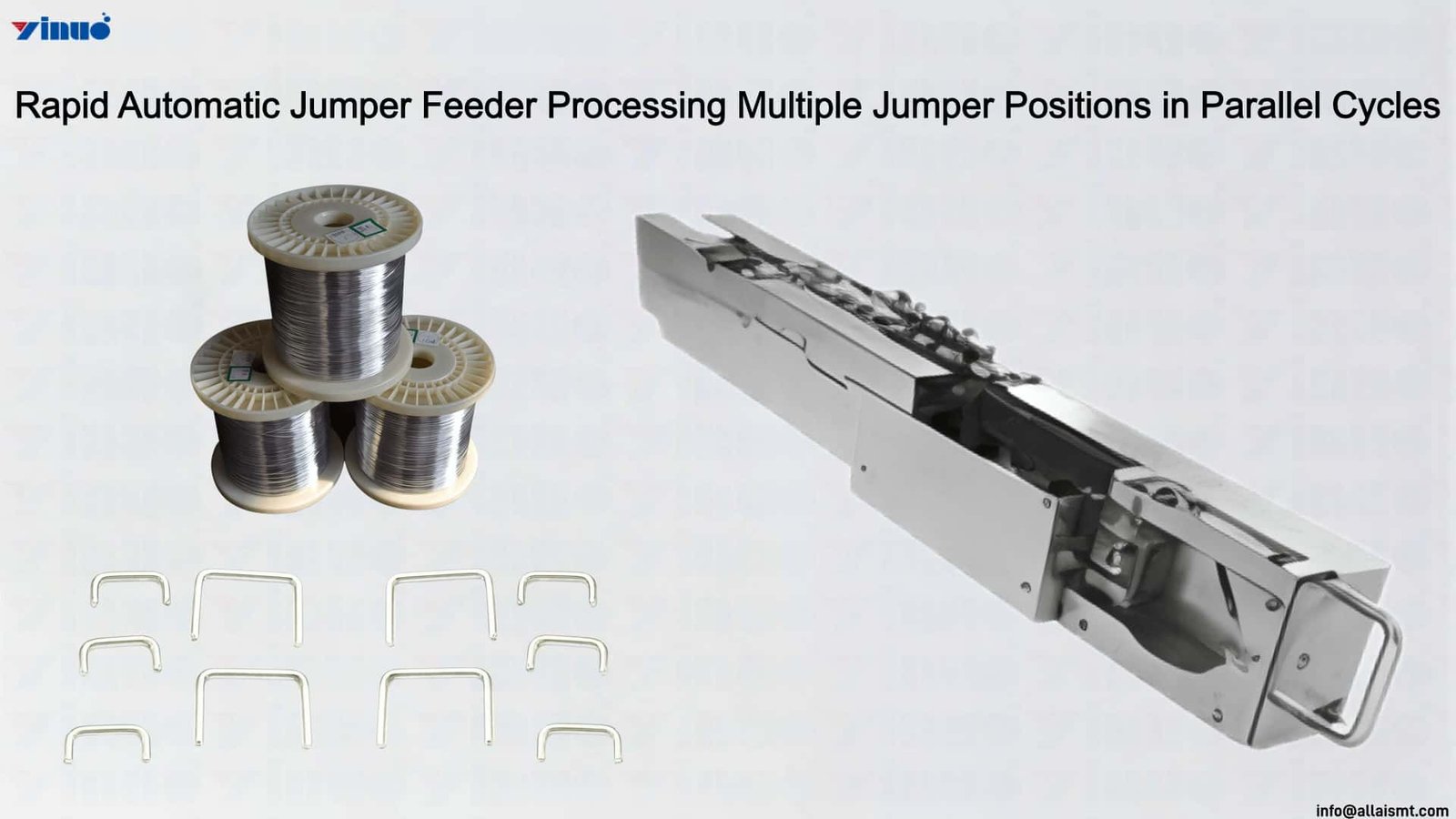
El Alimentador automático de puentes transforms what was once a labor-intensive PCB assembly step into a fully automated, high-throughput process. By taking over the manual feeding of jumper wires, the machine handles continuous spools of jumper material — cutting, stripping, forming, and inserting each wire in rapid sequence. This uninterrupted workflow keeps pace with the fastest production lines, feeding jumpers directly into designated positions on the board as it moves through the assembly conveyor. The material handling system maintains uniform tension and orientation, preventing the kinks, twists, or off-angle insertions that plague manual operations.
What sets this feeder apart is its intelligent coordination with upstream and downstream processes. It reads the PCB layout data to identify jumper locations, then synchronizes its feeding sequence with the solder paste printer and component placer ahead of it, as well as the reflow or wave soldering station behind it. This orchestration ensures that jumper wires arrive at the board at exactly the right moment — after paste deposition but before thermal processing — so they bond securely to the circuit without rework. The feeder adapts to mixed board designs automatically, switching between jumper types without operator intervention.
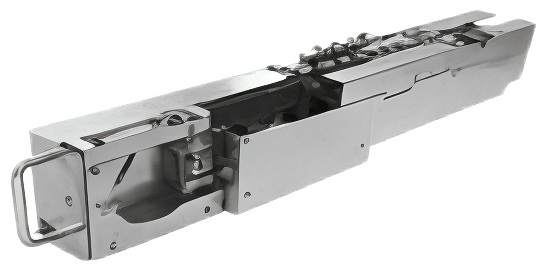
The Automatic Jumper Feeder sustains uninterrupted operation through a dual-spool magazine that loads a fresh jumper material reel while the active spool is still feeding, eliminating downtime for replenishment. Its high-speed cutting and forming head processes each jumper wire independently of the insertion stroke, preparing the next wire while the current one is being placed into the board. The machine’s onboard diagnostics module continuously monitors feed motor torque, cutter edge condition, and insertion force, automatically adjusting operational parameters to maintain consistent output quality throughout extended runs.
Alimentador automático de puentes
Automating Jumper Placement on Continuous-Flow Assembly Lines
In high-volume consumer electronics production — where lines run around the clock and every second of dwell time ripples through quarterly output — the Automatic Jumper Feeder operates as a fully synchronized node within the continuous-flow assembly line. The machine receives board panels directly from the upstream solder paste printer, processes every jumper position on the panel in a single pass, and releases completed boards to the downstream reflow oven at the line’s native throughput rate. Its dual-spool magazine swaps empty jumper wire reels automatically mid-production, sustaining uninterrupted feeding across full shifts without operator intervention.
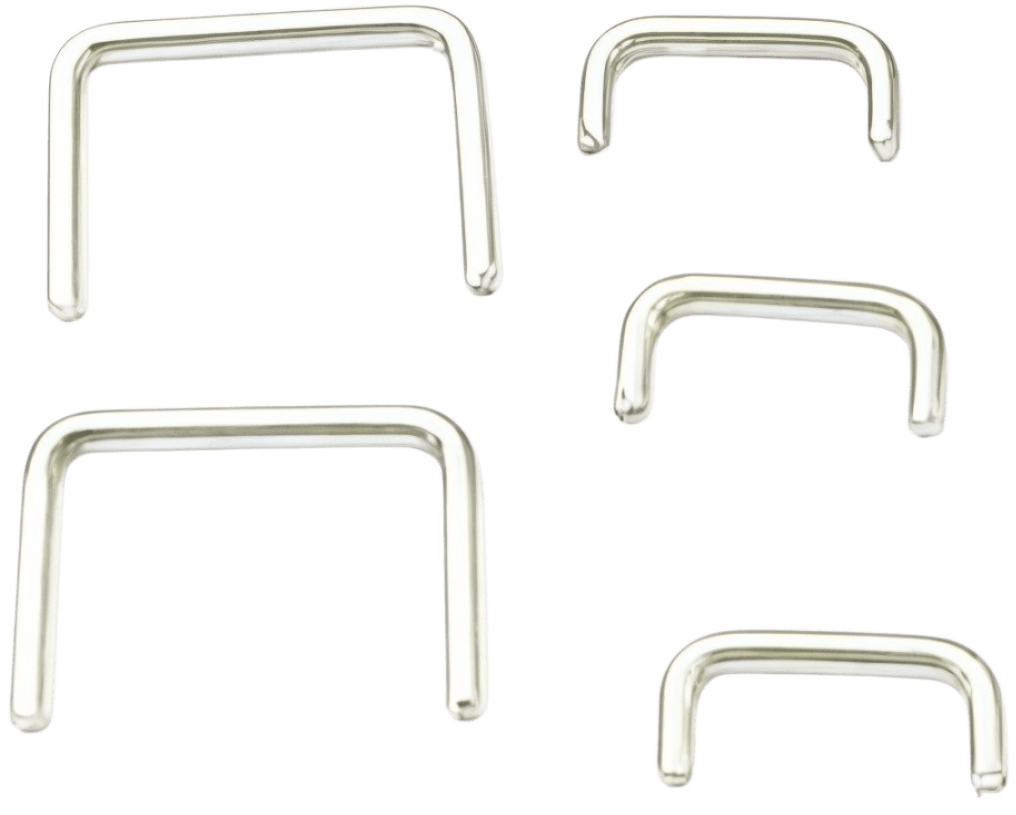
The feeder’s cutting and forming module works on a parallel architecture: while one jumper wire is being inserted into a board position, the next wire is simultaneously cut, stripped, and bent to specification in the preparation chamber. This overlapping cycle eliminates idle head travel and keeps the placement rate consistent regardless of jumper density per board. All jumper forming parameters — wire length, strip length on each end, bend radius, and lead orientation — are driven digitally from the production recipe, ensuring every board in a million-unit run carries jumpers identical in geometry and electrical performance.
Within the factory, the Alimentador automático de puentes removes the last manual dependency from high-speed SMT lines. The machine’s onboard process data recorder timestamps every insertion event, logs insertion force curves, and correlates each jumper to a unique board serial number, building a traceable quality record that satisfies both internal audit requirements and OEM customer compliance standards. For a manufacturing plant producing consumer devices at scale, this level of automation at the jumper placement stage eliminates a residual source of human error and delivers the repeatable output quality that volume buyers demand.

Presupuesto
| Modelo | YN-J2303 | Observaciones |
| Dimensiones (largo × ancho × alto) | 624 × 78 × 160 mm | |
| Peso | 6,5 kg | |
| Operating Voltage | DC 24V | |
| Suministro de aire necesario | None | |
| Corriente máxima | 2,5 A | |
| Feed Speed | 1,5 s/unidad | |
| Panel de operaciones | TFT de 0,96″ Resolución de la pantalla a color: 80 × 160 píxeles |
|
| Tiempo de cambio | 3 min | |
| Canal | Un solo canal | |
| Función de doblado de plomo | Flexión | |
| Función previa a la elevación | Servicio de recogida previa disponible | |
| Función de corte | Límite | |
| Función de corrección | Corrección | |
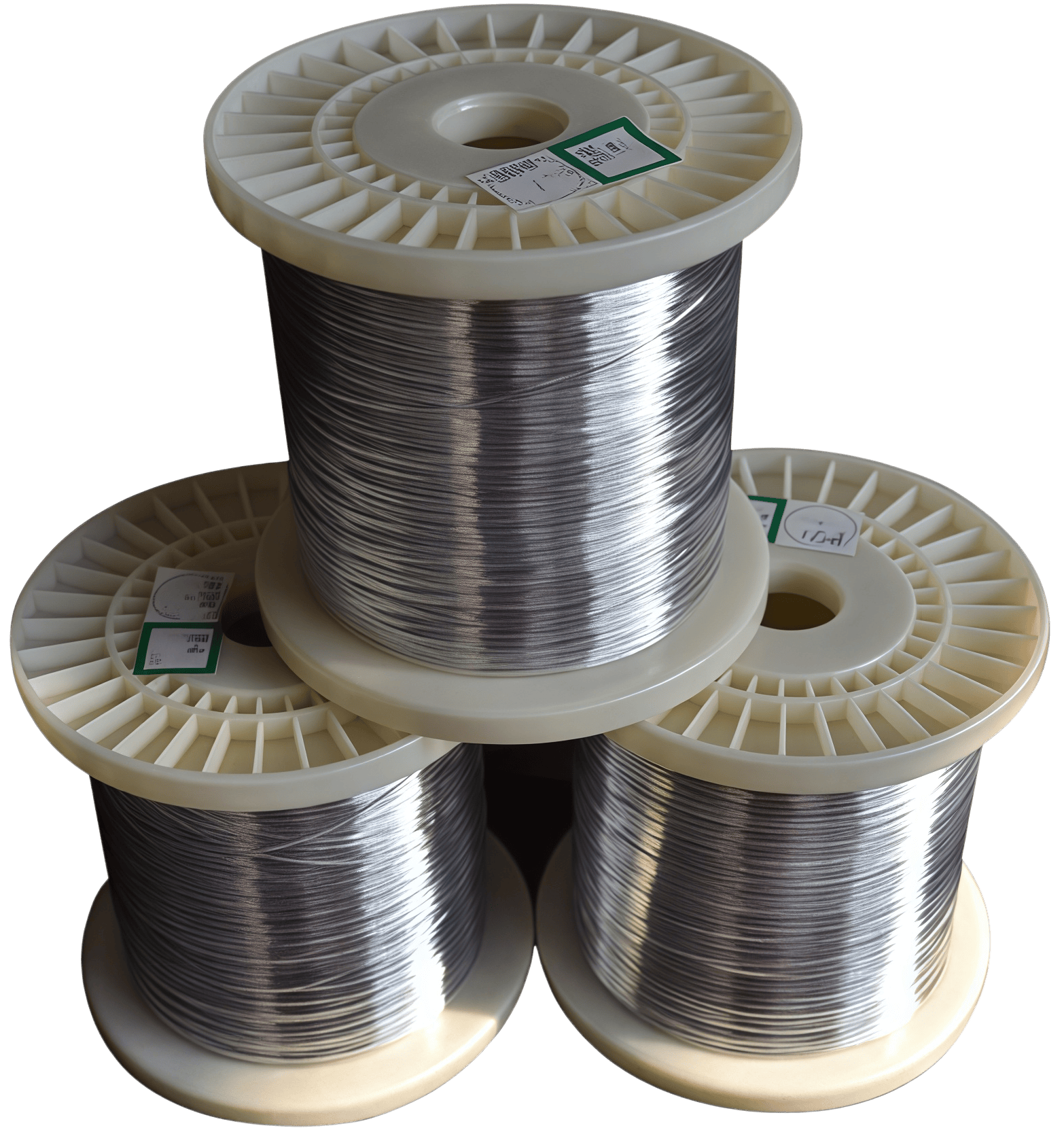
| Diámetro del alambre del material | 0,4–1 mm | No se puede utilizar una matriz de conformado de 0,6 mm para conformar un alambre de 0,4 mm; Solo se puede utilizar una matriz de 0,6 mm para un alambre de 0,6 mm. |
| Distancia entre carriles | 5–26 mm (La matriz de conformado depende del diámetro del alambre) Molde en forma de cruz: 3 tamaños en un solo juego (grande/mediano/pequeño) |
No se puede utilizar la matriz de conformado de 16 mm para un paso de vía de 16 mm; Se debe utilizar una matriz de 16 mm de longitud |
| Longitud del plomo de conformado | 2,0~5,5 mm | Dentro de este rango, solo es posible obtener diferentes longitudes utilizando diferentes matrices de conformado de los tamaños correspondientes |
https://www.youtube.com/@allaismt
For more information about the Alimentador automático de puentes, por favor envíe un correo electrónico a
Responderemos a su consulta a la brevedad y le proporcionaremos información detallada sobre nuestros productos y servicios.