Introducción
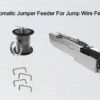
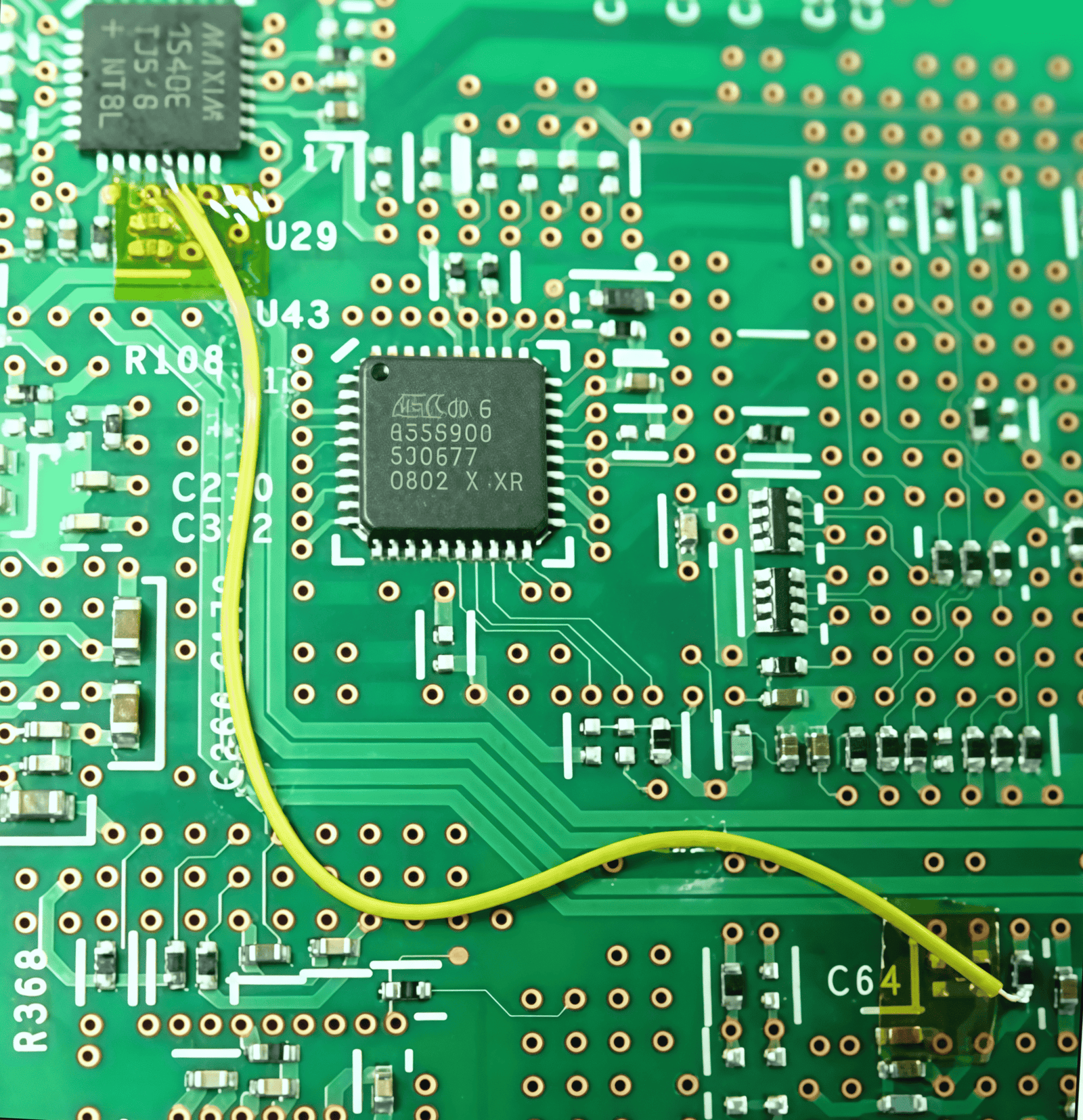
El Alimentador automático de puentes is a wire-handling unit designed for PCB assembly plants that process through-hole boards. It is typically installed alongside automatic insertion equipment in factories producing power supplies, appliance control boards, chargers, and LED drivers, where large numbers of jumper wires must be bridged across single-sided or mixed-technology boards.
In operation, the feeder takes tinned copper wire directly from a reel and completes the entire preparation cycle automatically: the wire is straightened, metered to the programmed length, cut, and formed into a consistent U-shaped jumper ready for insertion. The operator simply loads the reel and sets the wire diameter, cut length, and insertion span through the control panel. Servo-driven feed rollers then deliver the wire at a steady, repeatable rate that matches the rhythm of the insertion head, allowing the line to run continuously without manual wire handling.
This automatic preparation process is where the product’s value becomes visible. Every jumper leaves the feeder with identical leg length and bend geometry, which means stable insertion, uniform solder joints, and far fewer downstream defects. Compared with manual cutting and hand insertion, one feeder can sustain high-volume output around the clock, reduce labor on the line, and keep board quality consistent across entire production shifts.
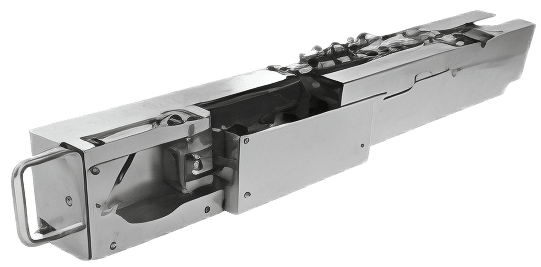
Alimentador automático de puentes
Automatic Jumper Feeder for Regulated Wire Tension Control in Battery Module Assembly
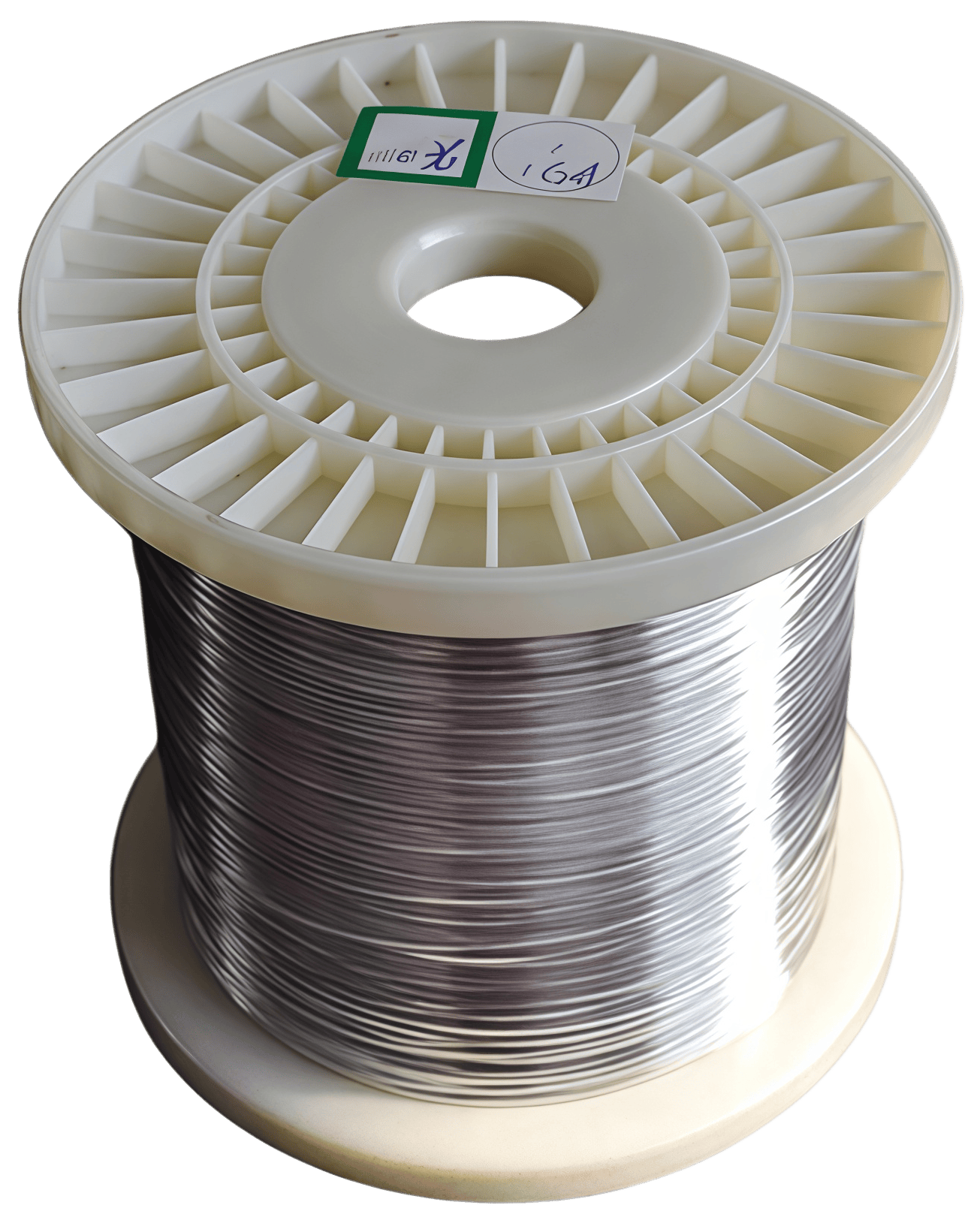
In battery power electronics factories, the Alimentador automático de puentes serves as the primary supply device for preparing interconnect jumper wires that bridge cell terminals and module busbars. The device accepts reeled copper wire as input material, drawing the wire from the reel through a controlled feed path that maintains consistent tension throughout the unwinding process. This regulated material handling is essential in battery manufacturing, where interconnect jumpers must retain uniform conductivity and dimensional integrity to ensure stable power transfer between battery cells and across module assemblies.
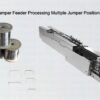
The feeder’s reeled-wire processing capability operates as a continuous, integrated cycle. As wire is pulled from the reel, it is measured to the programmed feed length, cut cleanly at the designated point, and formed into the jumper geometry required by the battery module design. The device then presents each finished jumper to the insertion machine in the correct orientation for automated placement. This uninterrupted reel-to-insertion flow eliminates the staging, pre-cutting, and manual sorting operations that typically interrupt material supply in battery assembly lines, allowing interconnect preparation to keep pace with high-volume module production schedules.
The market value of this reeled-wire feeding capability is particularly pronounced in battery power electronics, where production volume is scaling rapidly to meet energy storage and electric mobility demand. Manufacturers deploying the Automatic Jumper Feeder gain a supply device that converts bulk reeled copper directly into insertion-ready interconnect jumpers without labor-intensive preprocessing. The result is lower material handling cost, reduced wire waste through precise cut-to-length control, and a continuous supply flow that sustains module assembly throughput—capabilities that directly strengthen a battery manufacturer’s competitive position in a capacity-constrained market.

Presupuesto
| Modelo | YN-J2303 | Observaciones |
| Dimensiones (largo × ancho × alto) | 624 × 78 × 160 mm | |
| Peso | 6,5 kg | |
| Operating Voltage | DC 24V | |
| Suministro de aire necesario | None | |
| Corriente máxima | 2,5 A | |
| Feed Speed | 1,5 s/unidad | |
| Panel de operaciones | TFT de 0,96″ Resolución de la pantalla a color: 80 × 160 píxeles |
|
| Tiempo de cambio | 3 min | |
| Canal | Un solo canal | |
| Función de doblado de plomo | Flexión | |
| Función previa a la elevación | Servicio de recogida previa disponible | |
| Función de corte | Límite | |
| Función de corrección | Corrección | |
| Diámetro del alambre del material | 0,4–1 mm | No se puede utilizar una matriz de conformado de 0,6 mm para conformar un alambre de 0,4 mm; Solo se puede utilizar una matriz de 0,6 mm para un alambre de 0,6 mm. |
| Distancia entre carriles | 5–26 mm (La matriz de conformado depende del diámetro del alambre) Molde en forma de cruz: 3 tamaños en un solo juego (grande/mediano/pequeño) |
No se puede utilizar la matriz de conformado de 16 mm para un paso de vía de 16 mm; Se debe utilizar una matriz de 16 mm de longitud |
| Longitud del plomo de conformado | 2,0~5,5 mm | Dentro de este rango, solo es posible obtener diferentes longitudes utilizando diferentes matrices de conformado de los tamaños correspondientes |
https://www.youtube.com/@allaismt
For more information about the Alimentador automático de puentes, por favor envíe un correo electrónico a
Responderemos a su consulta a la brevedad y le proporcionaremos información detallada sobre nuestros productos y servicios.