Einführung
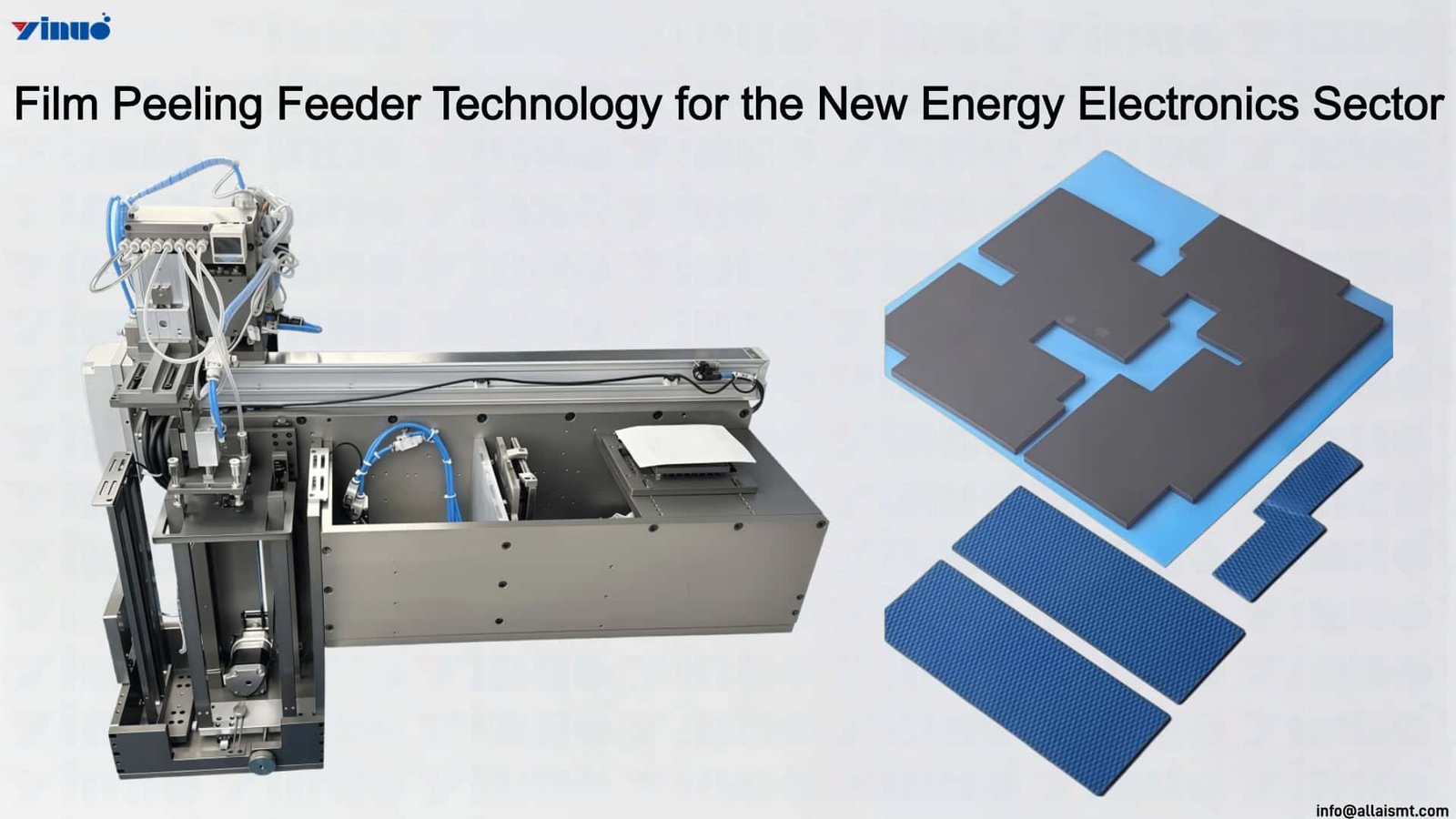
Der Sheet Film Peeling Feeder processes single-row and multi-row die-cut sheet materials — protective films, double-sided adhesives, conductive strips, copper foils, foam pads, and thermal layers — that cannot be supplied in roll format. Flat-sheet input reduces conversion costs and expands auxiliary placement options. A suction pad retrieves each sheet from the cassette and transfers it to the peeling station; the peel mechanism clamps the backing at its reserved margin, and as the carriage moves toward discharge, substrate separation occurs synchronously — the backing peels away while the functional layer advances intact. At discharge, the carriage releases the peeled piece onto a vacuum-anchored carrier stage ready for nozzle pickup.
The synchronized peel-and-transfer motion is the defining engineering element. Because peeling happens during transit rather than at a fixed station, the functional material experiences continuous, controlled separation without pause-induced wrinkles or edge lifts. The ≥10mm minimum backing-margin requirement ensures the peeling clamp grips only non-productive film, leaving the active area untouched. Peel stroke length, transfer velocity, and inter-cycle dwell are recipe-programmable, allowing operators to recalibrate between materials of different tack levels, film rigidities, or backing thicknesses through the recipe interface alone — no hardware swaps required.
Material rigidity is a prerequisite: the functional layer must possess sufficient stiffness to hold its geometry during synchronous peel-and-transfer, preventing flex or curl that would compromise placement accuracy. The mechanism contains few kinematic elements, keeping wear rates low and service intervals long. Platform-standard mounting, recipe-driven adaptability, and vacuum-stage positioning combine to make the Sheet Film Peeling Feeder a self-contained, uptime-reliable platform for die-cut sheet materials that exceed roll-format supply limits.
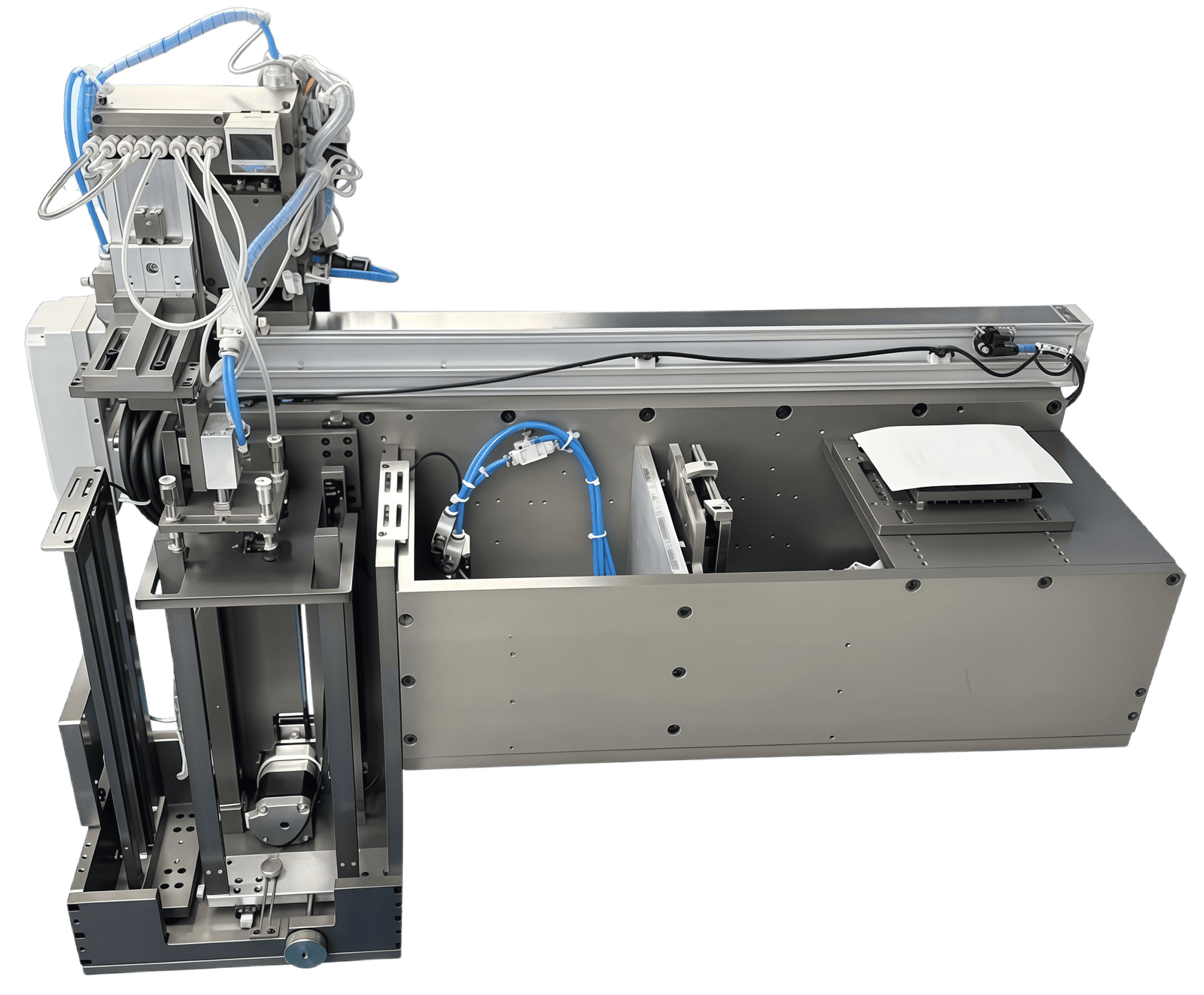
Sheet Film Peeling Feeder
Implementing the Sheet Film Peeling Feeder in Alternative Energy Electronics Assembly
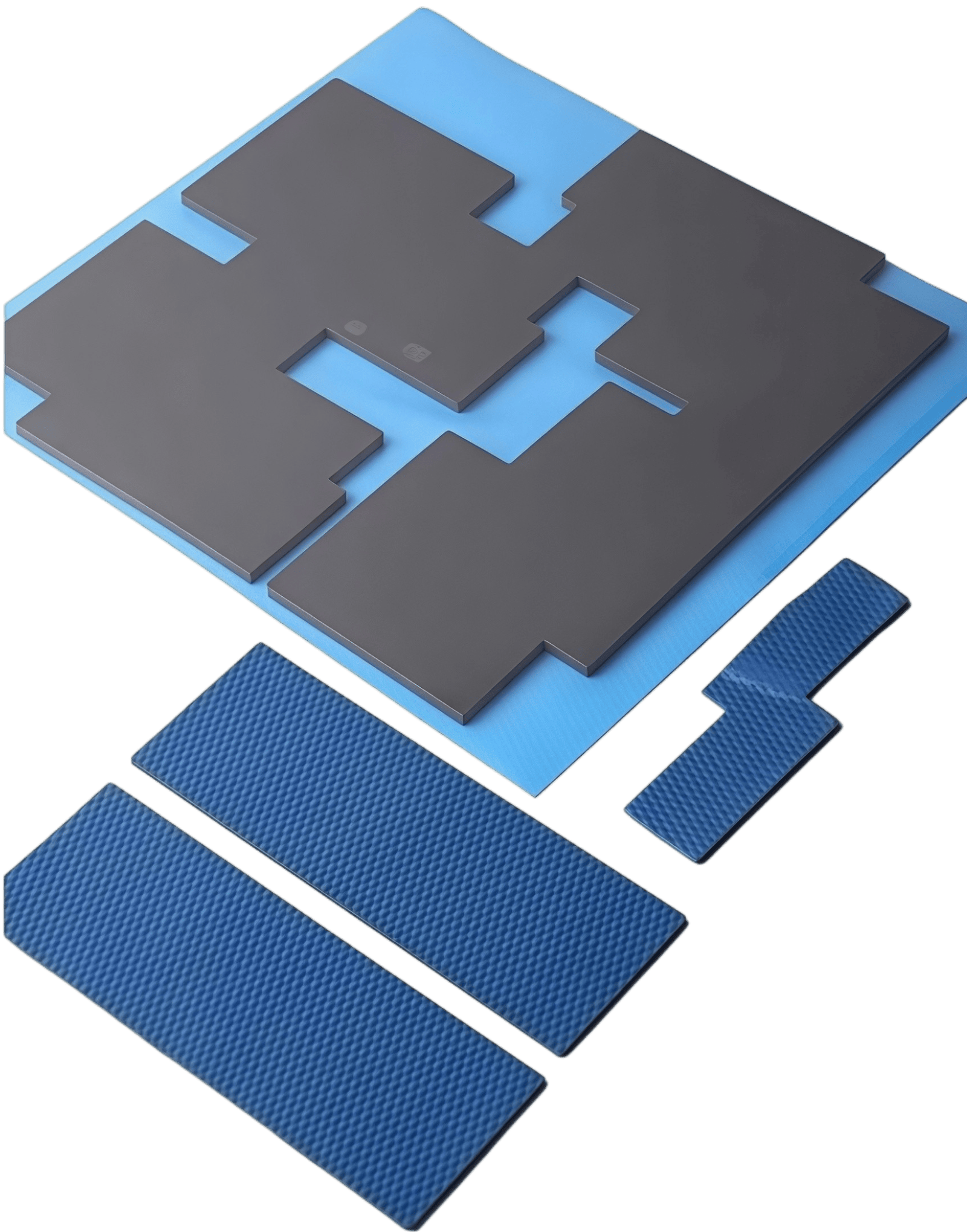
Die-cut sheet auxiliaries — protective films, double-sided adhesive patches, conductive copper foils, EMI shielding strips, foam cushioning pads, and thermal interface layers — arrive in single-row or multi-row flat-sheet formats that resist roll conversion. The Sheet Film Peeling Feeder accepts these materials in their native sheet form, executing a two-stage peel workflow: first the backing film is stripped away, then the functional material is peeled from its remaining carrier for nozzle pickup. This dual-phase approach ensures that each workpiece reaches the extraction point fully separated — backing removed, adhesive exposed, geometry preserved — without manual substrate handling or separate pre-processing stations.
The operational sequence integrates both peel phases into one continuous motion path. A suction cup lifts the sheet from the storage cassette, the transfer carriage moves it to the first peeling station, and the peel clamp engages the reserved backing margin (≥10mm minimum). As the carriage advances toward the discharge position, backing-film separation proceeds synchronously with forward transit — the backing curls away while the sheet continues intact. At discharge, the backing-stripped sheet is placed onto a vacuum-held carrier stage. The second peel phase then separates the functional layer from its carrier base, positioning it at the nozzle extraction point. Material stiffness is essential: the functional layer must resist curl through both stripping stages to maintain flatness at pickup.
The market positioning for manufacturers is straightforward. Flat-sheet input circumvents reel conversion cost and widens the material portfolio. Dual-phase peeling compresses backing removal and material separation into a single automated cycle, eliminating separate pre-peel equipment and manual intervention. One feeder unit consolidates multiple auxiliary-material feeding tasks — reducing capital expenditure, floor-space demand, and spare-part inventory. Mechanically simple, platform-compatible, and recipe-adaptable, the Sheet Film Peeling Feeder delivers the throughput precision and cost efficiency that high-mix production lines require.
Parameter
| Artikel | Parameter | Artikel | Parameter |
| Fütterungsmethode | Auf die Antihaft-Plattform abziehen, dann aufnehmen | Bedienfeld | 3,5-Zoll-TFT-Touchscreen, 480 × 320 Pixel, kapazitiv |
| Component Type | Komponenten aus der Leiste entfernen (an beiden Enden muss ein Freiraum vorhanden sein) |
Zuführgeschwindigkeit | Stufenlose Geschwindigkeitsregelung, max. 100 mm/s |
| Voltage | 24,0 V Gleichstrom | Power Consumption | <20 W |
| Aktuell | 5,0 A MAX | Operating Temperature | -20 bis 65 °C |
| Zuführgenauigkeit | ±0,5 | Luftfeuchtigkeit im Betrieb | 20~90%RH, nicht kondensierend |
| Einstellung der Zuführposition | X: Einstellung der mechanischen Endlage; Y: Softwareanpassung; Z: mechanische Einstellung |
Lagertemperatur | -40 bis 85 °C |
| Luftversorgungsspezifikation | 0,40–0,60 MPa | Luftfeuchtigkeit bei der Lagerung | 10~95% |
| Kommunikationsschnittstelle | GPIO-Typ NPN/PNP | Nutzungsdauer | ≥20.000 Std. (25 °C) |
| Hardware-Kommunikation | GPIO, RS232, TCP/IP | Abmessungen | Gemäß Produktspezifikation |
| Antriebsart | Elektrisch + pneumatisch | Gewicht | Gemäß Produktspezifikation |
https://www.youtube.com/@allaismt
For more information about the Sheet Film Peeling Feeder, Bitte senden Sie eine E-Mail an
Wir werden Ihre Anfrage umgehend beantworten und Ihnen detaillierte Informationen über unsere Produkte und Dienstleistungen zukommen lassen.