
Yinuo PCB Inverting Machine with Flexible Conveyor Configuration and Rail Alignment
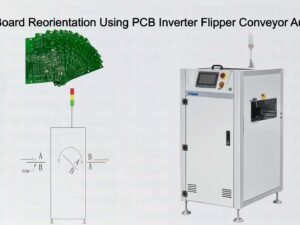
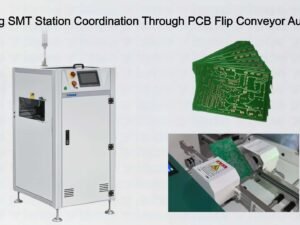
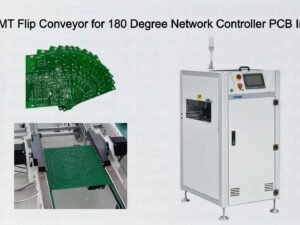
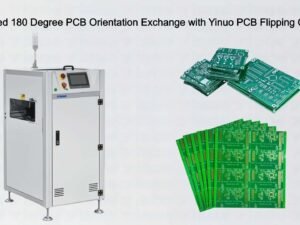
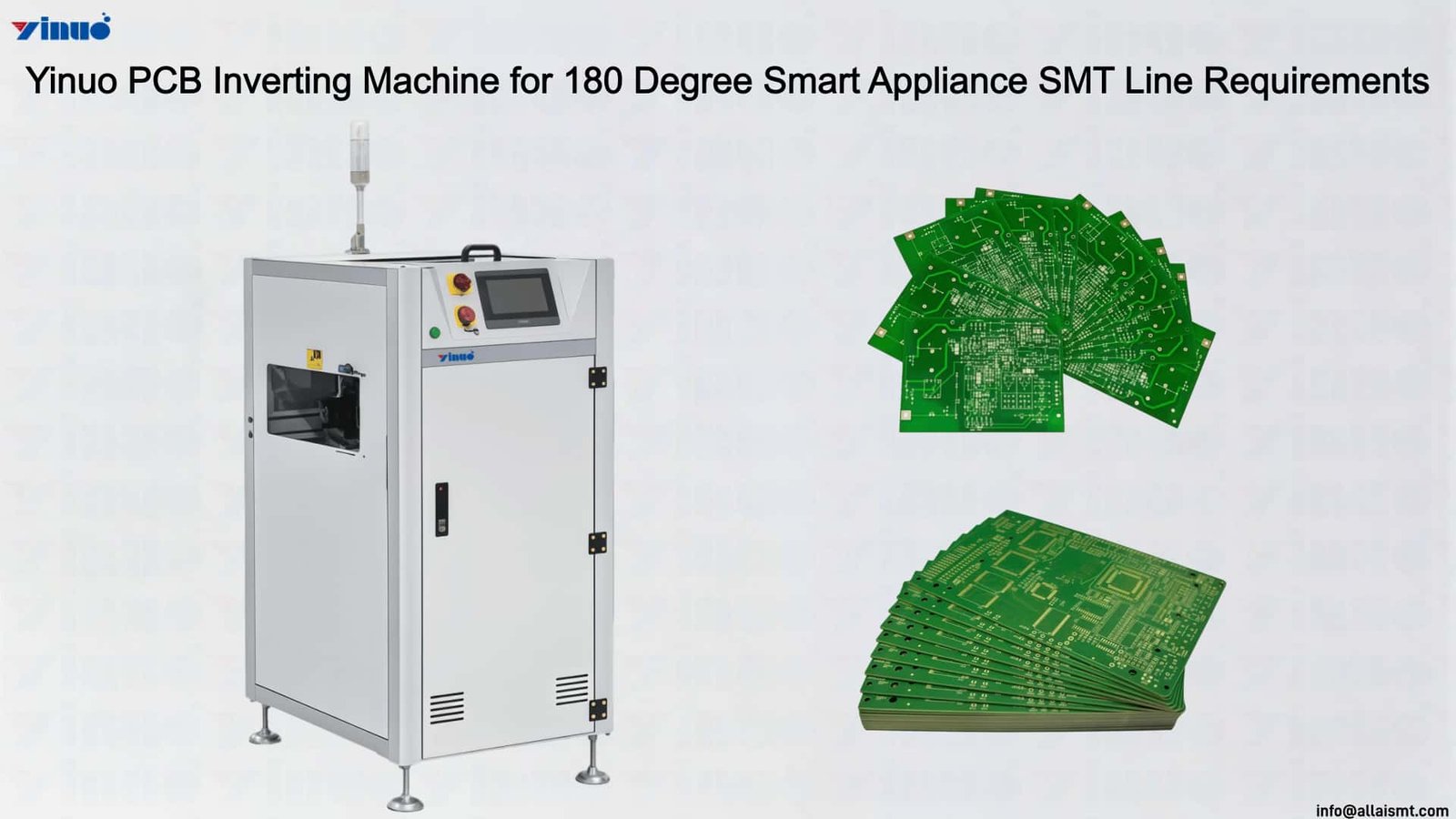
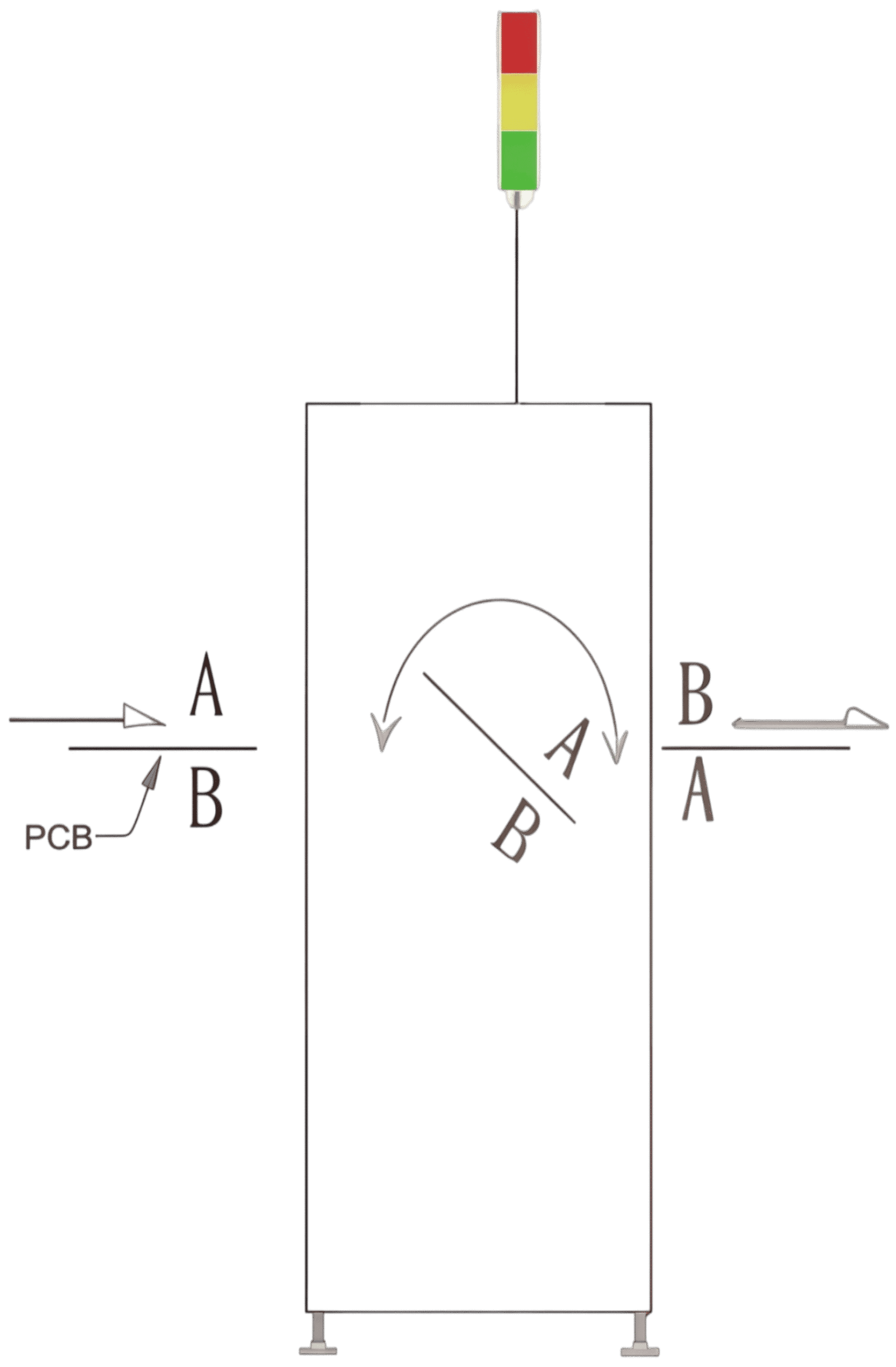
A PCB Inverting Machine introduces controlled surface repositioning into the material flow of an SMT production line. Rather than requiring operators to manually flip circuit boards between processing stages, the equipment changes PCB orientation through 180 degrees using a dedicated mechanical inversion mechanism. This operation allows the board’s opposite face to become accessible while preserving the intended conveyor route. In manufacturing environments where both sides require component mounting or soldering, the inverter provides a functional link between the first-side and second-side production sequences.
For computer peripherals, smart home electronics, and intelligent appliance manufacturing, PCB layouts frequently combine surface-mounted components, connectors, and interface circuits on opposing sides. After the initial assembly sequence, the PCB Inverting Machine repositions the board before it enters the next placement or soldering stage. The conveyor width adjustment mechanism helps accommodate supported PCB dimensions, while appropriate clearance around tall components and board edges must be considered during equipment selection. These factors allow production engineers to evaluate whether the inversion unit matches the physical requirements of different electronic assemblies.
Another application involves inspection and repair preparation. When a controller board requires examination of underside solder connections, the inverter changes the exposed surface before transfer to the relevant inspection station. This arrangement can be useful for industrial control electronics, LED lighting modules, battery management boards, and communication equipment. Sensor feedback and PLC-based control, where included in the machine configuration, can coordinate the inversion sequence with board positioning and conveyor movement. Compatible communication interfaces also help connect the unit with neighboring stations in an automated line.
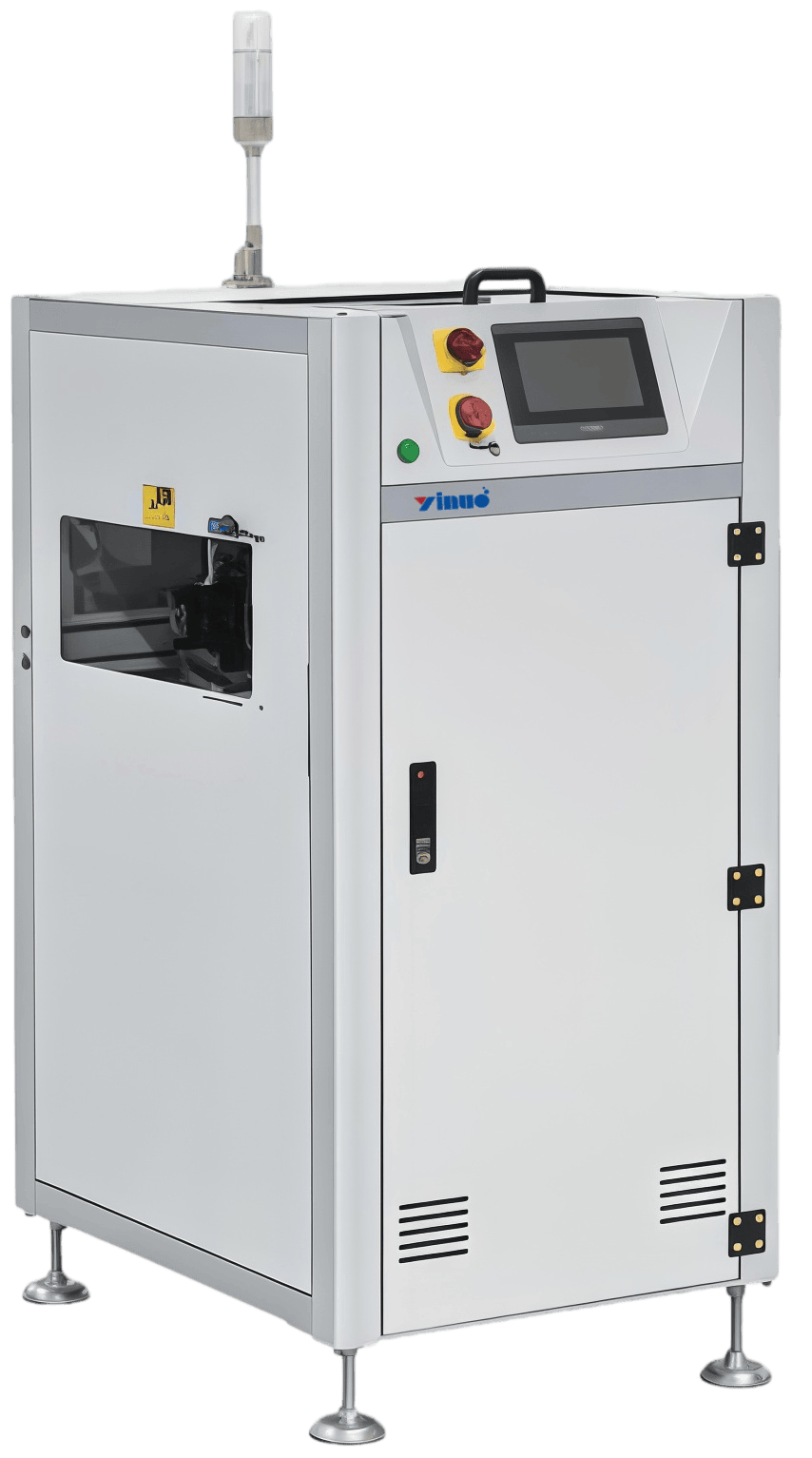
Yinuo’s PCB Inverting Machine combines functional inversion capability with mechanical features intended for practical SMT operation. The enclosed housing provides a protective barrier around internal mechanisms, while an accessible top cover facilitates servicing. A torque limiter helps protect the transmission when excessive resistance occurs, and screw-based width adjustment supports parallel rail positioning. With customizable conveyor arrangements and SMEMA-compatible interfacing, the machine can be incorporated into production layouts that require controlled 180-degree PCB inversion and organized transfer between assembly or inspection processes.
PCB Inverting Machine
Smart Home Control Board Assembly and Inspection Applications
Double Sided SMT Lines for Smart Home Controllers
In smart home electronics factories, the PCB Inverting Machine plays an important role in double-sided assembly lines producing circuit boards for intelligent thermostats, central control panels, and wireless home automation hubs. After solder paste printing, component placement, and reflow soldering on the first side, the machine inverts the PCB through 180 degrees so the opposite surface faces upward. This allows the board to enter the next assembly stage without requiring operators to flip each unit manually. Its conveyor-based transfer mechanism supports the movement of boards between designated SMT stations.
Wireless Communication Module Production Lines
Smart locks, connected sensors, and home security devices rely on wireless communication modules containing components such as RF circuits, microcontrollers, and interface connectors. When these PCBs require assembly on both surfaces, a PCB Inverting Machine can be installed between processing stations to provide the necessary board orientation change. Its adjustable conveyor width helps accommodate supported PCB dimensions, while engineers must account for component height and edge clearance when configuring the transfer path. This arrangement is suitable for factories handling different smart home communication boards within the same manufacturing facility.
Smart Appliance Controller Inspection Lines
Electronic controllers for intelligent washing machines, refrigerators, air conditioners, and kitchen appliances may require inspection of solder joints or components mounted underneath the PCB. Following reflow soldering, the PCB Inverting Machine can reposition the board before it reaches an appropriately configured automated optical inspection station or manual inspection area. This makes the opposite surface accessible for checking connector terminals, passive components, and solder connections. Integration with compatible conveyors helps establish a defined transfer sequence between soldering, inspection, and subsequent production stages.
The PCB Inverting Machine provides smart home electronics manufacturers with a dedicated solution for 180-degree PCB orientation changes. With chain-driven transfer, screw-based width adjustment, an enclosed mechanical structure, and a torque limiter, Yinuo’s equipment addresses practical handling and maintenance requirements. SMEMA-compatible communication supports connection with suitable neighboring machines, helping manufacturers organize double-sided assembly and inspection processes across different smart home product lines.
Технические характеристики
| Модель | YF-350 | YF-460 |
| Размеры (мм) | 500*725*1250 | 600*856*1250 |
| PCB Size(mm) | 50*50-445*350 | 50*50-550*460 |
| Cycle Time | Approx. 10 seconds | |
| Belt Type | Oblate Belt | |
| Источник питания | AC 1P 110V/220V; Max 150VA | |
| Air pressure | 4-6bar, 1.1 ltr/min Max | |
| Transport Height | 900±20mm(or customized) | |
| Transport Direction | From left to right or right to left | |
| Weight(KG) | 120 | 160 |
FQA
1.Q:What is the primary function of a PCB Inverting Machine?
A:It inverts a PCB by 180 degrees to expose the opposite surface for further processing.
2.Q:How is the conveyor width adjusted?
A:A screw-based mechanism adjusts the rails to accommodate different PCB widths.
3.Q:Does the machine support automatic production lines?
A:Yes. It can connect with compatible upstream and downstream SMT equipment.
4.Q:Can the machine be used before PCB inspection?
A:Yes. It exposes the opposite surface for suitable inspection equipment or manual examination.
5.Q:Can the machine be incorporated into an existing SMT line?
A:Yes, provided its dimensions, transfer height, and communication interface match the production line.
Yinuo Electronics Co., Limited specializes in SMT and PCB assembly equipment, offering a range of solutions for electronics manufacturing. Our product portfolio supports different stages of the production process, helping manufacturers select suitable equipment for their operational needs. We are committed to providing practical products and professional assistance to customers worldwide.
Our website is: www.esmte.com | Contact email: info@allaismt.com | Video channel: https://www.youtube.com/@allaismt/videos | WhatsApp: +8613760481664