

BGA Solder Ball Feeder for Micro Sphere Handling and Controlled Ball Delivery
Individual Sphere Feeding
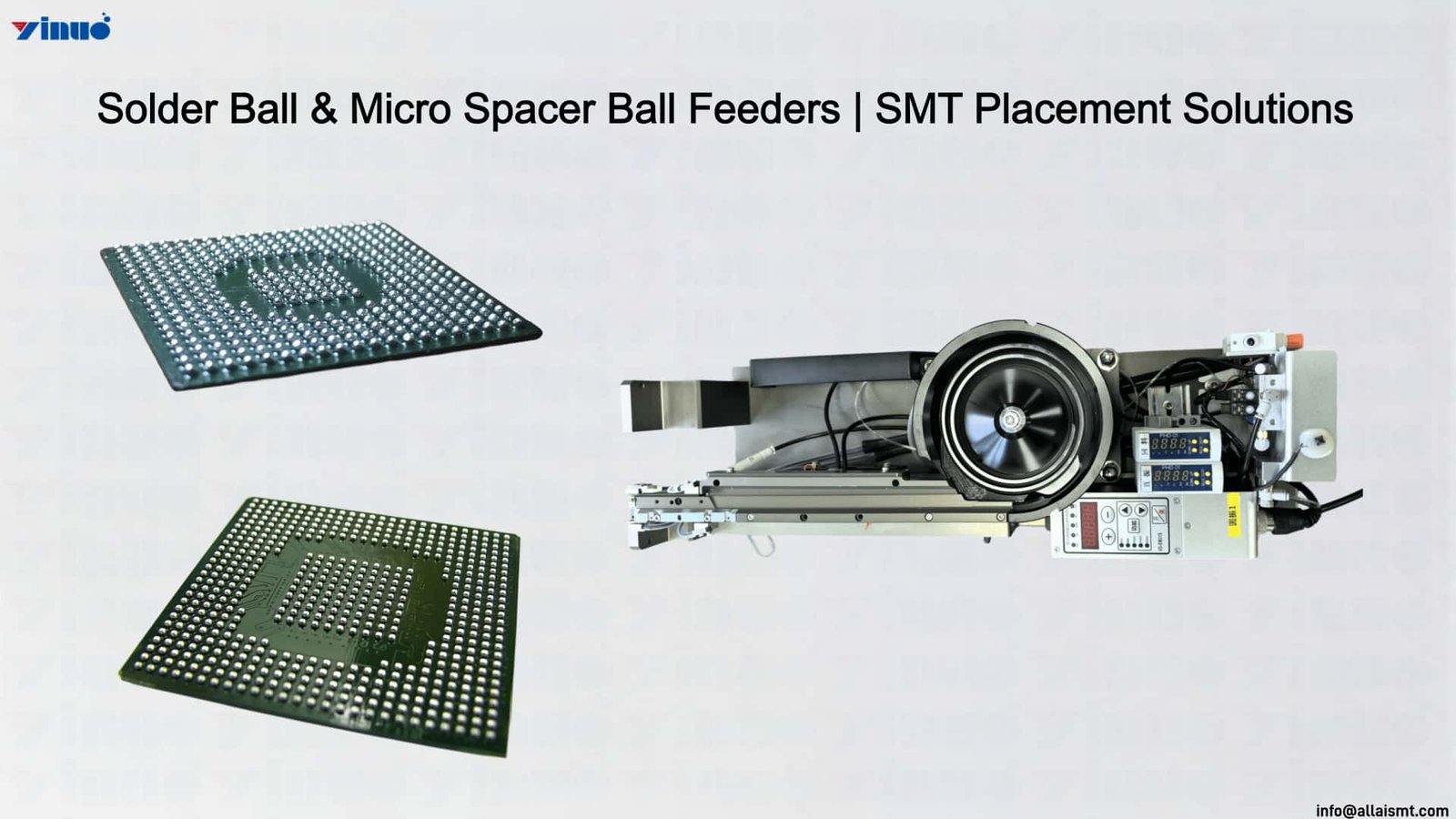
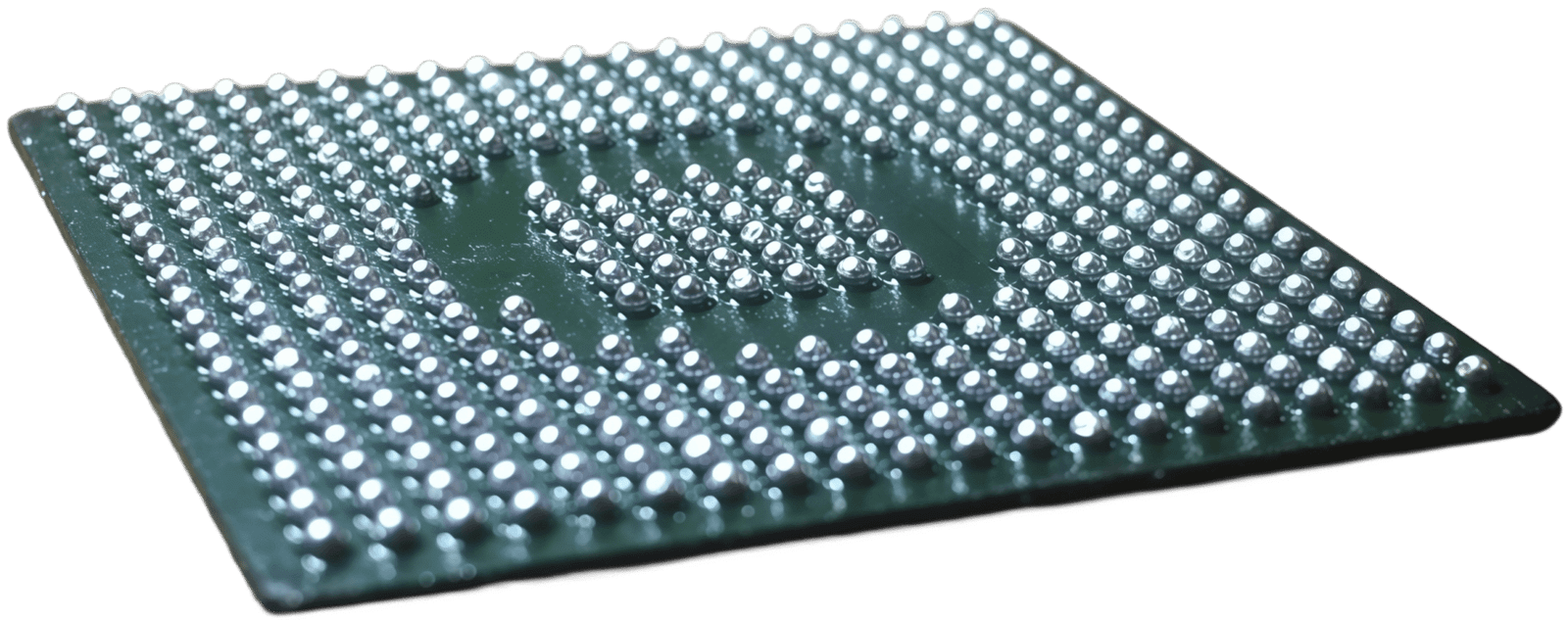
In BGA packaging, each solder sphere must reach its assigned pad without being lost, doubled, or incorrectly positioned. The BGA Solder Ball Feeder manages individual sphere presentation for compatible SMT placement equipment. Its function is not simply bulk material supply; it must separate the spheres, establish a repeatable pickup point, and allow the placement head to collect them using a suitable vacuum nozzle.
Solder spheres may also be described as tin balls, solder balls, ball bumps, or bumping balls. Micro spacer balls have a different purpose: they establish a specified physical gap rather than forming a conventional solder joint. Confirming the material and intended function is essential before specifying the feeder.
Feeding Architecture
A vibratory bowl moves larger spheres along a guided track toward the pickup position. For smaller spheres, an indexed carrier can provide one ball per pocket, reducing dependence on free-flow movement and track separation. The carrier or bowl is mounted beside the placement machine’s feeder rail, and the pickup point is assigned within the machine program.
The vacuum nozzle must match the sphere diameter and pickup geometry. Bracket dimensions, gantry travel, neighbouring feeders, and nozzle access must also be checked for the exact placement machine.

BGA Solder Ball Feeder
Diameter Coverage
The bowl-fed version handles approximately 200–800 µm balls at 8–40 balls per minute. The indexed micro version covers approximately 75–150 µm, including the 130 µm class, at 4–8 balls per minute, with vision counting available for the applicable configuration.
Below approximately 200 µm, adhesion, static attraction, and surface condition can interfere with conventional track feeding. For configurations below 300 µm, nitrogen protection is specified to help limit oxidation. Material cleanliness and storage conditions remain important because feeding accuracy alone cannot guarantee solder wetting.
Application Scenarios
- Fine-pitch BGA substrate preparation
- PoP package assembly and memory stacking
- Micro spacer placement for controlled package separation
- Replacement ball attachment during BGA rework
- Selected module-level electrical and thermal interconnections
- Electronic assemblies requiring specified ball arrays
For 0.25 mm and 0.3 mm pitch applications, feasibility depends on ball diameter, pad dimensions, placement capability, and solder spreading during reflow. Pitch alone is insufficient to confirm process suitability.
Machine Compatibility
The main adaptation target is ASM / ASMPT SIPLACE X, SX, TX, and HM platforms. Bracket and interface options may also be developed for YAMAHA, FUJI, PANASONIC, JUKI, and SAMSUNG machines. Model-specific verification is required because feeder mounting, software configuration, and pickup coordinates vary by platform.
Process and Inspection
SAC305 applications may use a preliminary reflow reference of 235–245 °C peak temperature and 60–90 seconds above 217 °C liquidus, subject to process validation. Sn99.99, SAC404, and low-melting alloys require selection according to the application specification. X-ray inspection helps assess internal joint formation; acceptance limits must follow the customer’s quality requirements.
Information for Quotation
Required details include ball diameter and tolerance, alloy or spacer material, target pitch, board size, machine model, and expected annual volume. Providing actual ball samples allows the feeding track or indexed carrier to be assessed against the material. Feeding verification and an on-machine video can be arranged where the project requires them.
Yinuo Electronics Co., Limited specializes in SMT and PCB assembly equipment, offering a range of solutions for electronics manufacturing. Our product portfolio supports different stages of the production process, helping manufacturers select suitable equipment for their operational needs. We are committed to providing practical products and professional assistance to customers worldwide.
Our website is: www.esmte.com | Contact email: info@allaismt.com | Video channel: https://www.youtube.com/@allaismt/videos | WhatsApp: +8613760481664