Introdução
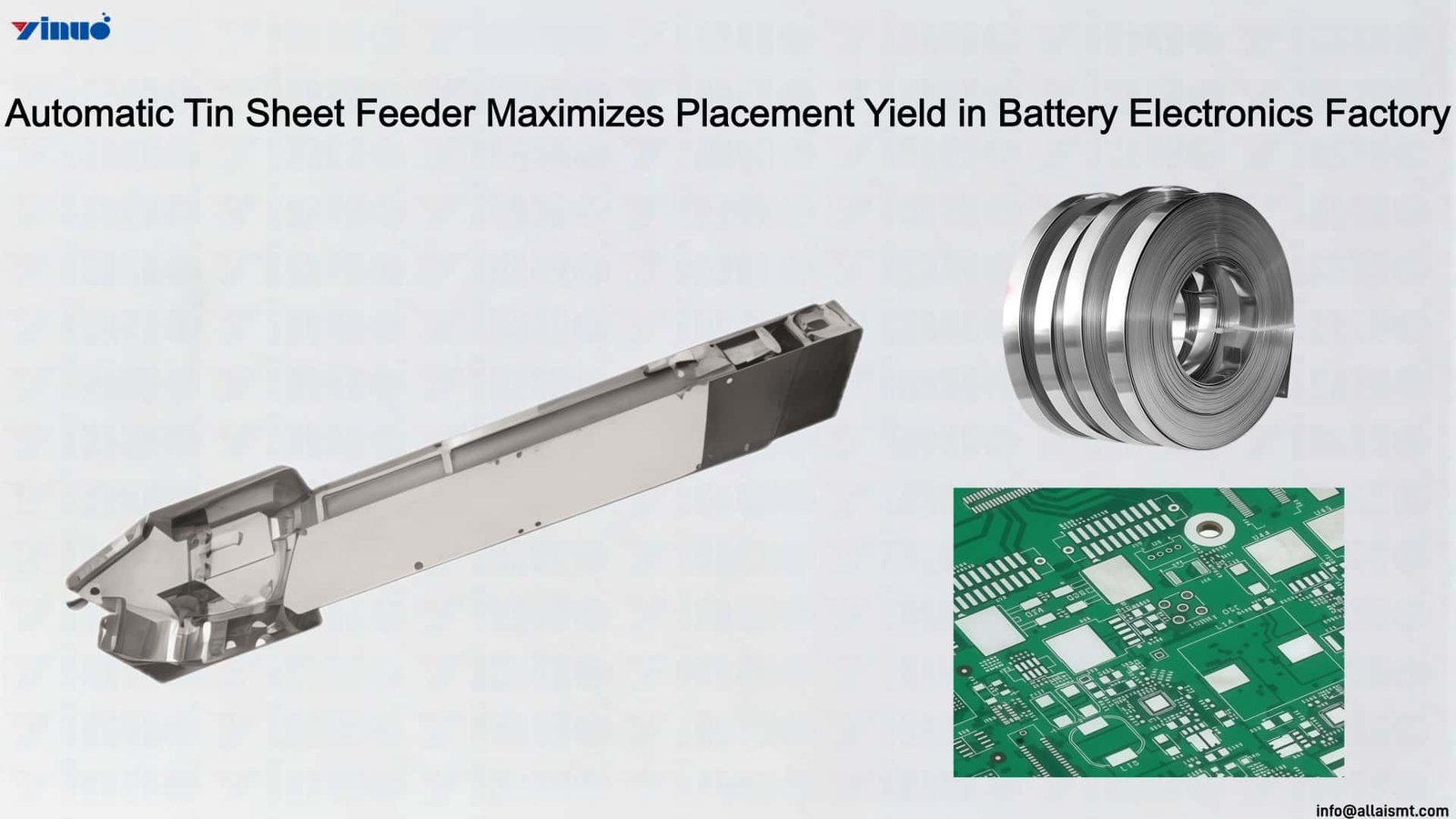
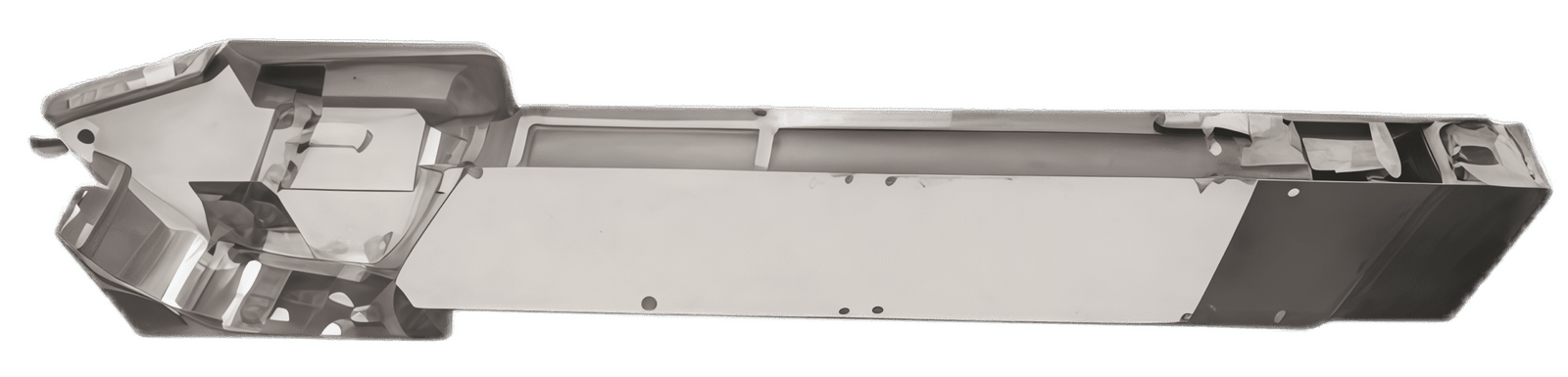
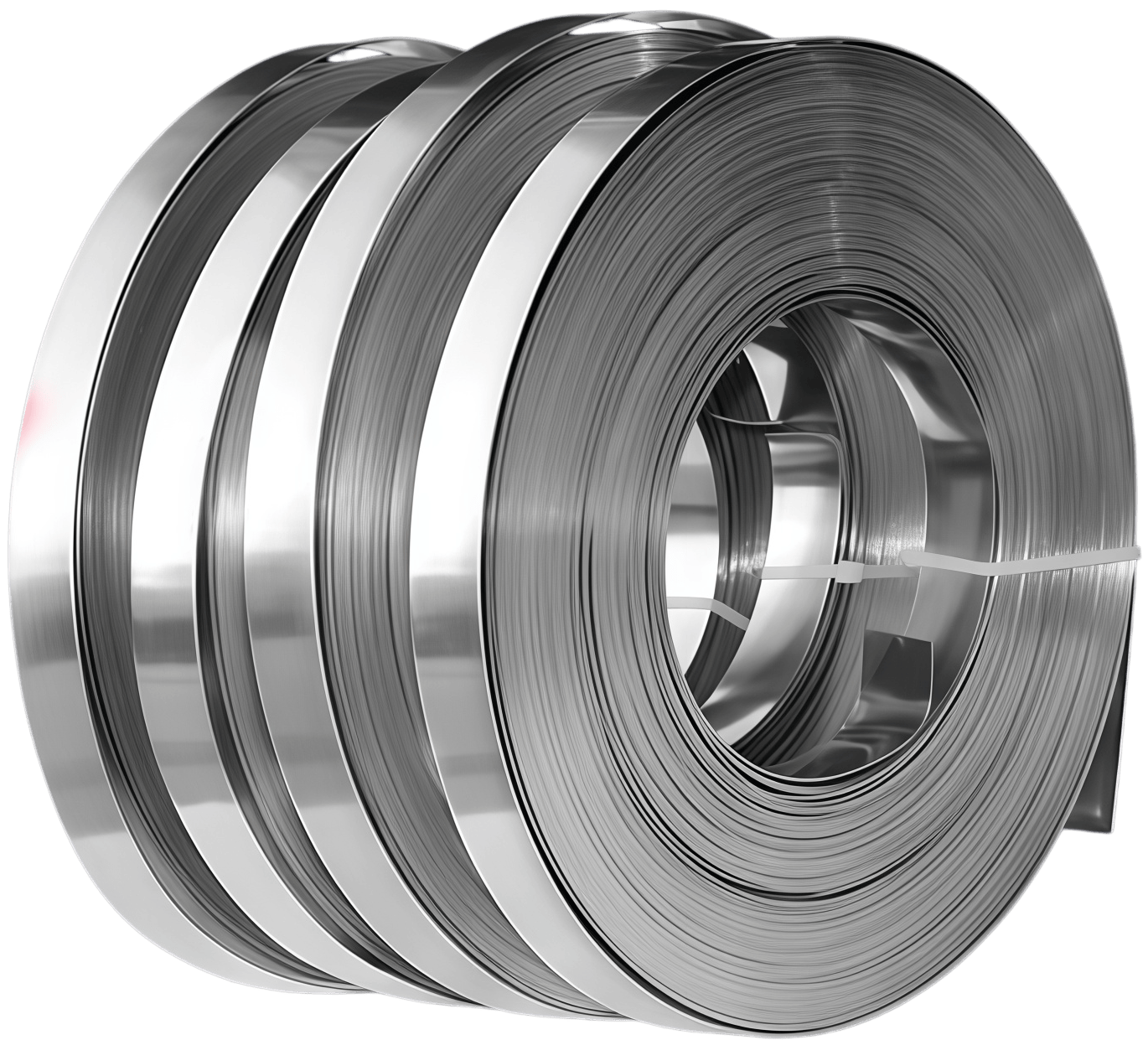
O Automatic Tin Sheet Feeder brings precision tape-and-reel feeding to SMT production, dispensing tin sheet strips or tin wire directly to pick-and-place machines for attachment onto PCB boards. Its servo-controlled advance mechanism unwinds material from the reel at a tightly regulated pitch, synchronizing with the placement head to deliver each segment at the exact moment the nozzle descends. This closed-loop coordination eliminates the positioning lag and skipped cycles that degrade placement yield, enabling manufacturers to integrate tin-based functional elements—shielding patches, thermal pads, or conductive bridges—alongside standard chip components in a single pass.
The Automatic Tin Sheet Feeder’s core strength lies in its integrated cut-and-place logic. A hardened shear module trims tin sheet or tin wire to a programmable length immediately before the pick point, ensuring every dispensed piece matches the target footprint without the burrs or deformation that compromise pad contact. The cutting stroke and feed advance are driven by the same controller, so length adjustment is purely a parameter change requiring no mechanical rework. Combined with a sensor suite that verifies material presence, cut completion, and feed position before signaling the host machine, the feeder turns what was once a manual pre-cut workflow into a fully synchronized inline process.
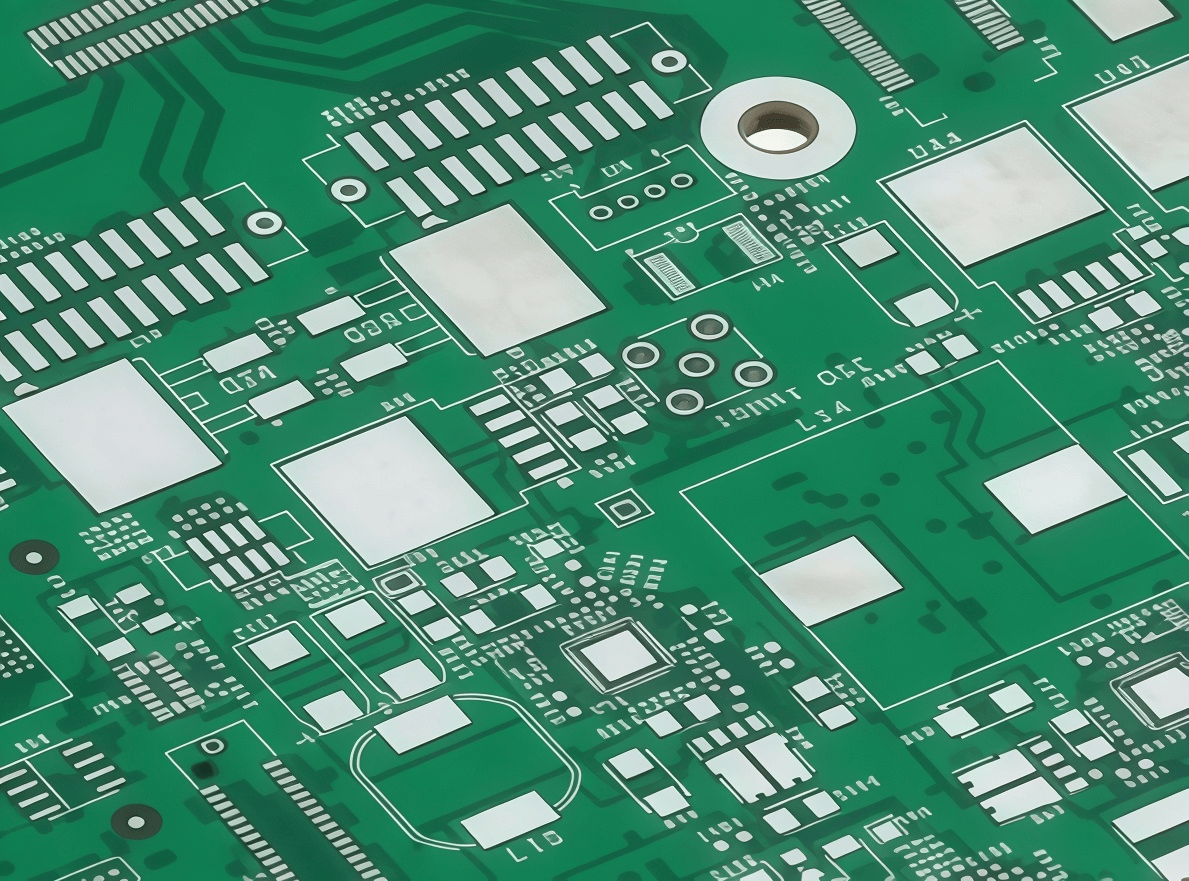
When deployed on an SMT line, the feeder enables PCB functionalization beyond conventional solder paste printing and component placement. It feeds tin sheet pads for localized grounding reinforcement, tin foil strips for EMI shielding, or pre-formed tin wire segments for jumper connections—all applied automatically by the same pick-and-place platform already running on the line. For manufacturers of power modules, RF boards, and high-reliability industrial PCBs, this capability consolidates steps that previously required off-line manual assembly, reducing both labor cost and the defect risk introduced by hand placement. By turning tin sheet into a standard feeder-delivered material, the machine expands what an SMT line can produce without expanding its footprint.
Automatic Tin Sheet Feeder
Consistent Interconnect Feeding for Uniform Weld Quality in Battery Assembly
O Automatic Tin Sheet Feeder brings consistent, high-precision material delivery to battery pack production lines, where tin sheet interconnects and nickel-tin bus strips form the electrical backbone of every cell-to-cell and cell-to-module connection. Its servo-driven advance mechanism unwinds reeled tin sheet at a tightly controlled pitch, cutting each segment to exact length before presenting it at the pick-up window for automated placement. This precision ensures that every interconnect strip lands with identical overlap on its target cell terminals, maintaining uniform contact resistance across hundreds of weld points in a single pack.
The Automatic Tin Sheet Feeder’s integrated cut-and-present logic eliminates the dimensional variability of manual pre-cutting. A hardened shear module produces clean, burr-free edges that sit flush against cylindrical cell cans or prismatic cell tabs, maximizing the weld contact area and minimizing hot-spot risk during resistance welding or laser bonding. Cut length is software-defined, so production can switch between different pack configurations—changing interconnect strip dimensions for a power tool battery versus an energy storage module—without hardware retooling. The closed-loop sensor suite verifies material presence, cut completion, and feed position before each cycle, preventing the misfeed errors that cause skipped welds and downstream rework.
In automated battery lines, the feeder integrates directly with pick-and-place platforms or robotic welding workcells, feeding tin sheet interconnects at the line’s native cycle rate. For e-bike packs, it supplies precisely sized nickel-tin strips to laser welding stations; for EV module assembly, it delivers bus-bar interconnects to ultrasonic bonding heads; for consumer electronics batteries, it feeds thin tin contact pads to resistance welding fixtures. By replacing hand-cut and hand-placed sheet with automated, repeatable feeding, the machine raises weld quality consistency, reduces per-cell labor cost, and makes high-volume battery pack production a disciplined, metrics-driven process rather than a craft-dependent one.
Especificações
| Modelo | YN-S2402 | Remarks |
| Dimensões (C × L × A) | 878×55×233mm | |
| Peso | 8.5 KG | |
| Operating Voltage | DC42V (1.5~2.5A) | Powered by placement machine |
| Abastecimento de ar necessário | 0.5–0.6MPa | Air supplied from placement machine |
| Operating Current | Less than 1.5A for feeding | |
| Feed Speed | 0.6 s/Pcs | Cutting time ≥2s |
| Painel de operação | 0.96″ TFT Color Screen Resolution: 80×160 pixels |
|
| Feeding Length | 2.2~18mm | Customizable, fine adjustment ±0.1mm |
| Solder Tab Thickness | 0.05–0.3mm | Customizable, non-adjustable |
| Solder Tab Width | 2*12.1mm | Customizable, non-adjustable |
| Solder Tab Material | SnAg3Cu0.5 | Affects both cutting and forming |
| Feed Method | Mechanically Clamped |
https://www.youtube.com/@allaismt
For more information about the Automatic Tin Sheet Feeder, Por favor, envie um e-mail para
Responderemos à sua solicitação prontamente e forneceremos informações detalhadas sobre nossos produtos e serviços.