

Controlled Handling of Small Spherical Materials
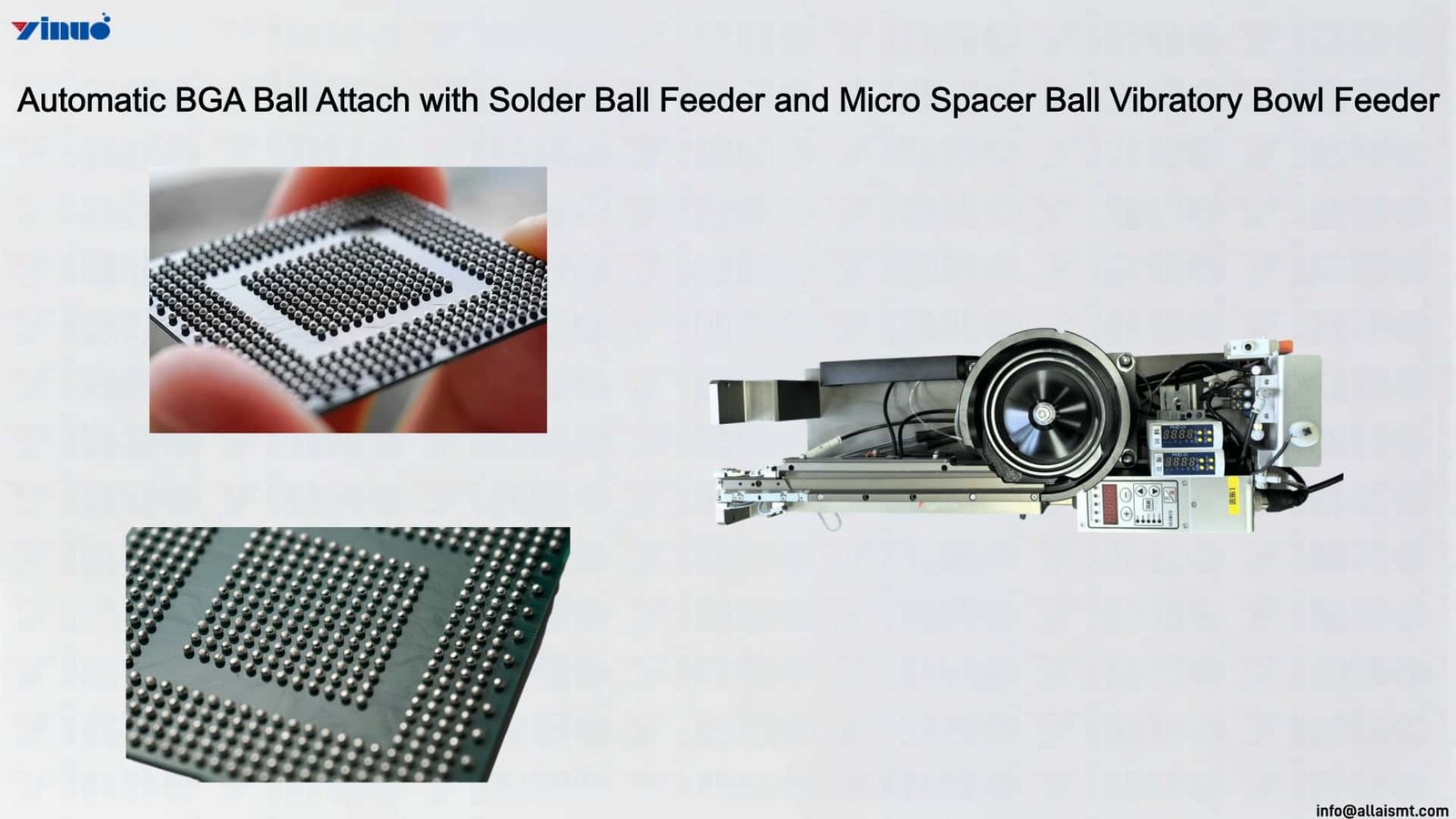
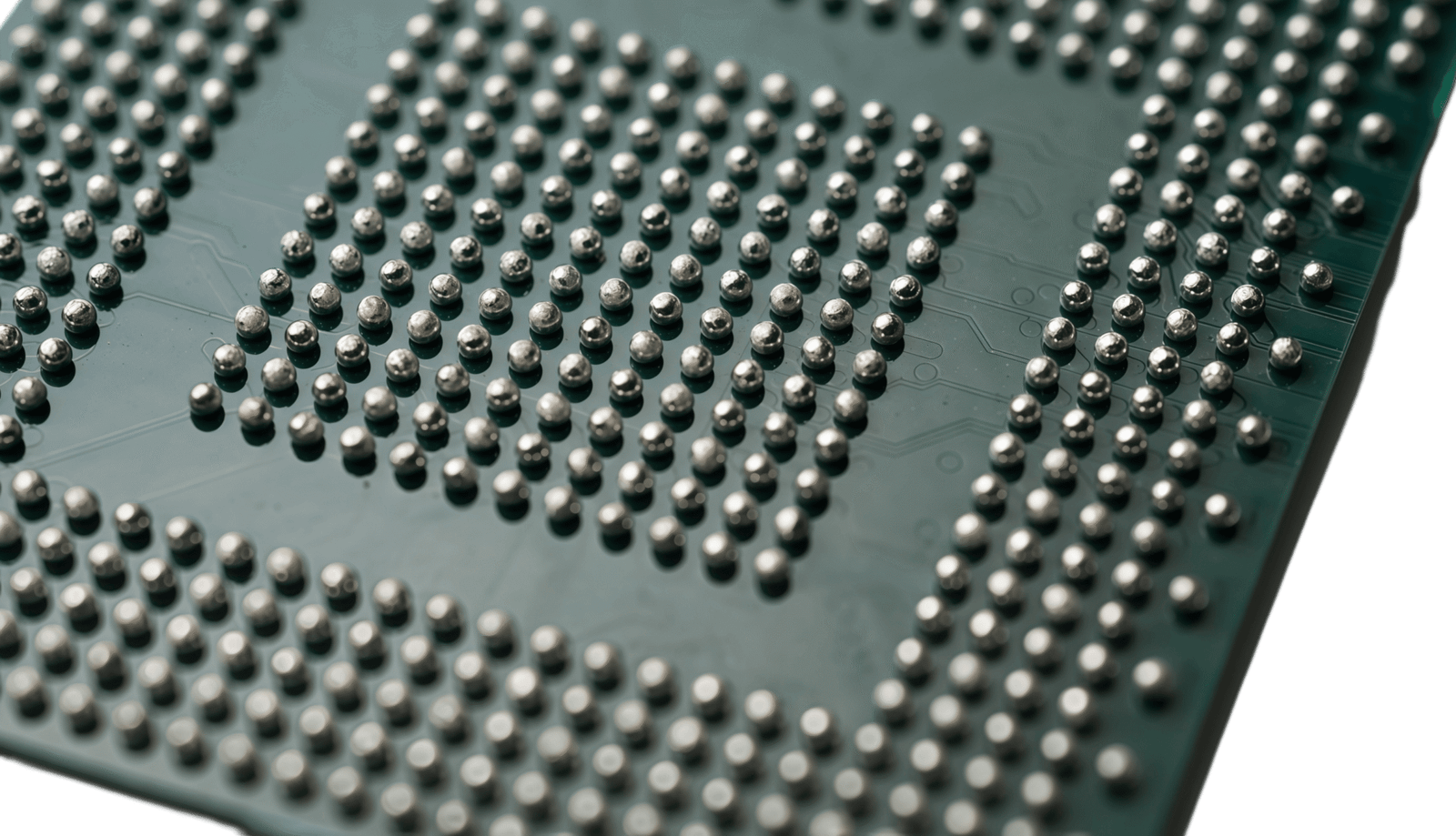
The BGA Solder Ball Feeder addresses the specialized handling requirements of solder balls and micro spacer balls used in semiconductor packaging. Unlike standard SMT components, spheres can roll, adhere to nearby surfaces, or respond to electrostatic forces during feeding. These behaviors become particularly important when the ball diameter decreases and the available pickup area becomes smaller. A suitable feeder configuration separates individual spheres and presents them at accessible pickup locations, allowing compatible placement equipment to handle spherical materials through a programmed sequence.
Feeding Architecture Selected by Ball Diameter
A vibratory bowl feeder uses controlled vibration and a guided track to move suitable balls toward the pickup point. This arrangement is applicable when the spheres can maintain reliable separation along the track. For micro spheres that require more constrained positioning, an indexed carrier can assign an individual location to each ball. The choice between these mechanisms depends on sphere diameter, material properties, required feed rate, and pickup conditions. Actual ball samples are useful for determining whether track feeding is practical or whether a carrier-based approach offers better control over sphere presentation.

BGA Solder Ball Feeder
Individual Pickup and Transfer Stability
Reliable sphere transfer depends on the relationship between the ball, nozzle, and placement head. A nozzle with an unsuitable opening may fail to retain the ball or may interfere with accurate pickup. The BGA Solder Ball Feeder must therefore be configured with a suitable ball-pick nozzle and calibrated pickup coordinates. Vacuum conditions, pickup height, transfer movement, and feeder alignment also require verification. These parameters influence whether each sphere reaches the placement head correctly and remains retained during movement toward the target substrate.
Solder Balls and Micro Spacer Balls
Solder spheres and inert spacer spheres may share a similar shape, but they serve different purposes in package assembly. Solder balls form conductive joints during the designated bonding process, whereas micro spacer balls establish a controlled physical separation between structures. The material specification must identify the intended function because alloy selection, surface requirements, and downstream processing differ. The feeder configuration should also account for the target diameter and placement pattern. Clear material identification helps prevent a feeding setup intended for one application from being applied incorrectly to another.
Fine Pitch and Advanced Packaging Applications
The BGA Solder Ball Feeder can be evaluated for BGA substrate preparation, PoP package interconnection, memory stacking, micro spacer placement, and selected re-balling processes. Fine-pitch applications require careful coordination between ball diameter, pad spacing, nozzle geometry, and placement coordinates. The target array must be assessed as a complete pattern rather than as a collection of independent ball positions. Where placement requirements exceed the practical capability of the proposed feeder and machine combination, an alternative ball attachment method should be considered.
Material Condition and Process Validation
Ball surface condition can influence both feeding behavior and subsequent solder wetting. Oxidation, contamination, and surface residue may contribute to bonding defects even when the sphere has been placed at the correct coordinate. Environmental controls, including nitrogen where specified, should be selected according to the material and validated process requirements. For solder applications, reflow parameters and inspection methods must also be established for the selected alloy and package construction. Feeding tests and downstream joint evaluation together provide a more complete assessment of production suitability.
Yinuo Electronics Co., Limited specializes in SMT and PCB assembly equipment, offering a range of solutions for electronics manufacturing. Our product portfolio supports different stages of the production process, helping manufacturers select suitable equipment for their operational needs. We are committed to providing practical products and professional assistance to customers worldwide.
Our website is: www.esmte.com | Contact email: info@allaismt.com | Video channel: https://www.youtube.com/@allaismt/videos | WhatsApp: +8613760481664