
Introdução
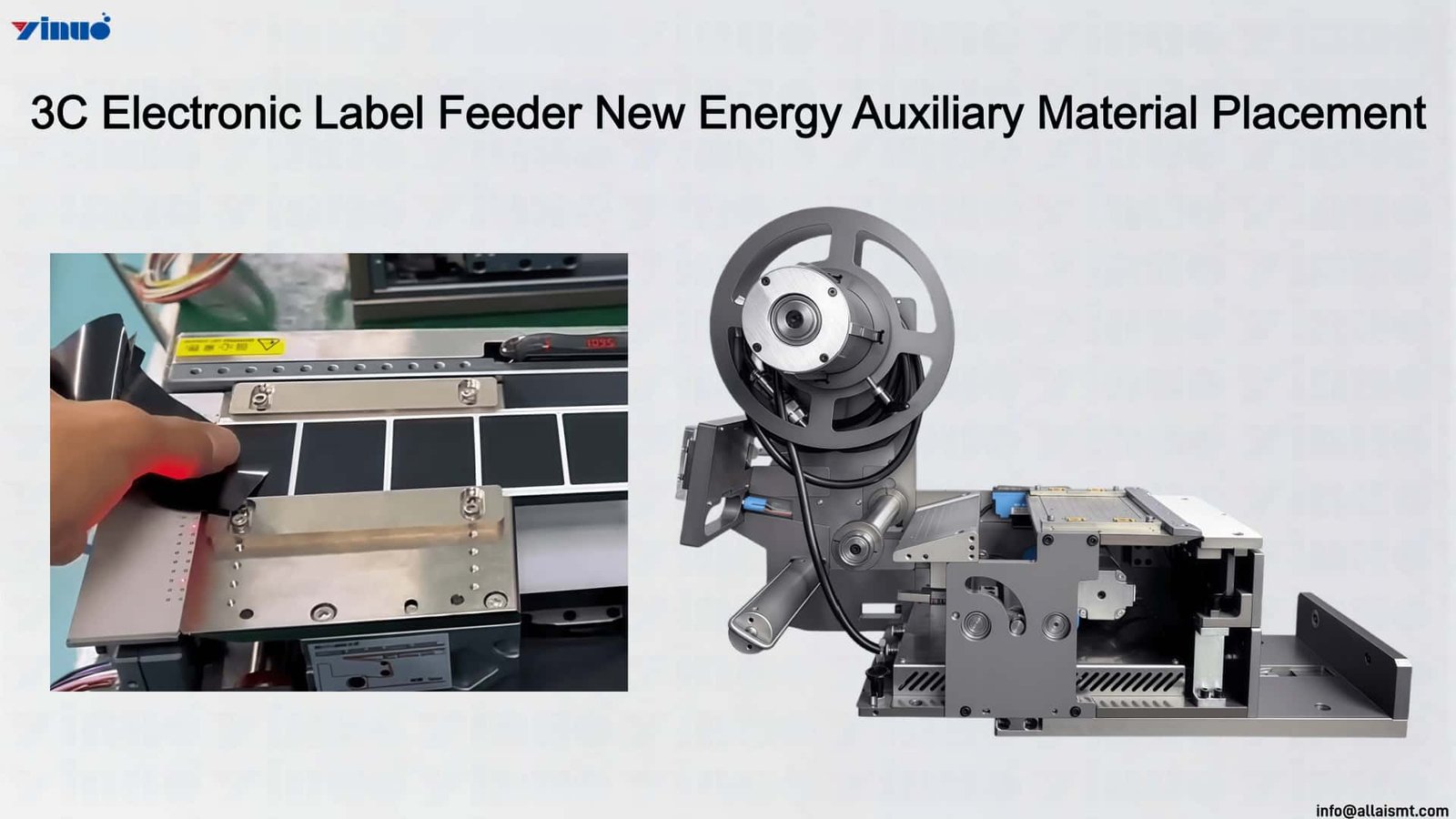
New energy electronics — from BMS protection boards to onboard charger modules — rely on functional auxiliary materials that traditional feeders were never designed to handle. Conductive foam gaskets, thermally conductive silicone pads, EMI shielding films, and insulating barrier sheets are compressible, tacky, and laminated with release liners that peel unpredictably. The Alimentador automático de empurramento frontal Yinuo pushes the carrier tape forward into a defined presentation window rather than pulling it through pinch rollers. This eliminates compression, so foam keeps its thickness, adhesive stays on the intended side, and liners release at the designed separation point rather than prematurely inside the feeder.
The same front pushing principle proves equally effective for 3C electronic labels, where precision and surface integrity are non-negotiable. Smartphone mainboard labels, flex circuit identifiers, and wearable device markings are small, thin, and often printed with scannable codes. A feeder that grips or bends the label risks smudging print or introducing micro-creases. By pushing the carrier from behind and presenting the label flat at the pickup position, our design preserves the label exactly as it left the converter. The fixed peel edge geometry ensures even labels with partial adhesive coverage release cleanly.
What distinguishes this feeder in application is its compatibility with the materials that define new energy electronics builds. Copper foil strips for EMI grounding, polycarbonate insulation sheets for high-voltage isolation, thermally conductive gap fillers for power module heat dissipation, and adhesive-backed steel stiffeners for flex circuit reinforcement all run through the same feed path without modification. The key is the adjustable peel geometry — different materials release cleanly at different peel angles and blade profiles, and our feeder lets the process engineer dial in both parameters mechanically.
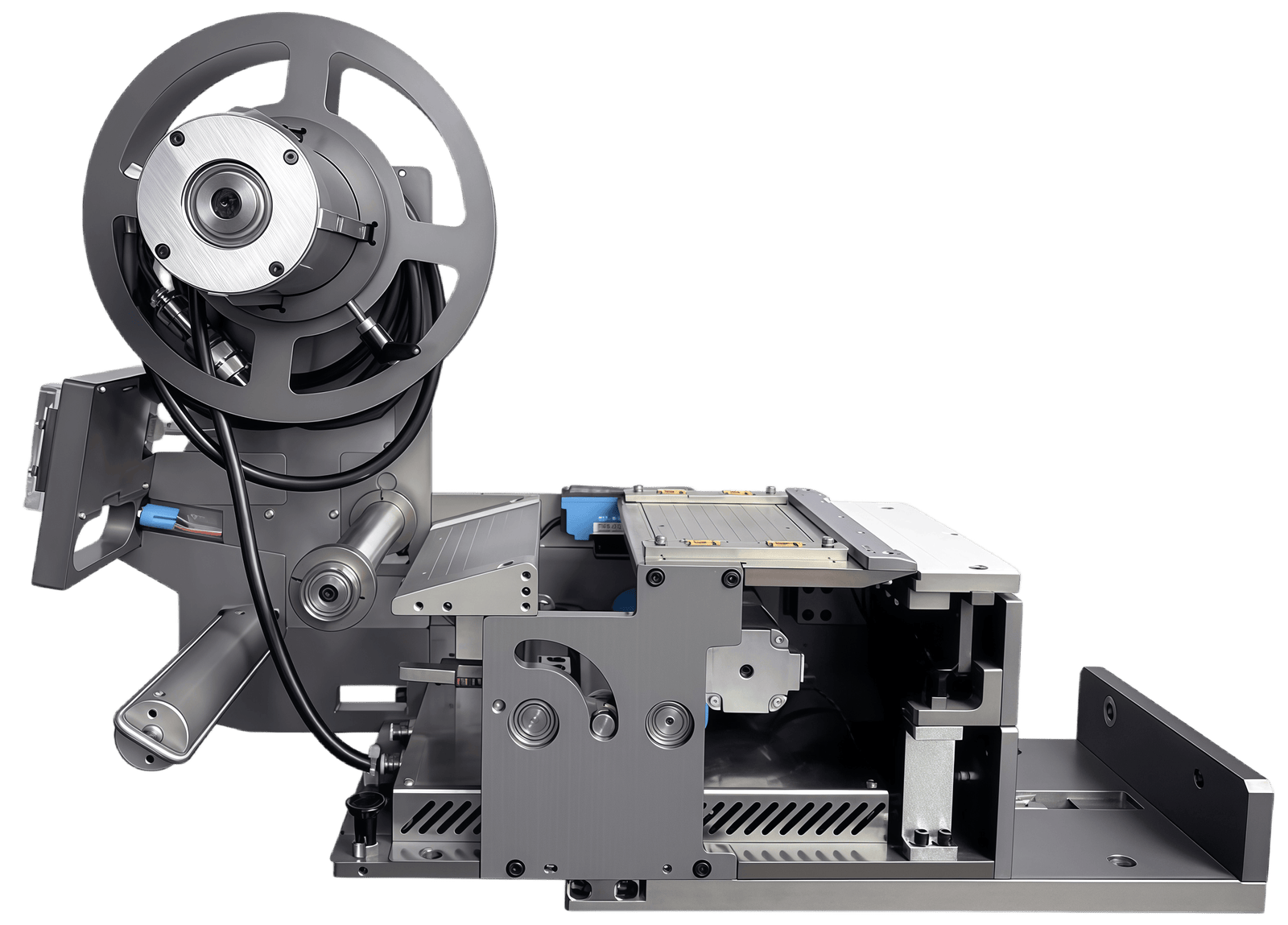
Alimentador automático de empurramento frontal Yinuo
How Yinuo Automatic Front Pushing Feeder Applies in the 3C New Energy Auxiliary Material Industry
O Alimentador automático de empurramento frontal Yinuo moves carrier tape through a cam-driven pusher bar that advances material into a fixed presentation window, then retracts before pickup. This mechanical separation between transport and presentation is what lets the feeder handle materials that defeat pinch-roller designs. Thin PET labels, compressible foam gaskets, and tacky thermal pads all travel the same straight feed path without compression, stretching, or adhesive transfer to guide surfaces. The pusher contacts only the liner, never the component surface, so material integrity is preserved regardless of thickness or surface tack.
The peel edge sits at a fixed geometry relative to the pickup position, with blade profiles that are interchangeable for different material release characteristics. A sharp edge suits thin films with aggressive adhesives; a radiused edge releases thicker, layered materials without delamination. Peel angle adjusts mechanically through a cam follower linkage, giving the process engineer direct control over how the liner separates from the component.
Material width and feed stroke are set through tool-accessible adjusters on the feeder body. The feed stroke determines how far the pusher advances per cycle, which maps directly to component pitch on the carrier tape. Width guides center the tape laterally without pinching it, using spring-loaded side rails that accommodate minor width variations in slit rolls. These three adjustments — peel geometry, feed stroke, and width — cover the full setup envelope for labels, foams, films, adhesives, and metal stiffeners across both 3C and new energy builds.

Especificações
| Item | Especificação | Parameter | Especificação |
| Método de alimentação | Descole a fita na plataforma de recepção e, em seguida, pegue-a | Interface de Operação | Tela colorida TFT de 3,5 polegadas, resolução de 480×320, tela sensível ao toque capacitiva |
| Material Type | Fita em bobina | Velocidade de alimentação | Regulação contínua da velocidade, máx. 100 mm/s |
| Tensão | 24,0 V CC | Potência em modo de espera | <20 W |
| Atual | 5,0 A MÁX. | Operating Temperature | de -20 °C a 65 °C |
| Precisão na alimentação | ±0,2 mm | Umidade de operação | 20% a 90% RH, sem condensação |
| Ajuste da posição do material | Direção X: ajuste do limite mecânico; Direção Y: ajuste por software; Direção Z: ajuste mecânico |
Temperatura de armazenamento | -40 °C a 85 °C |
| Pressão do ar de entrada | 0,40 MPa a 0,60 MPa | Umidade de armazenamento | 10% para 95% |
| Interface de comunicação | Tipo GPIO NPN/PNP | Expectativa de vida | ≥20 mil horas (25 °C) |
| Interface do programa | GPIO 232, TCP/IP | Dimensões | Consulte as especificações reais do produto |
| Método de acionamento | Motor + sistema pneumático | Peso | Consulte as especificações reais do produto |
https://www.youtube.com/@allaismt
For more information about the Alimentador automático de empurramento frontal Yinuo, Por favor, envie um e-mail para
Responderemos à sua solicitação prontamente e forneceremos informações detalhadas sobre nossos produtos e serviços.


