

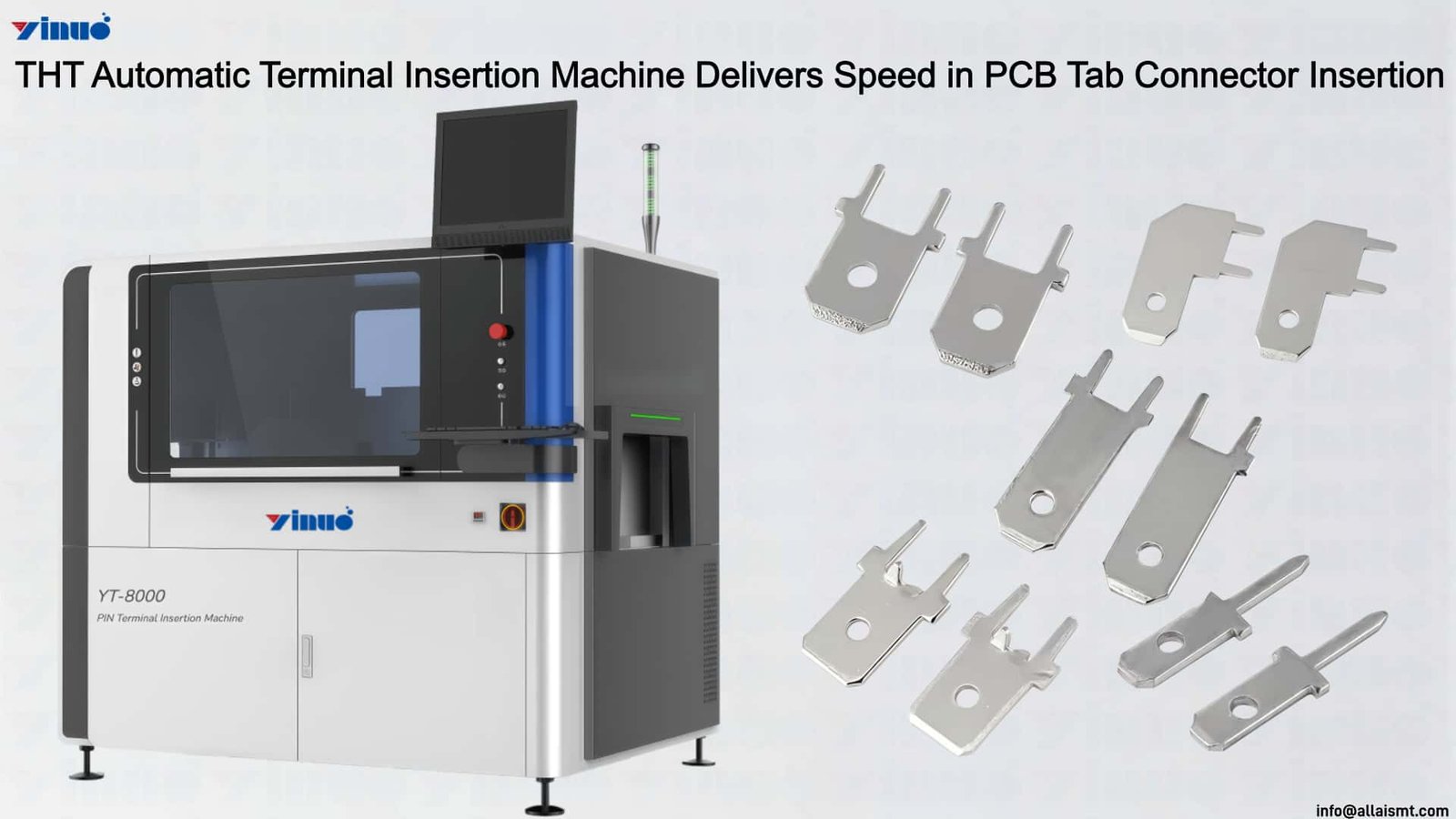
導入
Tab connector insertion is one of the last manual strongholds in PCB assembly, and it persists for a reason: the task seems too variable to automate. Terminal types differ in blade width, thickness, and lead spacing. PCBs vary in thickness, hole tolerance, and surrounding component density. A THT automatic terminal insertion machine succeeds where earlier automation attempts failed because it treats variability as an engineering input rather than an obstacle. The machine’s vision system identifies each terminal’s exact geometry on pickup, compares it against the expected part for that board position, and adjusts grip force and insertion parameters in real time.
This adaptive intelligence extends to board handling. The vision system registers PCB fiducial marks and compensates for any board-to-board positional variation caused by fabrication tolerances or thermal expansion. Hole locations are verified optically before insertion, catching blocked or undersized holes that would cause a manual operator to force a terminal through and damage the board. When a problem is detected, the machine logs the event, flags the board position, and continues — maintaining production flow while documenting every anomaly for downstream review.
In terms of industry relevance, the THT自動端子挿入機 offers significant advantages. By streamlining production processes and reducing costs, it allows manufacturers to improve their bottom line while meeting the rising demand for high-quality electronic components. As the market evolves, this machine equips businesses with the necessary tools to maintain their competitive edge and drive innovation.
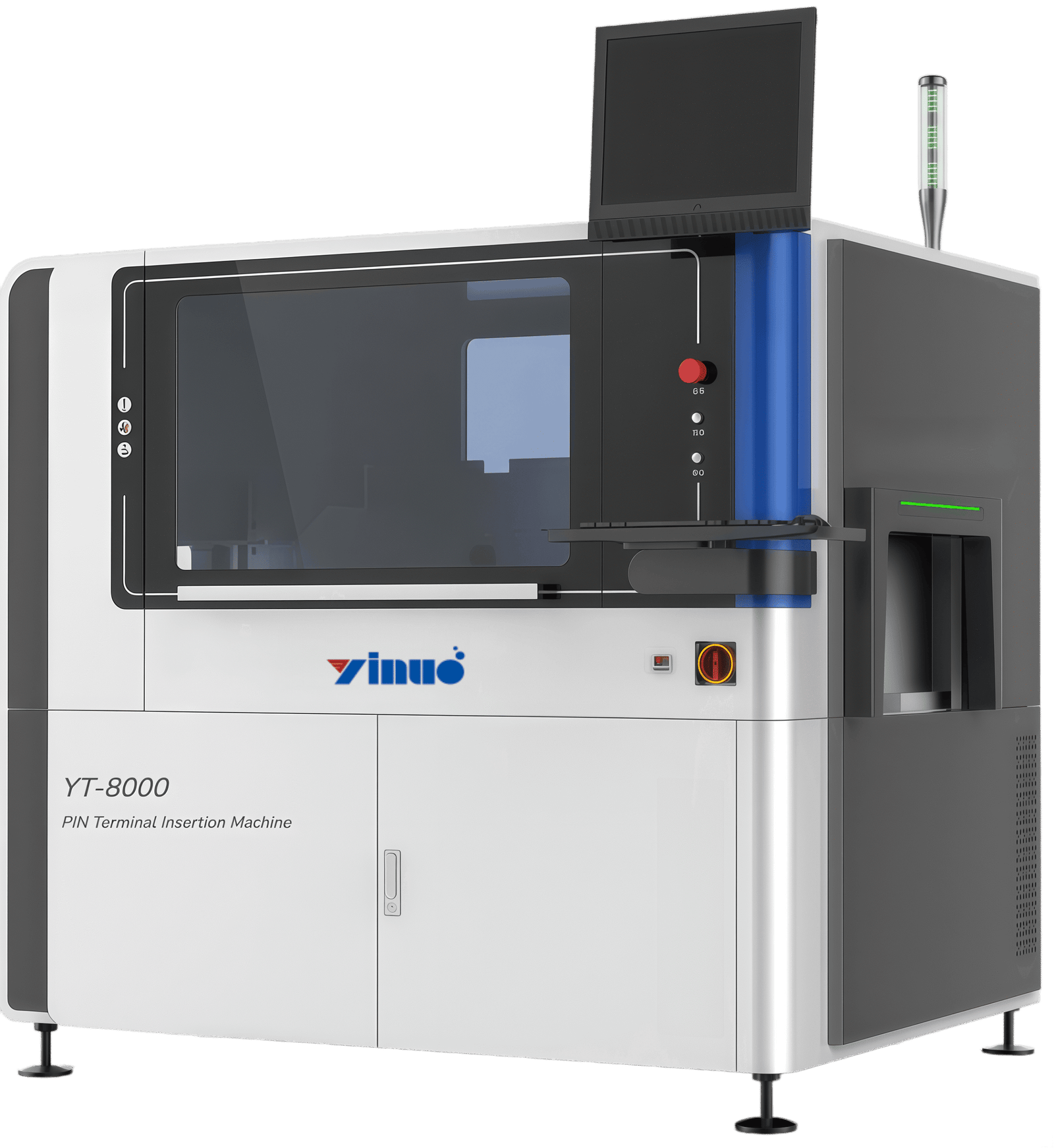
THT自動端子挿入機
How a THT Automatic Terminal Insertion Machine Serves Multiple Industries
A THT automatic terminal insertion machine demonstrates its performance across manufacturing environments that demand fundamentally different things from the same equipment. In automotive electronics, where engine control units and EV power modules subject tab connectors to years of thermal cycling and continuous vibration, the machine delivers insertion depth consistency that manual assembly cannot approach — every terminal seats to identical programmed depth, producing the uniform solder barrel fill that survives under-hood conditions.
In consumer electronics, where smart home hubs and gaming console power boards pack miniature quick-connect tabs onto densely routed multilayer PCBs, the servo-driven insertion head dials back stroke pressure to protect fragile substrates from pad lift while maintaining throughput. In home appliance production, refrigerator inverter boards and washing machine controllers use cost-sensitive phenolic materials that crack under uncontrolled force — the machine’s programmable profiles apply exactly the calibrated pressure these lighter substrates demand. In renewable energy equipment, solar inverter DC stages and battery management systems carry continuous current through connectors where any insertion inconsistency becomes a resistive hot spot over time.
What unifies these applications is the machine’s closed-loop process intelligence. Force-feedback sensing monitors every insertion stroke in real time, detecting abnormal resistance that signals a blocked hole, contaminated barrel, or misaligned terminal before the board advances to soldering. The vision system confirms terminal type and orientation at each position, eliminating the mixing errors that plague manual workstations handling multiple connector formats simultaneously. This built-in verification means boards exit the machine insertion-complete and quality-confirmed, ready for wave soldering without a separate inspection step — a workflow advantage that compounds across every industry the machine serves.
The market value crystallizes in capital efficiency. A single insertion cell feeds automotive Tier 1 programs, consumer electronics contracts, appliance production runs, and energy equipment assemblies — changeover between product families is a recipe file load rather than a mechanical rebuild. For contract manufacturers and OEMs navigating markets where customer mix shifts quarterly, this multi-industry adaptability transforms terminal insertion automation from a single-product capital expense into a factory-wide productivity asset that earns its cost across the full diversity of the production schedule.
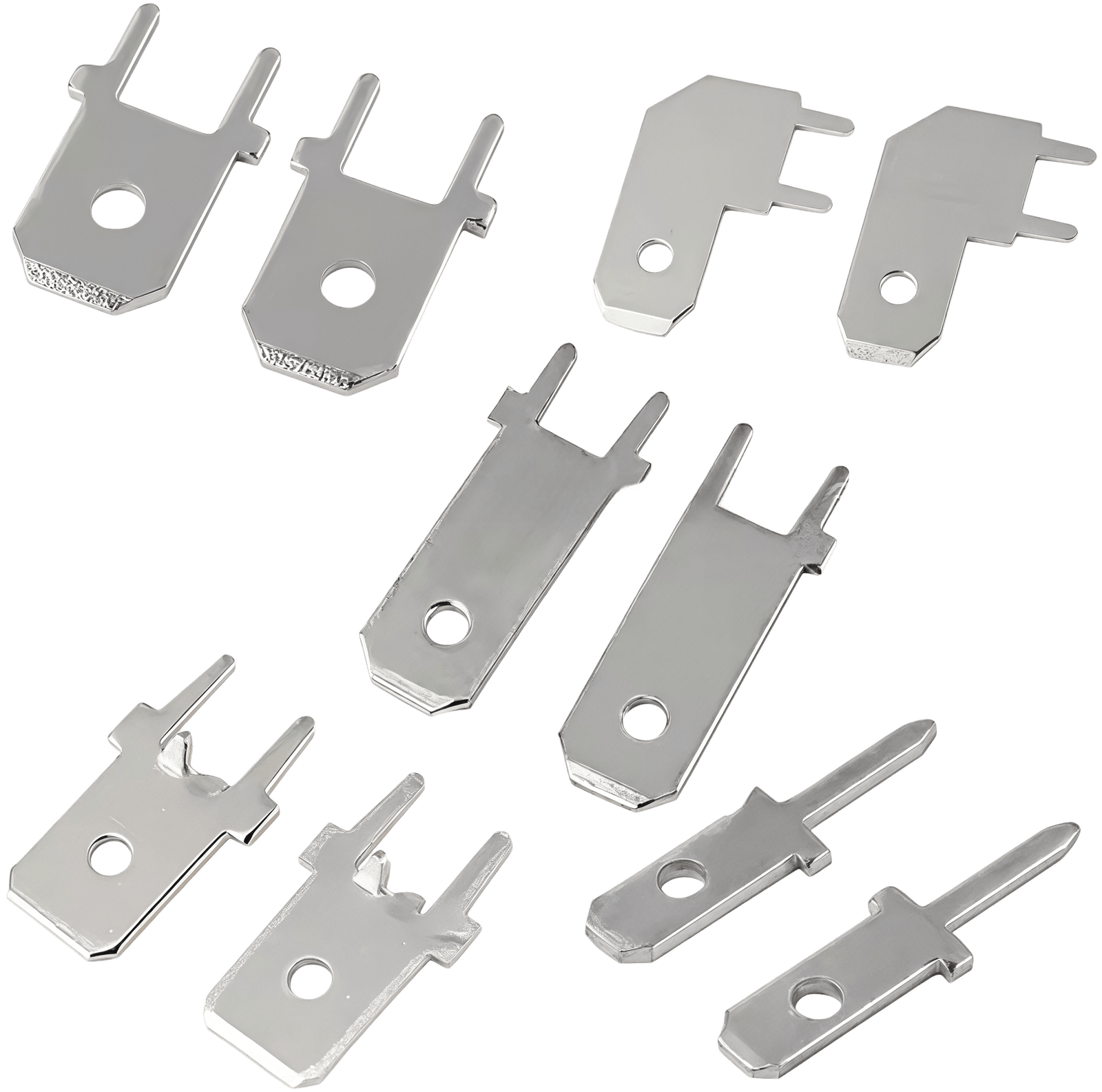
PCBタブ端子
仕様
| モデル | YT-8000 |
| 機器のサイズ | 1700mm×1300mm×1600mm(2ヘッド) |
| パッケージ | テープ端子、バルク端子 |
| 機器の重量 | 1200kg |
| PCBサイズ | 380mm×280mm(拡大サイズはカスタマイズ可能です) |
| 挿入ヘッドの数 | 1~4 任意 |
| 端面厚さ | 0.5mm以上 1.2mm以下 |
| 鉛直誤差 | ≤0.8° |
| PCBの要件 | 挿入穴は、部品の脚よりも0.5±0.1mm大きい |
| 挿入角度 | 360°(1°刻み) |
| ボディ・ディスタンス | 部品間の距離は 2mm 以上である |
| クリンチ | 内側クリンチ/外側クリンチ/「N」” |
| 湿度 | 30%-70% |
| 表示システム | 17インチカラー液晶モニター |
| 給餌システム | テープフィーダー、またはボウルフィーダー+送りガイド |
| 動作精度 | 0.001mm/パルス |
| モーションシステム | パナソニック製コントローラー、モーター |
| プログラミング機能 | オンラインでのビジュアルプログラミング、ビジュアルによる修正、EXCEL |
| データのインポート | USBインターフェースからの取り込み、手動入力 |
| 通信インターフェース | RS-232C(MESシステムに接続可能) |
| 力 | 単相 220V/AC、50/60Hz、2kVA |
https://www.youtube.com/@allaismt
For more information about the THT自動端子挿入機, 、メールをお送りください
お問い合わせには速やかに対応し、弊社製品およびサービスに関する詳しい情報を提供させていただきます。.

-300x225.jpg)
-300x225.jpg)
-300x225.jpg)