

PCB Flip Station for Solder Joint Inspection Access
Inspection Access After Reflow
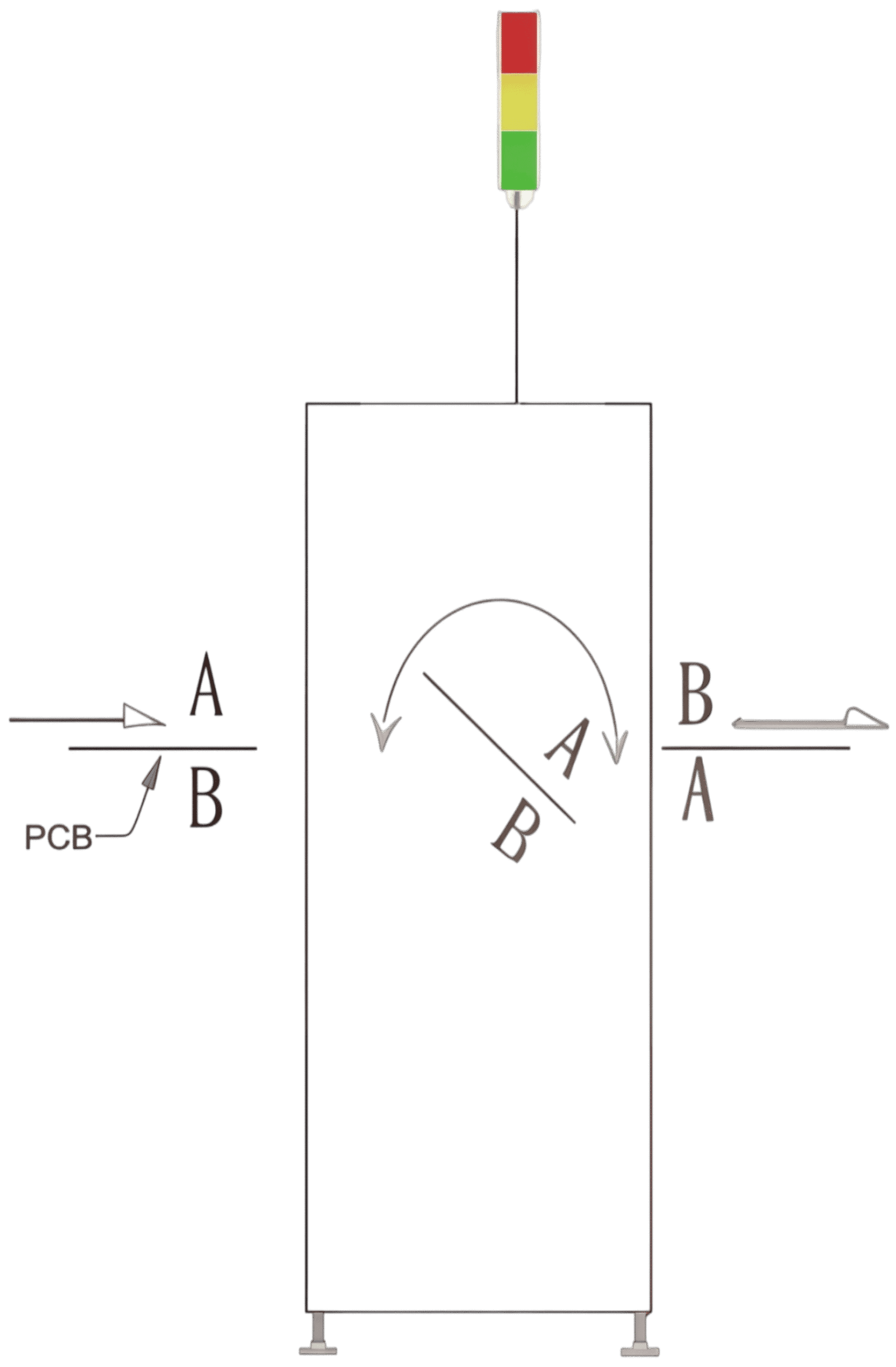
In SMT manufacturing, some solder joints and component connections remain difficult to examine while the PCB stays in its original orientation. The PCB Flip Station changes the board’s exposed surface through 180-degree inversion, allowing the production route to direct the opposite side toward a suitable inspection or examination stage. This function is particularly relevant to assemblies with bottom-side components, underside terminations, or solder joints that require visual access after an earlier process has been completed.
Board Positioning During Surface Exchange
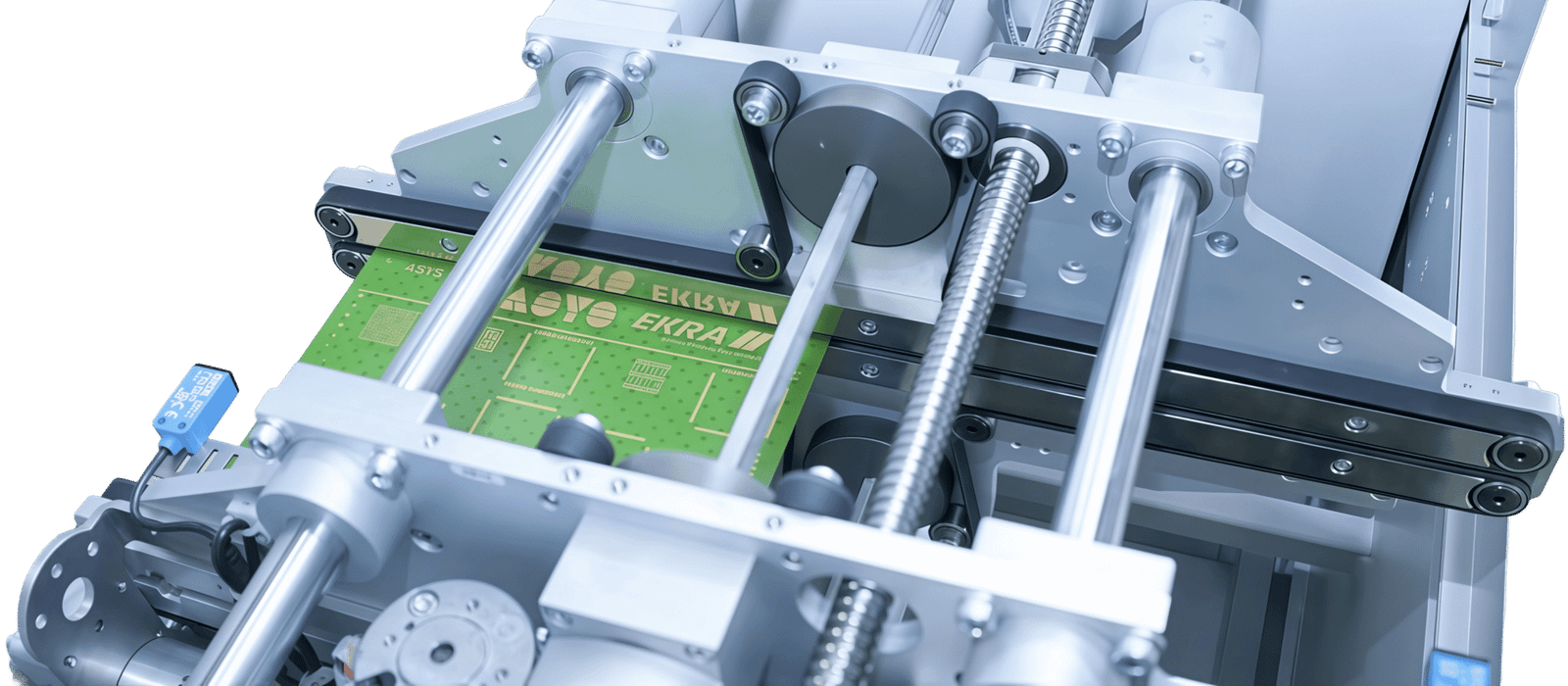
The inversion process requires the PCB to remain within the intended movement envelope throughout the rotation cycle. Board support, gripping conditions, and the position of projecting components all influence how the assembly moves. Engineers should evaluate populated boards with different component heights and weight distributions to determine whether the station’s mechanical arrangement accommodates the actual product range. This assessment is especially important for assemblies whose underside components could contact the conveyor structure during rotation.
Inspection Sequence and Transfer Requirements
The station’s position within the inspection route depends on the type of examination required and the way boards enter and leave adjacent machines. Engineers should confirm whether the receiving equipment accepts the inverted board orientation and whether its conveyor can accommodate the board’s dimensions. Cycle timing also requires attention when inspection equipment operates at a different rate from the preceding reflow or transport stage. These details determine whether inversion can take place without disrupting board flow.
A Practical Option for Underside Examination
The PCB Flip Station provides an orientation-changing function that can make otherwise inaccessible PCB surfaces available for inspection. Its application depends on the inspection method, board construction, component clearance, and receiving-machine requirements. Matching these factors before installation helps establish an appropriate inspection sequence for assembled circuit boards.
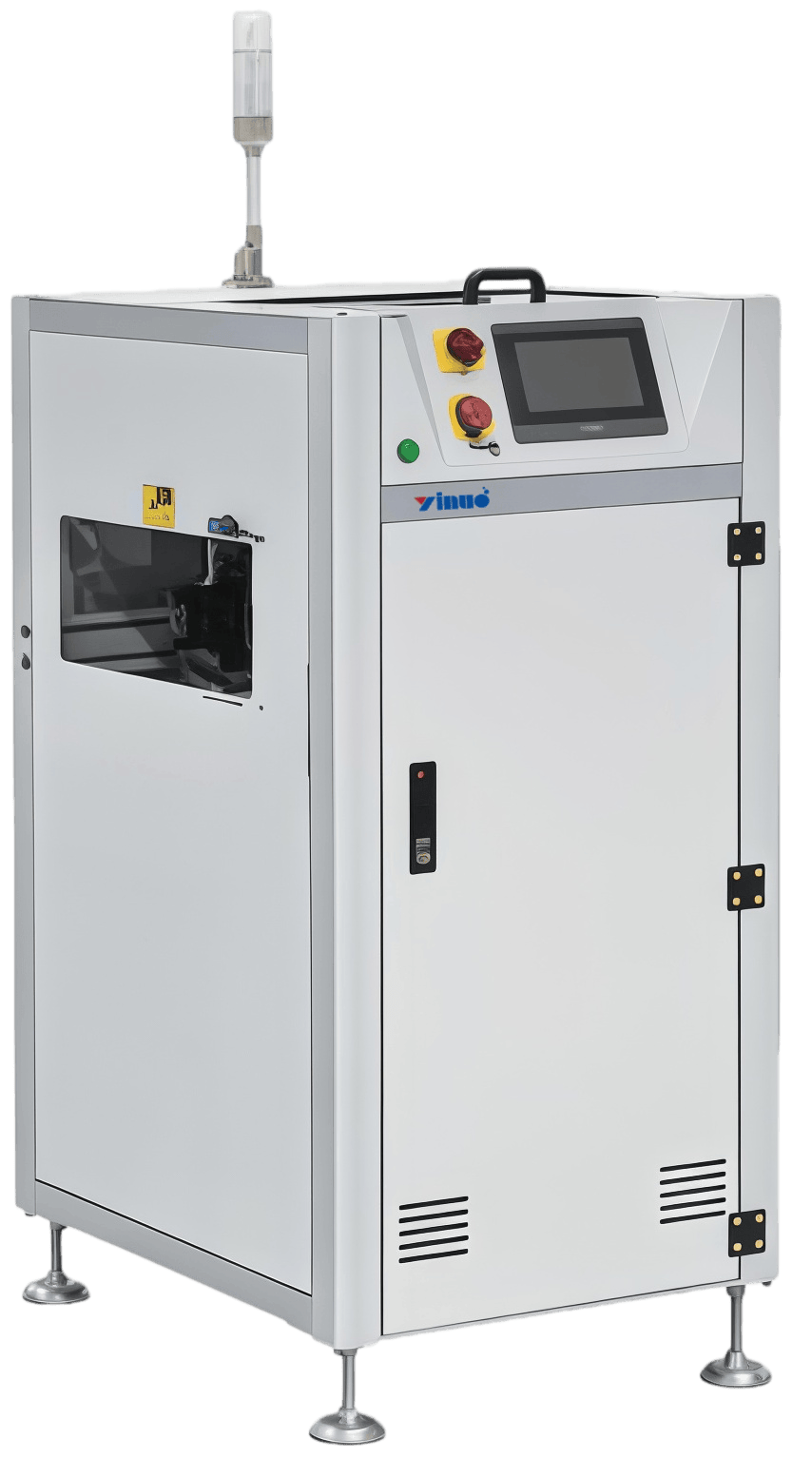
PCB Flip Station
PCB Flip Station for Electric Vehicle Battery and Charging Electronics
PCB Flip Station for Electric Vehicle Battery Electronics
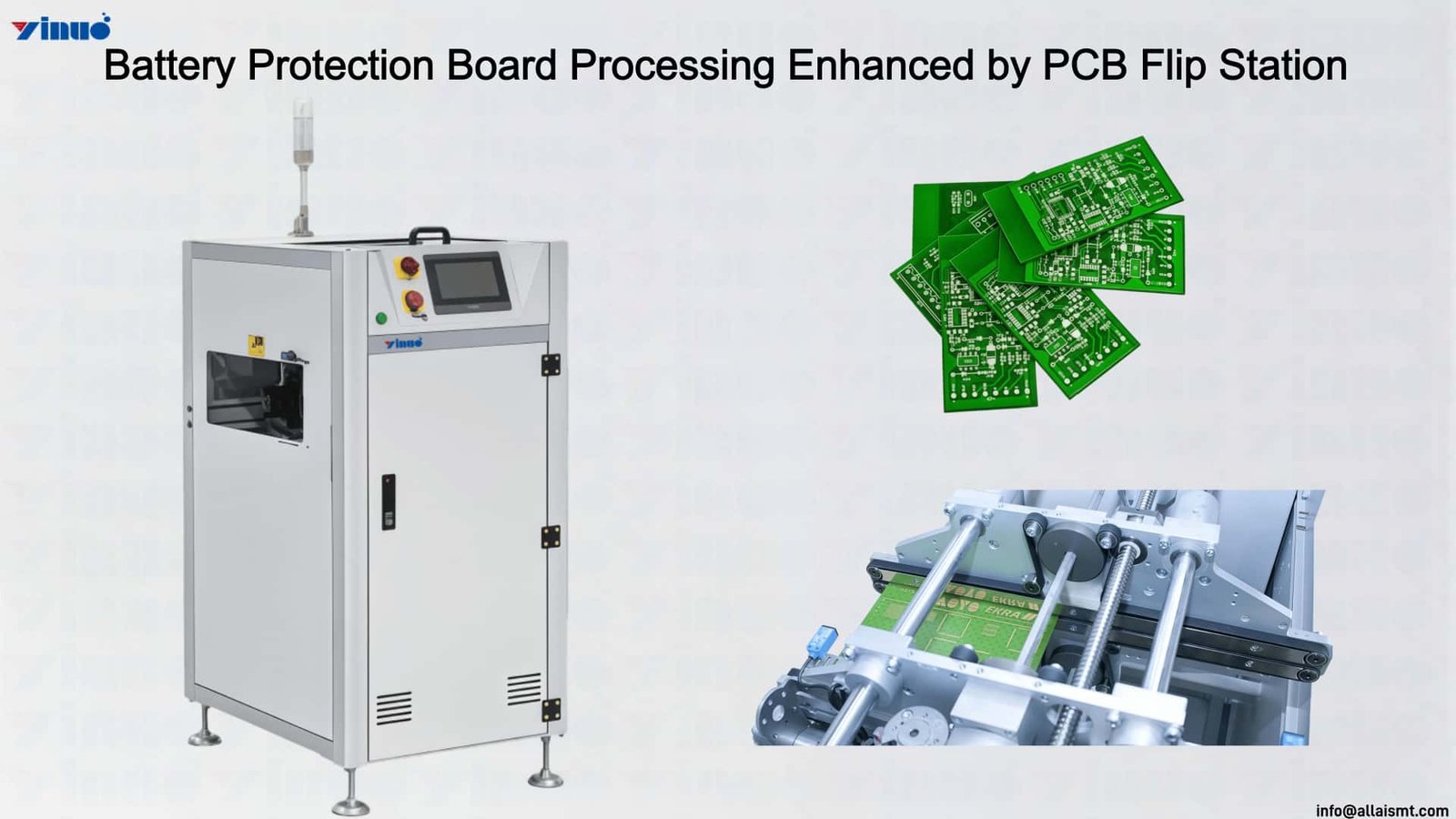
Electric vehicle battery electronics manufacturing involves multiple PCB types, including battery monitoring units, pack control boards, and battery management modules. Where these assemblies require components on both sides, a PCB Flip Station can be installed between the first-side and second-side SMT processes. After the initial assembly stage, the station rotates the PCB 180 degrees so that the remaining surface can enter the next printing, placement, or inspection operation. This orientation change is particularly relevant when the production route must accommodate different circuit functions on opposite sides of the same board.
Application in Battery Pack Control Module Assembly
Battery pack control modules may incorporate communication circuits, switching control, sensing interfaces, and protection-related electronics. For boards with double-sided component layouts, the PCB Flip Station can change the exposed surface between assembly stages without requiring a separate manual inversion step. During equipment selection, engineers should consider the complete populated-board envelope rather than the dimensions of the bare PCB alone. Tall connectors, projecting components, and unevenly distributed loads can influence the permitted rotation clearance and the suitability of the station for a particular battery control module.
Use in Charging Equipment and Power Management PCB Lines
Manufacturers of electric vehicle charging equipment and battery power management systems may produce controller boards that require processing on both surfaces. The PCB Flip Station can occupy the transfer point between first-side assembly and subsequent operations on the opposite face, according to the board’s manufacturing sequence. For lines containing different PCB models, the station’s allowable board range and adjustment arrangements should be checked against the production portfolio. Control communication, conveyor alignment, and receiving-machine requirements also need verification to ensure that inverted boards enter the next process in the correct orientation.
Summary of PCB Flip Station Applications
The PCB Flip Station serves as an orientation-control unit for double-sided battery electronics, charging control boards, and battery pack management assemblies. Its 180-degree rotation function allows manufacturers to position the required PCB surface toward the next process while maintaining a conveyor-based transfer sequence. Appropriate assessment of component clearance, board format, cycle timing, and machine interfaces determines its suitability for an electric vehicle electronics line. This makes the station a practical option for production routes where board orientation is a necessary part of the assembly process.
仕様
| モデル | YF-350 | YF-460 |
| 寸法(mm) | 500*725*1250 | 600*856*1250 |
| PCB Size(mm) | 50*50-445*350 | 50*50-550*460 |
| Cycle Time | Approx. 10 seconds | |
| Belt Type | Oblate Belt | |
| Power Supply | AC 1P 110V/220V; Max 150VA | |
| Air pressure | 4-6bar, 1.1 ltr/min Max | |
| Transport Height | 900±20mm(or customized) | |
| Transport Direction | From left to right or right to left | |
| Weight(KG) | 120 | 160 |
FQA
1.Q:What is a PCB Flip Station used for?
A:It is used to change PCB orientation during SMT production and electronic assembly.
2.Q:Can a PCB Flip Station handle double sided PCBs?
A:Yes, it can help present the opposite side for the next manufacturing process.
3.Q:Which industries use PCB Flip Stations?
A:Common applications include automotive electronics, battery electronics, telecommunications, and industrial control.
4.Q:What should buyers consider when choosing a PCB Flip Station?
A:Consider PCB size, production requirements, conveyor height, and compatibility with existing equipment.
5.Q:How can I choose the right PCB Flip Station?
A:Provide your PCB specifications and production-line requirements to identify a suitable model.
Yinuo Electronics Co., Limited specializes in SMT and PCB assembly equipment, offering a range of solutions for electronics manufacturing. Our product portfolio supports different stages of the production process, helping manufacturers select suitable equipment for their operational needs. We are committed to providing practical products and professional assistance to customers worldwide.
Our website is: www.esmte.com | Contact email: info@allaismt.com | Video channel: https://www.youtube.com/@allaismt/videos | WhatsApp: +8613760481664