
Introduzione
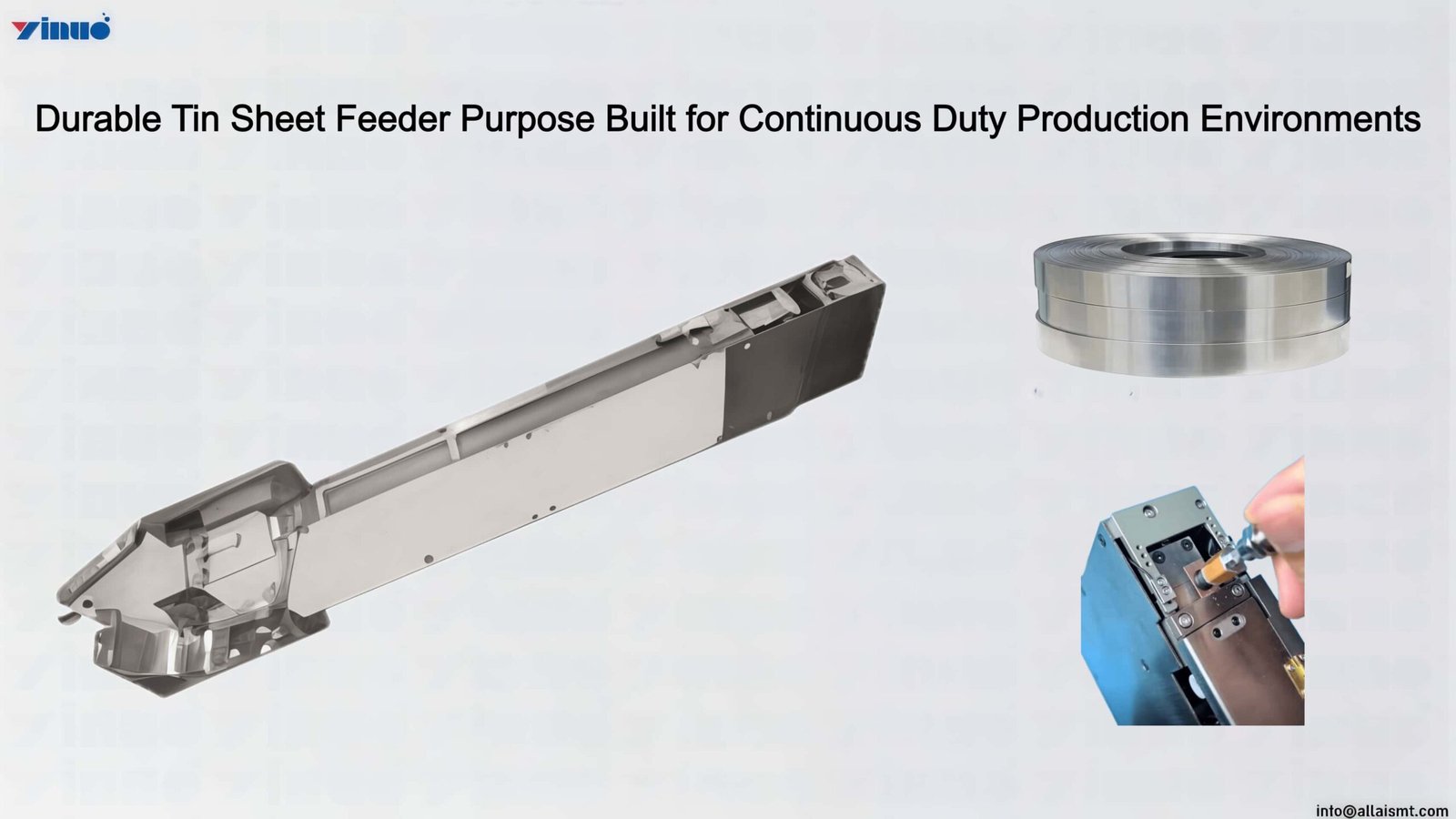
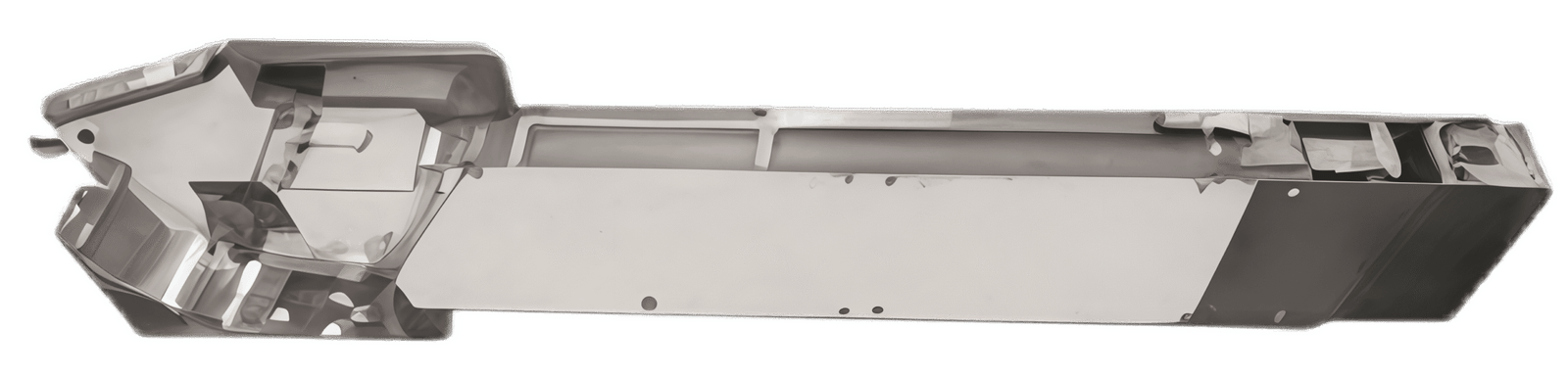
At the core of the Alimentatore per lamiere di stagno is a fully automatic cutting and feeding architecture that accepts rolled tin sheet and outputs placement-ready segments with no manual steps between input and delivery. The roll loads into the feeder in a single motion; from that point, the device unwinds the material under governed tension, severs each piece to the programmed length, and feeds it forward to the placement or labeling machine. This sequence runs continuously and autonomously, making the feeder equally effective whether supplying solder preforms to a placement machine for PCB attachment or delivering conductive strips to a labeling station for specialized SMT functionalization.
Applied as a standard component on automated production lines, the Tin Sheet Feeder reduces the engineering overhead that accompanies every new line commission or product changeover. Traditional approaches require custom-designed feed mechanisms tailored to the specific material format and placement geometry of each product — a process that inflates design timelines and introduces integration risk at the mechanical, electrical, and software layers. The Tin Sheet Feeder replaces this custom engineering with a proven, self-regulating module whose performance characteristics are documented and predictable, allowing automation designers to treat material supply as a solved subsystem rather than a per-project development task.
The feeder’s mechanical simplicity also makes it a natural partner for robotic arms. In a typical layout, the robotic arm serves as the spatial executor — reaching, picking, orienting, and placing — while the Tin Sheet Feeder governs the more fundamental task of preparing each piece with dimensional accuracy and delivering it at the right interval. This division of responsibility creates a reliable, repeatable workflow that replaces manual operators across the entire cutting, feeding, and placement sequence. For electronics factories pursuing automation as a competitive strategy, the feeder and the robot together form a self-sufficient cell that converts a roll of raw tin into PCB-attached components without human hands touching the material at any stage.
Alimentatore per lamiere di stagno
Tin Sheet Feeder From Roll to PCB in Smart Machine Electronics Assembly
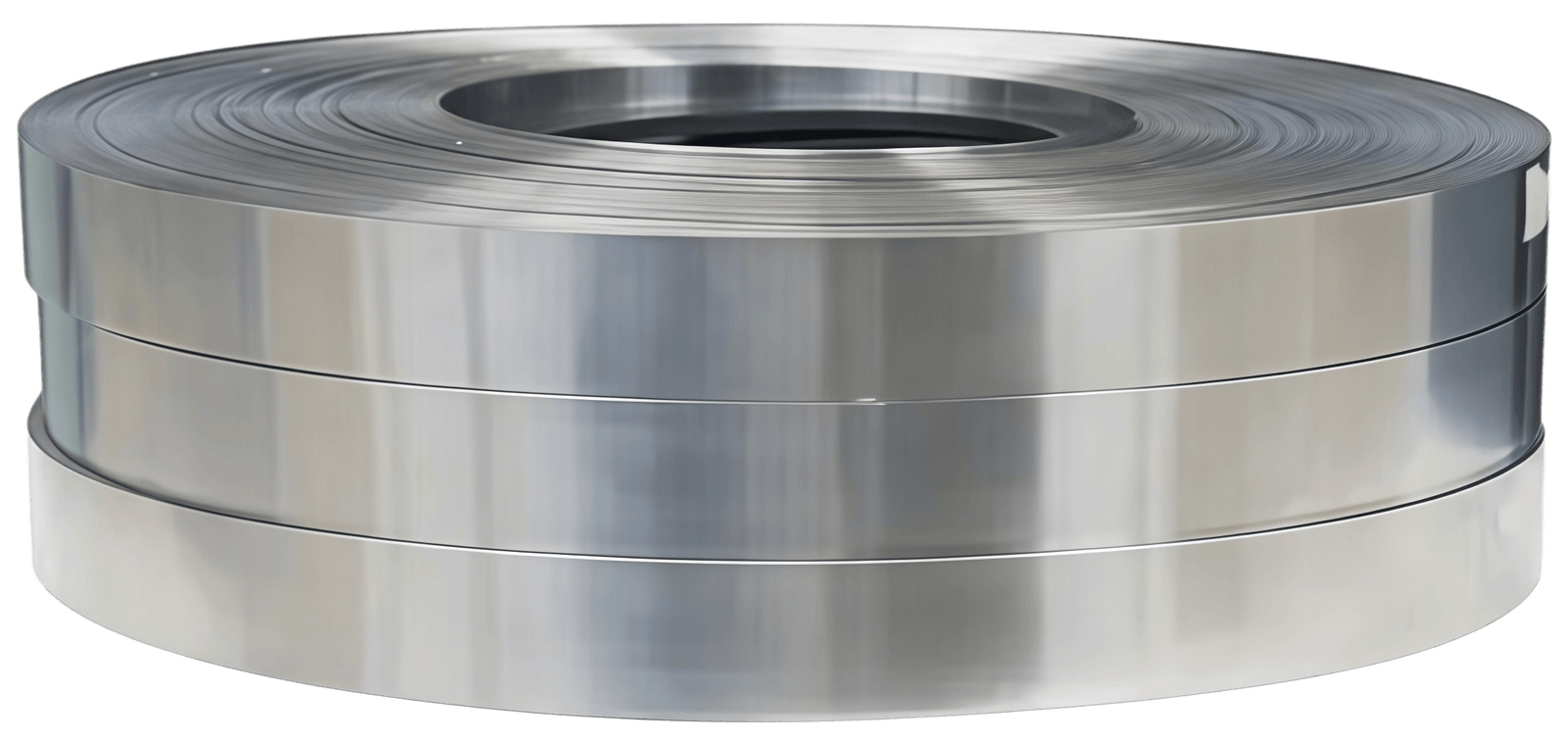
IL Alimentatore per lamiere di stagno operates on a simple principle: a roll of tin sheet is loaded, and the device takes control of the material, unwinding the strip, cutting it into precise lengths, and inserting each segment into the feed path of a placement machine for attachment to the PCB. This continuous unwind-cut-feed sequence bypasses every manual handling step between bulk material and board-level placement, a critical advantage in smart machine electronics factories where the PCBs — motor controllers, communication modules, robotic drivers, and vision processors — demand solder preforms of exacting consistency. The roll format is key: unlike loose pre-cut sheets that suffer damage in storage and transport, the continuous roll preserves the tin in a tension-controlled state.
Within the smart machine electronics production landscape, the feeder’s application spans a remarkably broad range of PCB types and assembly requirements. A factory producing servo drive control boards benefits from the feeder’s ability to deliver high-volume tin sheet segments with no interruption; the same device, minutes later and with reconfigured cutting parameters, supplies the precise, smaller-dimension preforms needed for a compact industrial sensor module. This parameter agility means the Tin Sheet Feeder functions as a universal material supply station — one unit serving multiple product lines without dedicated hardware for each board variant.
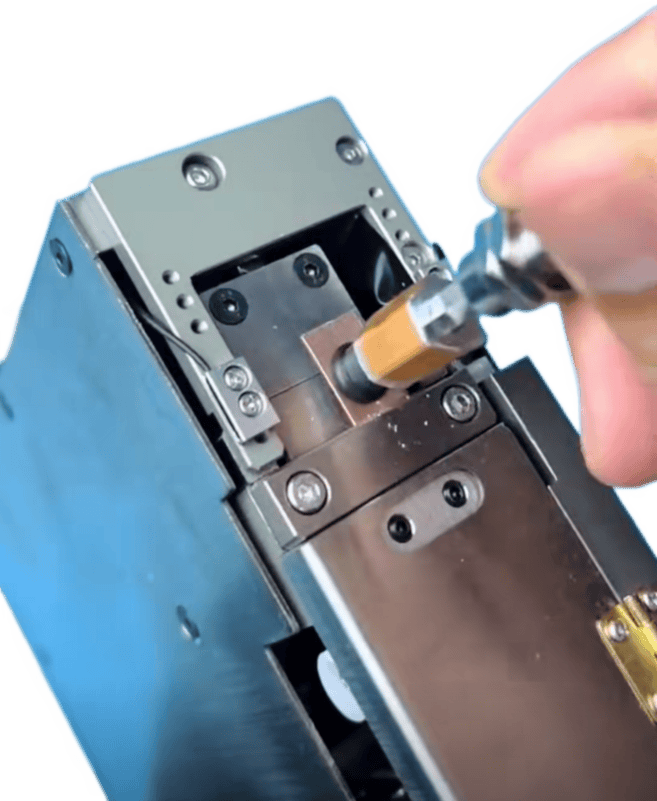
The Tin Sheet Feeder integrates directly with placement machines and robotic assembly cells, forming a material loop that begins at the roll and ends at the PCB. Its unwinding mechanism draws tin strip from the roll, advances it through the precision cutting assembly to be severed at the programmed length, and channels each segment through a guided delivery pathway to a fixed pickup coordinate. The placement machine or robotic arm retrieves the piece from this coordinate and positions it onto the board, a handoff that repeats across every cycle. Each PCB receives tin segments of identical mass and geometry because the cutting mechanism engages the strip under uniform tension and rate, producing sheets with consistent dimensions.
Specifiche
| Modello | YN-S2402 | Remarks |
| Dimensioni (L×P×A) | 878×55×233mm | |
| Peso | 8.5 KG | |
| Operating Voltage | DC42V (1.5~2.5A) | Powered by placement machine |
| Fornitura d'aria richiesta | 0.5–0.6MPa | Air supplied from placement machine |
| Operating Current | Less than 1.5A for feeding | |
| Feed Speed | 0.6 s/Pcs | Cutting time ≥2s |
| Pannello operativo | 0.96″ TFT Color Screen Resolution: 80×160 pixels |
|
| Feeding Length | 2.2~18mm | Customizable, fine adjustment ±0.1mm |
| Solder Tab Thickness | 0.05–0.3mm | Customizable, non-adjustable |
| Solder Tab Width | 2*12.1mm | Customizable, non-adjustable |
| Solder Tab Material | SnAg3Cu0.5 | Affects both cutting and forming |
| Feed Method | Mechanically Clamped |
https://www.youtube.com/@allaismt
For more information about the Alimentatore per lamiere di stagno, si prega di inviare una e-mail a
Risponderemo tempestivamente alla tua richiesta e ti forniremo informazioni dettagliate sui nostri prodotti e servizi.