Bevezetés
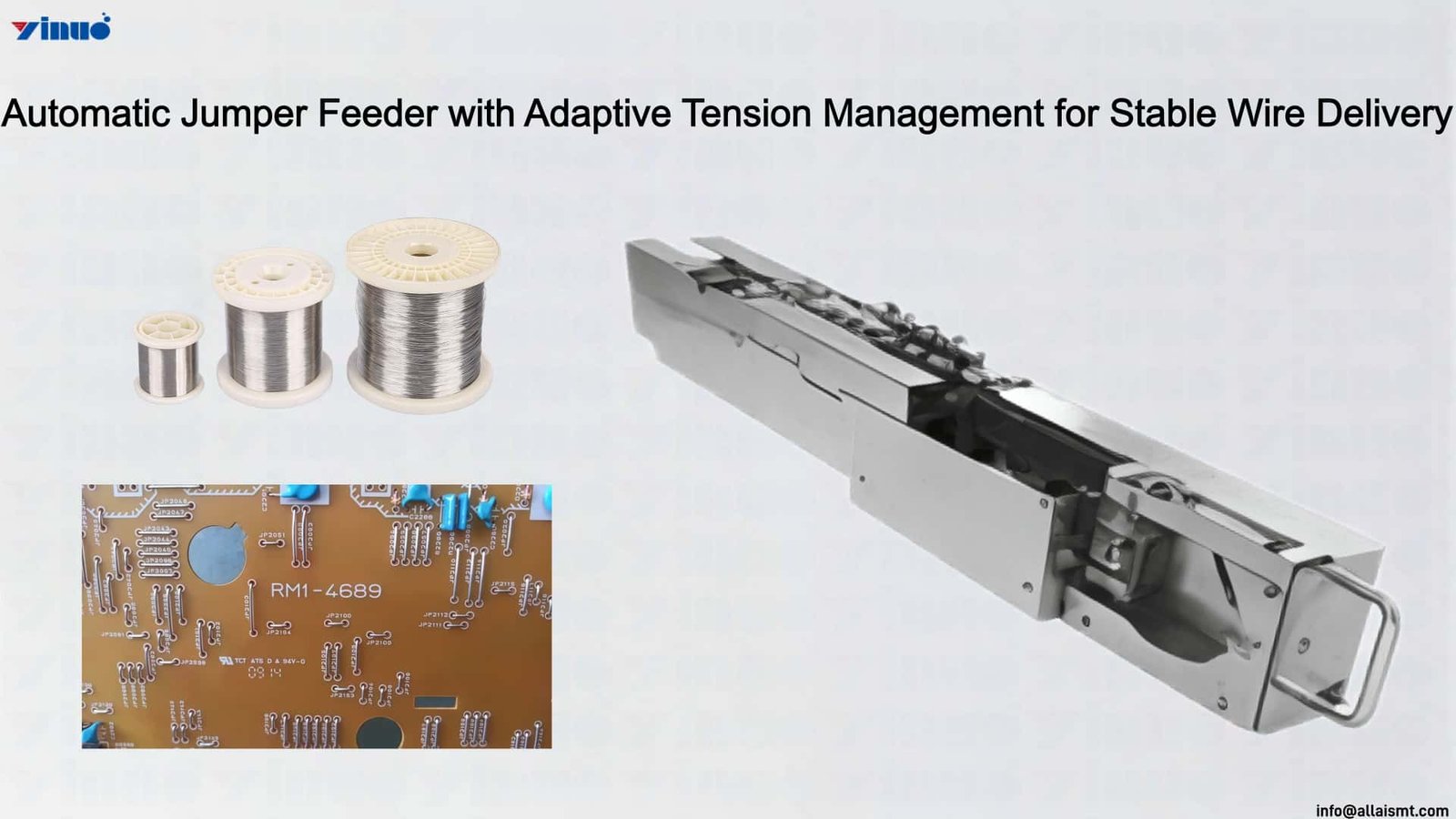
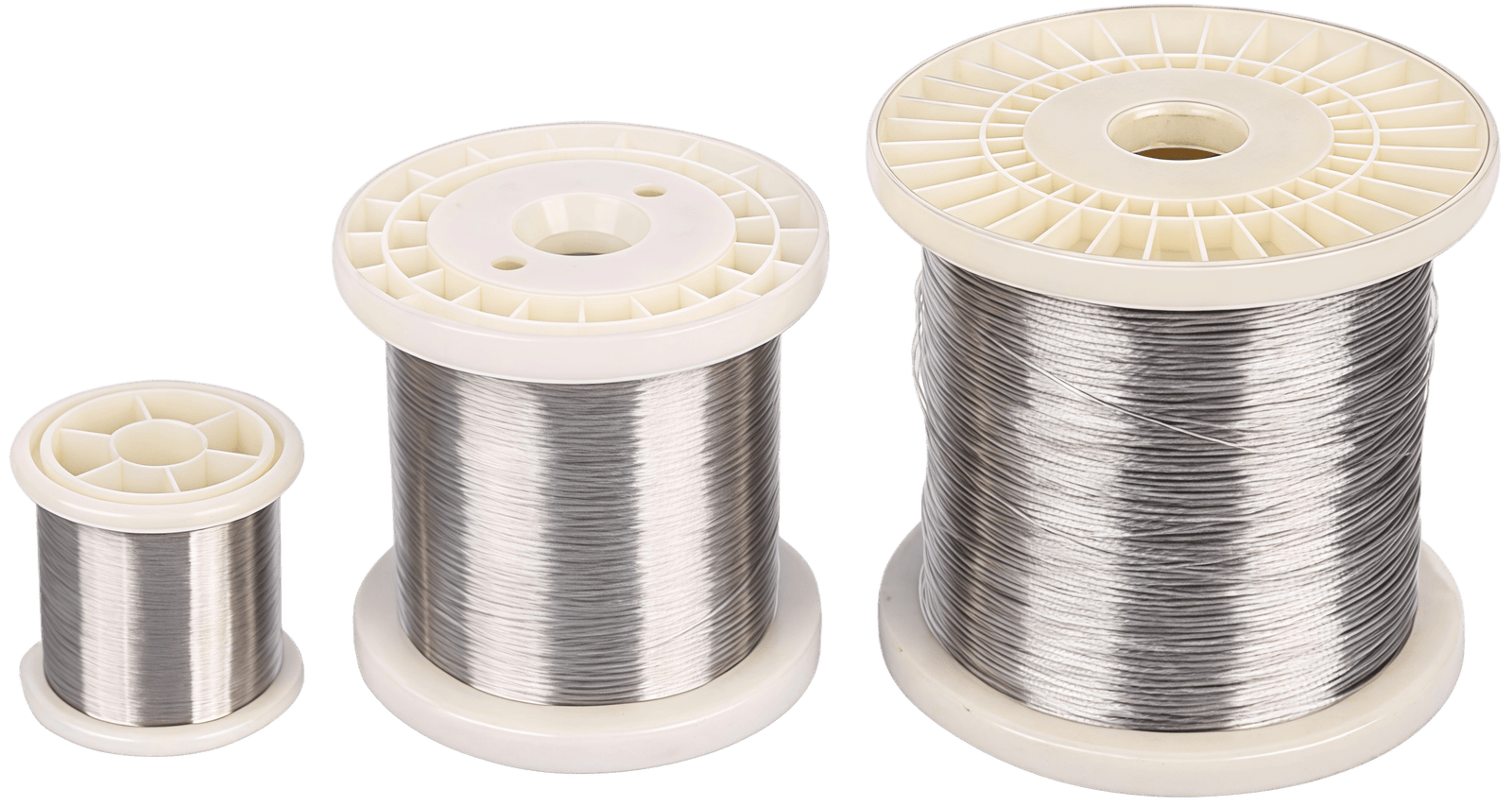
A Automatic Jumper Feeder for roll-mounted jump wire addresses one of the material-handling challenges unique to SMT assembly: how to supply a continuous, tangle-free stream of wire from a bulk spool and present discrete cut lengths at the placement head. Designed to mount alongside standard tape feeders on a pick-and-place machine, this unit unwinds jumper wire under carefully managed tension, preventing overstretching, kinking, or bird-caging that would otherwise disrupt feeding accuracy. The spool holder accommodates a range of reel diameters and core sizes, giving manufacturers flexibility in sourcing wire without being locked into proprietary packaging formats.
Tension control is the defining performance feature of this feeder. As wire is consumed, the system maintains uniform pull force through a combination of dancer arms, motorized payoff, and adaptive feed rollers that compensate for changes in spool inertia and remaining wire mass. This controlled unwinding is critical because loose wire can loop or snag inside the feeder, while excessive tension can deform fine-gauge conductors or cause premature cutter wear. By stabilizing the wire path from spool to cut station, the feeder ensures repeatable cut lengths and consistent orientation, which in turn supports reliable nozzle pickup and accurate placement onto PCB pads.
Operationally, the feeder streamlines the transition from raw material to finished assembly. Production staff load a wire spool, thread the material through the guide path, and select the required jumper length and quantity from the machine interface. The system then runs autonomously, feeding and cutting in synchronization with the placement machine’s pick-and-place cycle. This uninterrupted material flow is especially advantageous in high-volume environments where frequent reel changes or manual wire preparation would otherwise constrain throughput. For contract manufacturers and OEM assembly lines alike, the feeder converts jumper installation from a secondary operation into a fully automated, in-line process.

Automatic Jumper Feeder
Reliable Automatic Jumper Feeder Synchronizing Cut and Feed with Placement Machine Cycles
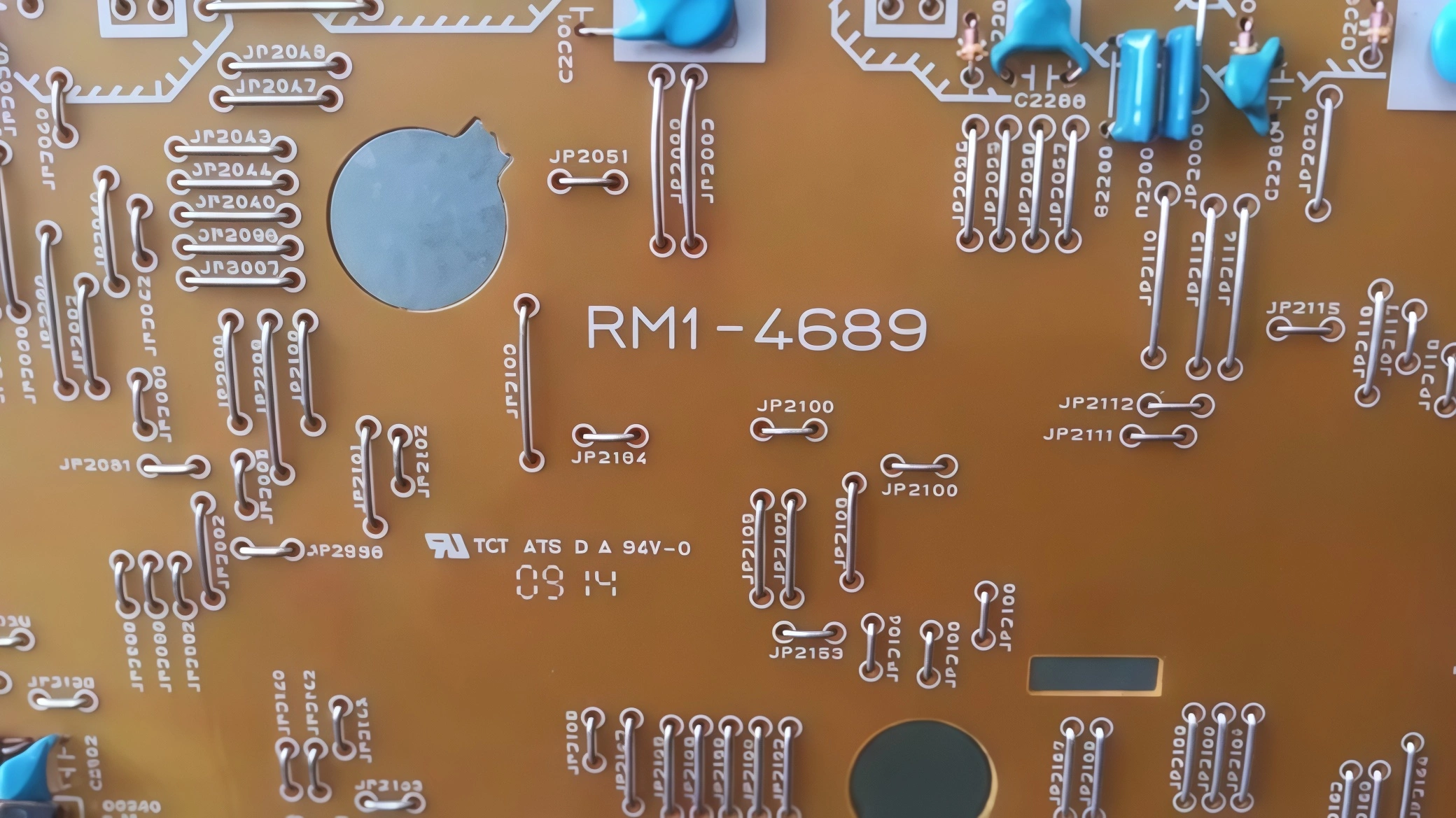
In battery and power electronics factories, the Automatic Jumper Feeder supplies cut jumpers to placement machines assembling power distribution boards, battery management system controllers, and direct-current converter circuits—boards where jumpers route current between copper pours, linking ground planes, and bridging power rails across board layers. The feeder draws roll-mounted jumper wire through its integrated straightening path, advances the material to the precise length dictated by the current board layout, and severs it with a servo-driven cutter that produces clean, squared ends free of burrs or deformation. These cut characteristics matter in power electronics, where jumper end-surface quality directly influences solder-joint cross-sectional area and the current-carrying capacity and thermal stability of assembled connections.
The feeder’s adaptive tension-management system plays an essential role when processing the heavier-gauge jumper wire commonly encountered in power and battery applications. Thicker conductors exhibit greater spring-back force and coil-set memory when unwound from a roll, which can cause feeding misalignment or cutter jamming if the wire is not properly conditioned before cutting. The Automatic Jumper Feeder addresses this through a combination of dancer-arm tension regulation and motorized roll payoff that maintain uniform pull force regardless of wire stiffness or remaining roll mass, ensuring that each cut segment is delivered to the pickup position in a straight, stable orientation ready for reliable nozzle acquisition and accurate placement onto power-board pads.
During sustained production of power distribution assemblies, the feeder operates autonomously within the placement cycle, cutting and presenting each jumper synchronized with the pick-and-place head’s arrival. Integrated sensors verify wire presence, cut completion, and proper component positioning before the placement head descends, preventing empty-pocket picks and misaligned placements that compromise high-current circuit integrity. When the system detects an anomaly such as partial cuts or wire slippage, it automatically advances to the next valid position and re-verifies, without halting the placement machine or operator intervention. This self-correcting capability maintains continuous jumper supply throughout battery management and power conversion board runs, sustaining both throughput and placement accuracy under demanding production conditions.

Specifikációk
| Modell | YN-J2303 | Remarks |
| Méretek (H×Sz×M) | 624×78×160mm | |
| Súly | 6.5KG | |
| Operating Voltage | DC 24V | |
| Szükséges levegőellátás | None | |
| Maximális áramerősség | 2.5A | |
| Feed Speed | 1.5s/Pcs | |
| Operation Panel | 0.96″ TFT Color Screen Resolution: 80×160 pixels |
|
| Changeover Time | 3min | |
| Csatorna | Egycsatornás | |
| Ólomhajlítási funkció | Bending | |
| Emelés előtti funkció | Pre-lift available | |
| Kivágási függvény | Cut-off | |
| Correction Function | Correction | |
| Material Wire Diameter | 0.4–1mm | Cannot use 0.6mm forming die to form 0.4mm wire; Can only use 0.6mm die for 0.6mm wire |
| Track Pitch | 5–26mm (Forming die depends on wire diameter) Cross-shaped die: 3 sizes in one set (large/medium/small) |
Cannot use 16mm forming die for 16mm track pitch; Must use 16mm length die |
| Forming Lead Length | 2.0~5.5mm | Within this range, different lengths can only be achieved by using different forming dies of corresponding sizes |
https://www.youtube.com/@allaismt
For more information about the Automatic Jumper Feeder, kérjük, küldjön egy e-mailt a következő címre:
Megkeresésére haladéktalanul válaszolunk, és részletes tájékoztatást nyújtunk termékeinkről és szolgáltatásainkról.