
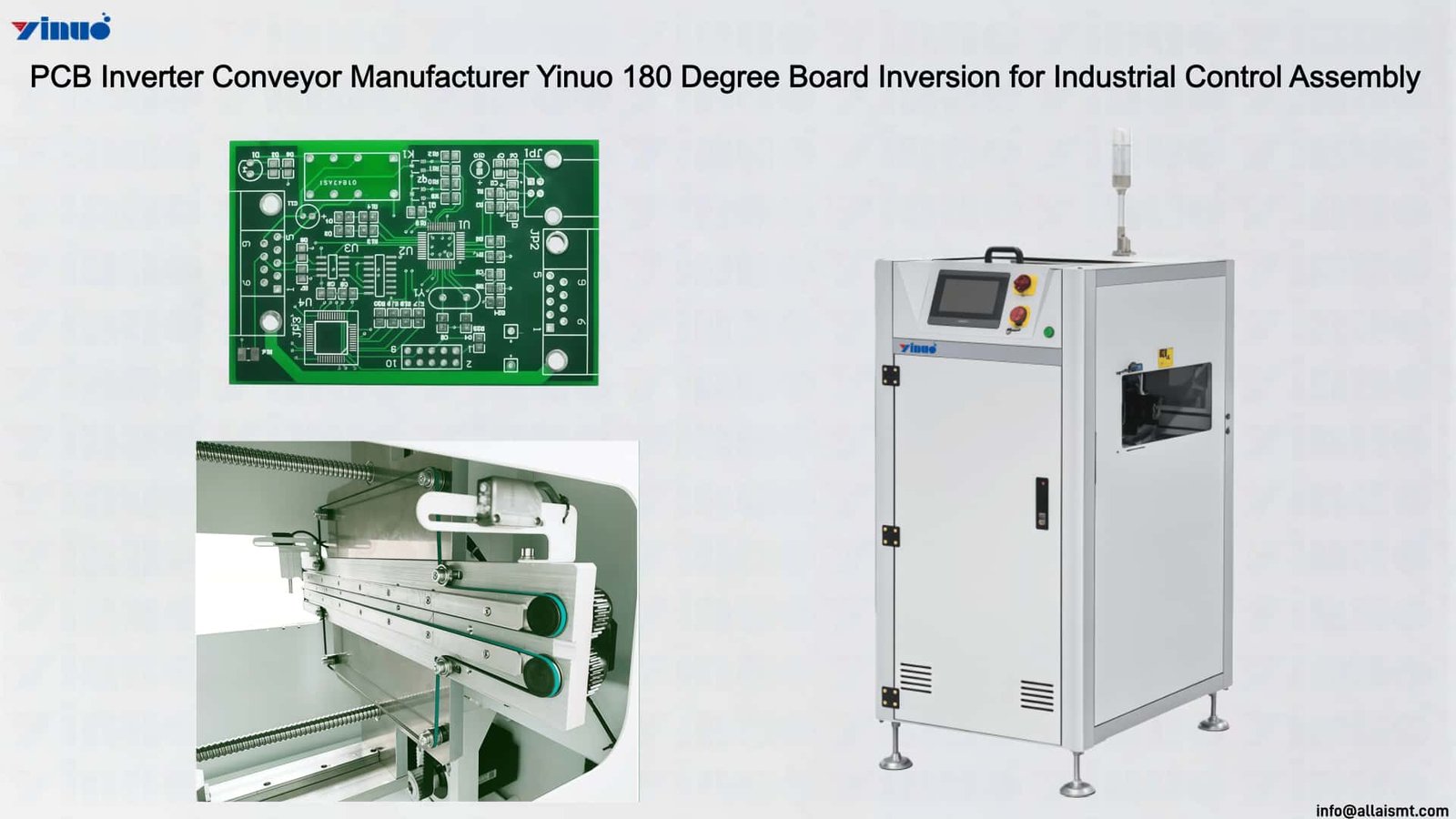
PCB Inverter Conveyor for Industrial Control Electronics
Orientation Changes in Controller Manufacturing
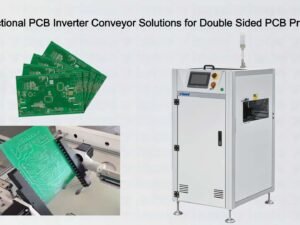
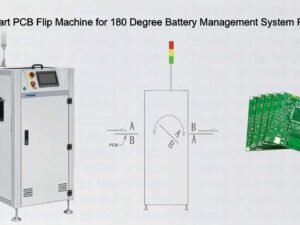
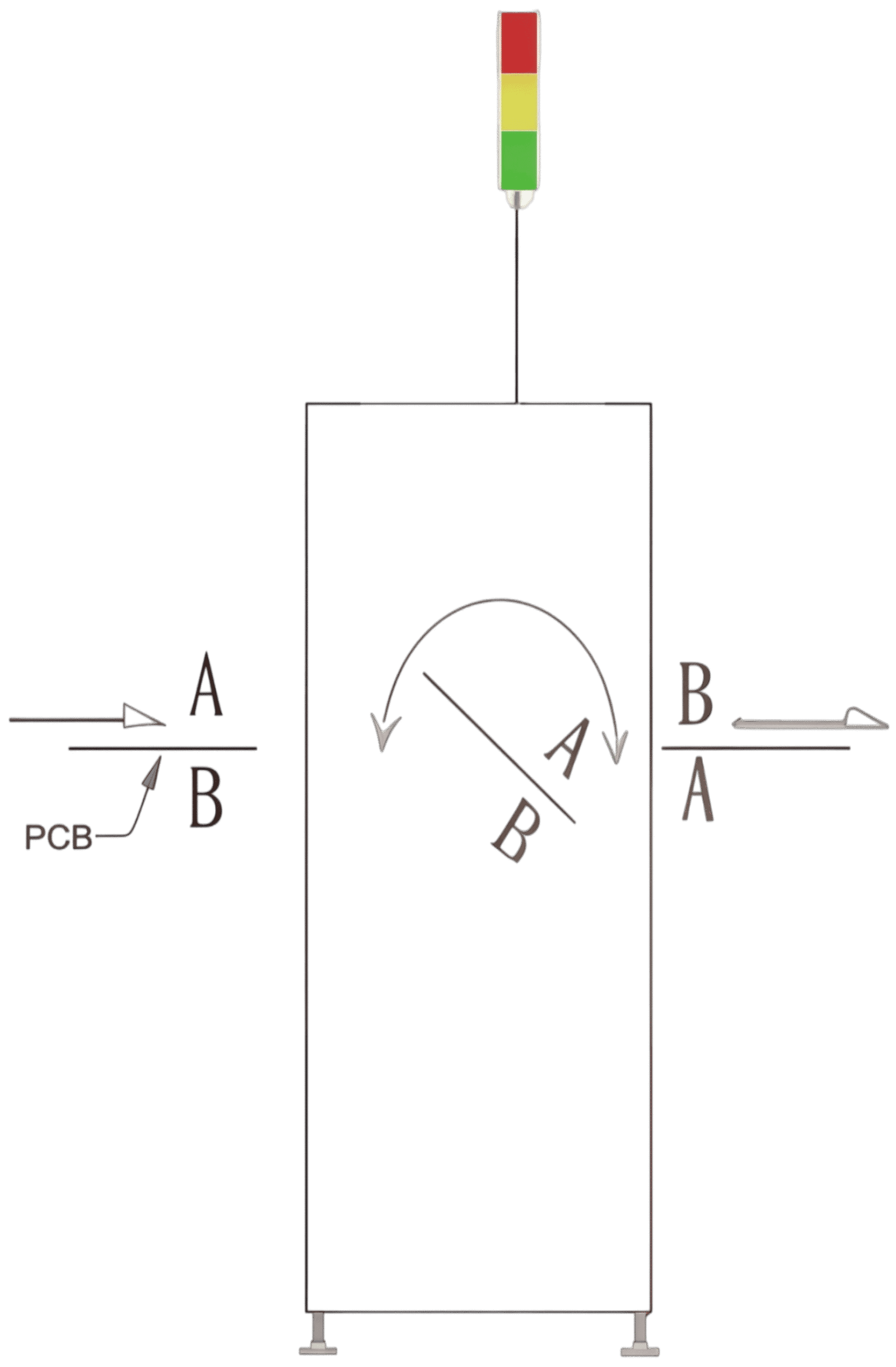
Industrial control boards used in PLC systems, motor drives, servo controllers, and automation equipment may require assembly operations on both PCB surfaces. The PCB Inverter Conveyor rotates the board through 180 degrees to expose the opposite side for the next designated process. By placing this equipment at the appropriate point in the manufacturing route, engineers can establish a specific transition between first-side and second-side operations without relying on manual board flipping.
Accommodation of Uneven Component Layouts
Industrial electronics frequently combine low-profile passive components with relays, terminal connectors, transformers, and other comparatively large parts. Their distribution across the PCB affects the mechanical conditions during inversion. A board carrying heavier components on one side may have a different center of gravity from a more evenly populated assembly. Equipment evaluation should therefore include representative loaded boards, maximum component height, edge clearance, and board-support conditions. These checks help determine whether the selected conveyor configuration can handle the intended product range.
Mechanical Adjustment and Process Timing
When multiple controller models share a production line, conveyor width adjustment can help accommodate different PCB formats, provided each board remains within the machine’s specified operating range. The transfer height and entry position must also match the neighboring stations. PLC-based control and sensor detection can coordinate the inversion sequence according to the installed configuration. Before commissioning, production engineers should measure the actual cycle time, verify board discharge conditions, and confirm that the next machine can receive the inverted assembly without interrupting the planned process sequence.
Yinuo for Industrial SMT Applications
Yinuo supplies PCB inversion equipment for SMT factories manufacturing industrial control electronics and other populated circuit assemblies. The selection process should consider board geometry, component distribution, transfer interfaces, and the required production takt rather than treating inversion capability as the only criterion. Practical trials with representative assemblies allow engineers to assess clearance and transfer behavior under actual operating conditions. This makes the PCB Inverter Conveyor a relevant material-handling option for industrial electronics lines that require controlled access to both PCB surfaces.
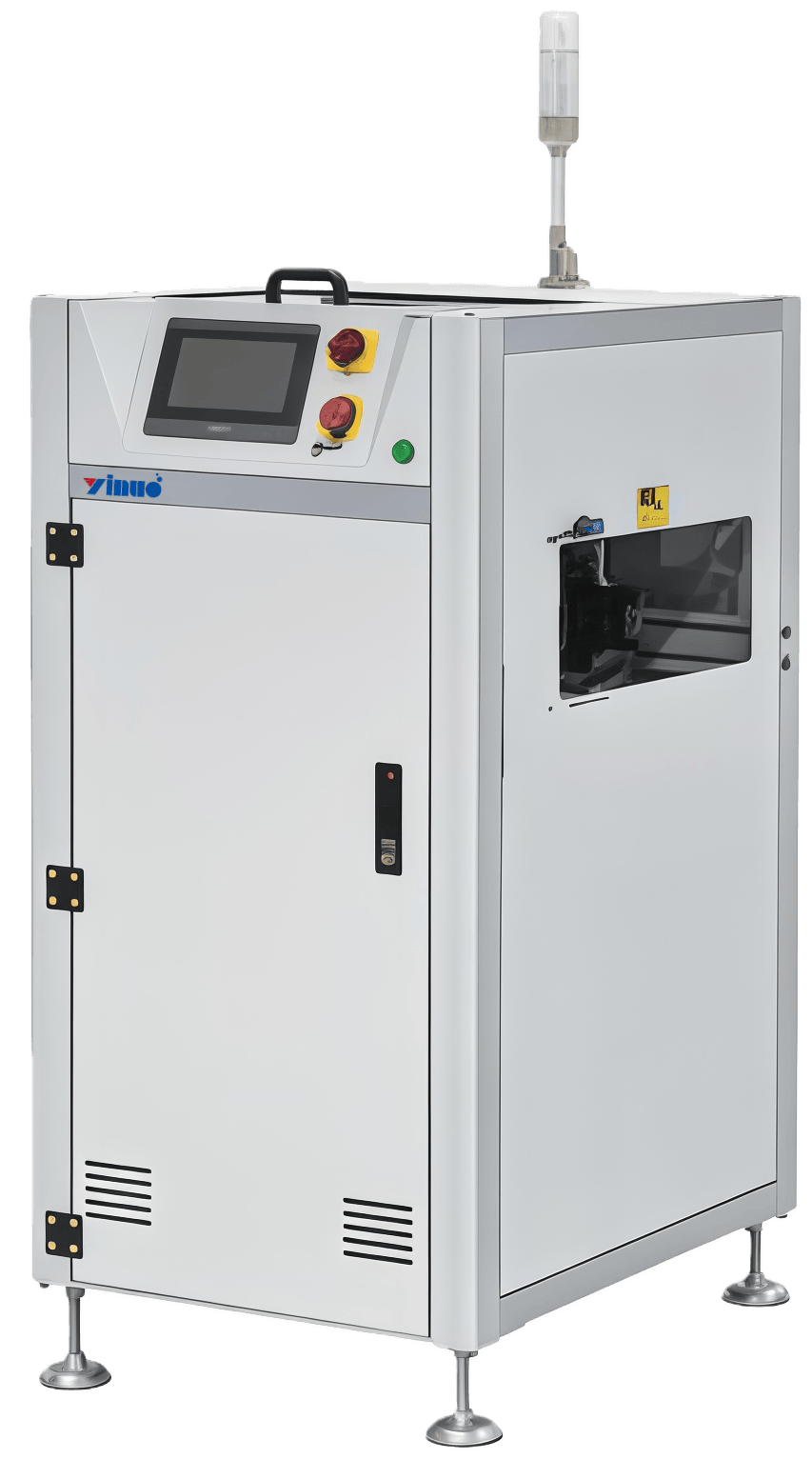
PCB Inverter Conveyor
PCB Inverter Conveyor for Renewable Energy Conversion and Storage Electronics
PCB Orientation Management for Solar Inverter Controllers
Solar inverter electronics coordinate power conversion, electrical monitoring, and system control. Their circuit boards may contain power semiconductors, sensing components, communication circuits, and control interfaces distributed across both surfaces. A PCB Inverter Conveyor changes the upward-facing PCB surface through 180-degree inversion, allowing the manufacturing route to accommodate the next required operation. Its position can be determined by examining whether the board needs to be inverted after first-side reflow, before second-side placement, or at another defined transition in the production sequence.
Handling Energy Storage Control Assemblies
Battery energy storage systems use control boards for cell monitoring, system communication, temperature acquisition, and power management. These assemblies may include tall connectors, terminal interfaces, and components with different mechanical profiles. When a board requires inversion, the PCB Inverter Conveyor must accommodate the populated assembly rather than simply the dimensions of the bare laminate. Engineers should check protruding components, unsupported edges, board weight distribution, and the clearance available during rotation. Such assessments help identify potential interference before the machine is introduced into the line.
Process Transitions in Power Management Electronics
Power management boards used in renewable energy equipment may pass through printing, component mounting, soldering, optical inspection, and electrical testing. Not every stage requires inversion, so the machine’s location should follow the specific production route. A PCB Inverter Conveyor can transfer an assembly into the orientation required by a subsequent station, including an inspection process that needs the opposite side exposed. Line planners should confirm the receiving conveyor’s height, transfer direction, board stop position, and handling sequence to establish a workable connection between adjacent machines.
Establishing a Suitable Inversion Point
Renewable energy manufacturing combines different PCB formats and circuit functions, making orientation control an important part of line planning. The PCB Inverter Conveyor provides a dedicated 180-degree inversion step for assemblies that require access to the opposite surface during production. Selection should account for board dimensions, component clearance, rotation time, machine interfaces, and downstream process conditions. When these factors are reviewed against actual solar inverter, energy storage, and power management assemblies, manufacturers can determine whether the equipment fits their process requirements and where it should be installed within the SMT line.
Presupuesto
| Modelo | YF-350 | YF-460 |
| Dimensión (mm) | 500*725*1250 | 600*856*1250 |
| PCB Size(mm) | 50*50-445*350 | 50*50-550*460 |
| Cycle Time | Approx. 10 seconds | |
| Belt Type | Oblate Belt | |
| Power Supply | AC 1P 110V/220V; Max 150VA | |
| Air pressure | 4-6bar, 1.1 ltr/min Max | |
| Transport Height | 900±20mm(or customized) | |
| Transport Direction | From left to right or right to left | |
| Weight(KG) | 120 | 160 |

FQA
1.Q:What determines the installation position of a PCB Inverter Conveyor?
A:Its position depends on the required board orientation, the preceding process, and the receiving station’s entry direction.
2.Q:How does 180-degree inversion affect double-sided SMT assembly?
A:It exposes the opposite PCB surface for the next assembly operation, allowing both sides to follow their assigned production sequence.
3.Q:Is a PCB Inverter Conveyor suitable for mixed PCB sizes?
A:It can accommodate different board formats when the conveyor width and operating range match the required PCB dimensions.
4.Q:How does the machine control PCB orientation during inversion?
A:A controlled rotation mechanism changes the board orientation by 180 degrees before releasing it toward the next station.
5.Q:How does conveyor width adjustment affect changeover?
A:Correct width adjustment aligns the transport path with the incoming PCB format and reduces lateral positioning errors.
Yinuo Electronics Co., Limited specializes in SMT and PCB assembly equipment, offering a range of solutions for electronics manufacturing. Our product portfolio supports different stages of the production process, helping manufacturers select suitable equipment for their operational needs. We are committed to providing practical products and professional assistance to customers worldwide.
Our website is: www.esmte.com | Contact email: info@allaismt.com | Video channel: https://www.youtube.com/@allaismt/videos | WhatsApp: +8613760481664