
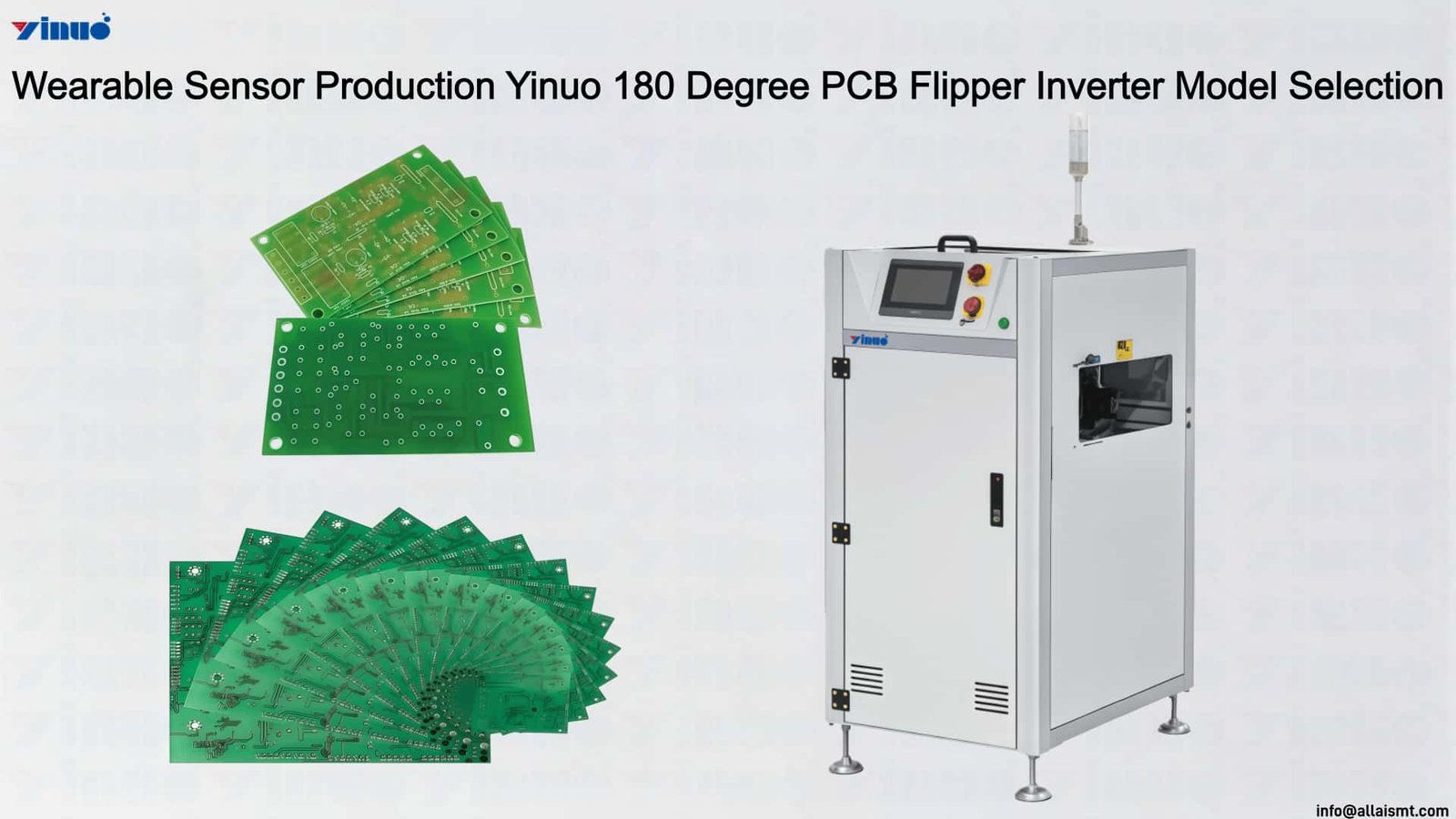
Automatic PCB Flipper Inverter with 180 Degree Inversion for Industrial Automation Circuit Assembly
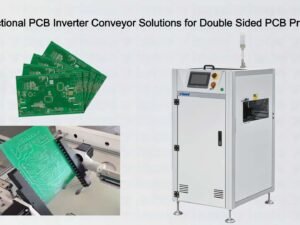
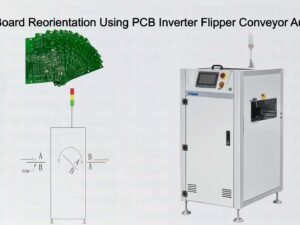
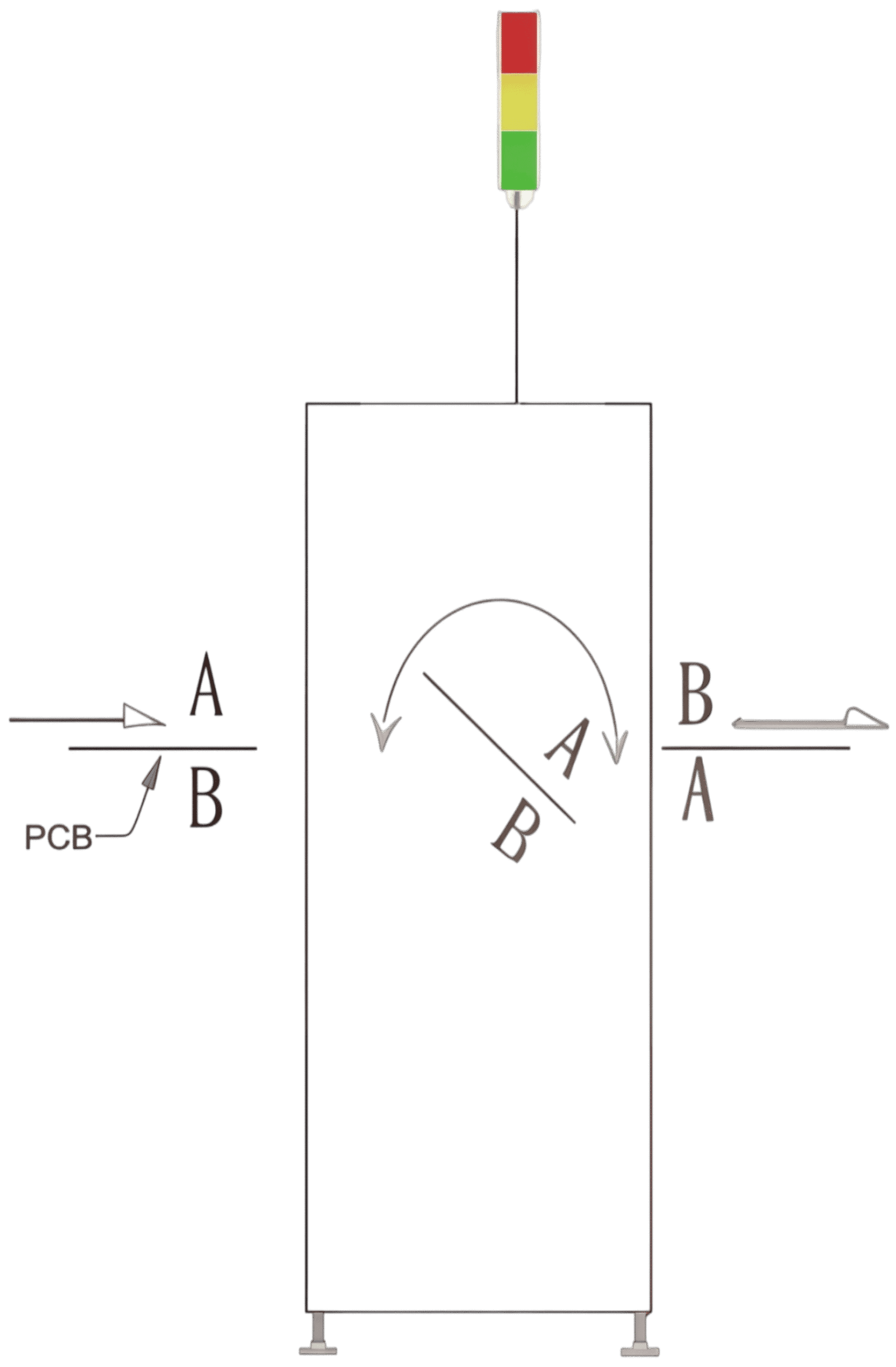
Der Automatic PCB Flipper Inverter addresses a key requirement in SMT line engineering: controlling PCB orientation as assemblies move between manufacturing stages. Its 180 degree inversion mechanism changes the upward-facing surface of a circuit board, allowing the production sequence to accommodate processing requirements on both sides. Rather than relying on operators to reposition boards between stations, manufacturers can assign the inverter a specific position within the conveyor route. This is particularly useful when the assembly sequence depends on a defined transition between first-side and second-side operations.
Board geometry plays an important role in the inversion process. Different PCB formats may include projecting connectors, edge-mounted components, or uneven component distributions that affect the available movement clearance. Yinuo’s Automatic PCB Flipper Inverter is available in YF-350 and YF-460 configurations, covering different board size ranges. Production engineers can compare the applicable dimensions with their actual assemblies and evaluate conveyor height, entry direction, rail spacing, and component clearance before finalizing installation.
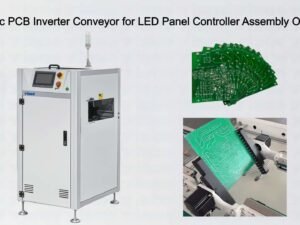
In electronics factories producing motor controllers, power management boards, and industrial automation circuits, the inverter can establish a controlled orientation change before downstream assembly or examination. Once the PCB has passed through its initial processing stage, the machine exposes the opposite surface for the next operation. PLC control and sensor feedback, where included in the configuration, can coordinate the operating sequence with board positioning. This approach gives production teams a defined mechanical step within the material flow rather than an improvised manual handling procedure.
Yinuo’s Automatic PCB Flipper Inverter combines 180 degree board inversion with adjustable rail positioning and transmission safeguards. Its enclosed structure houses the mechanical assembly, while the accessible top cover facilitates service access. A torque limiter helps protect the transmission when excessive resistance occurs. By bringing these functions together, the machine offers manufacturers a practical way to manage board orientation changes while accommodating different PCB formats and the physical requirements of automated SMT production.
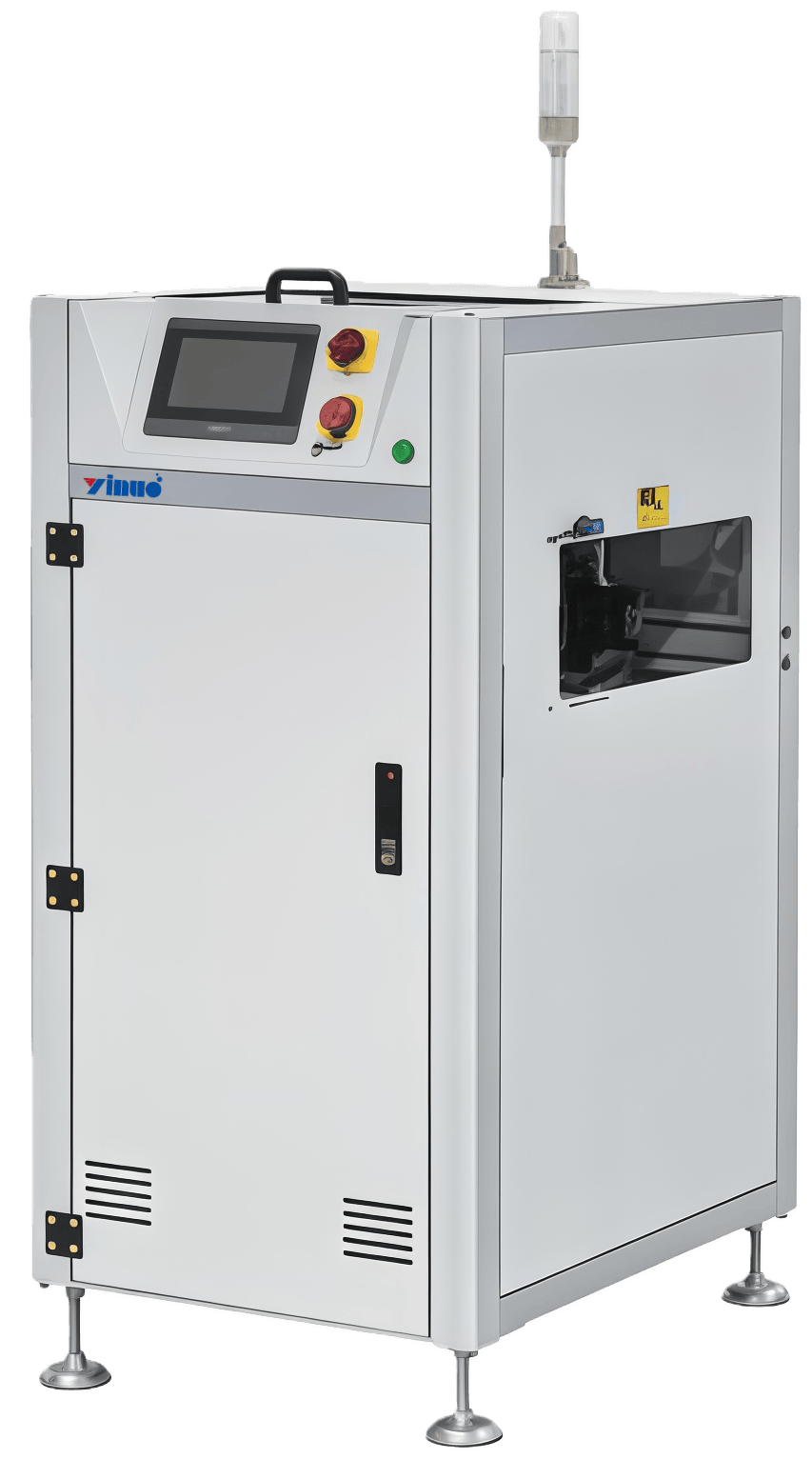
Automatic PCB Flipper Inverter
Automatic PCB Flipper Inverter for Wearable Sensor and Wireless Device Assembly
Double Sided Sensor Board Processing
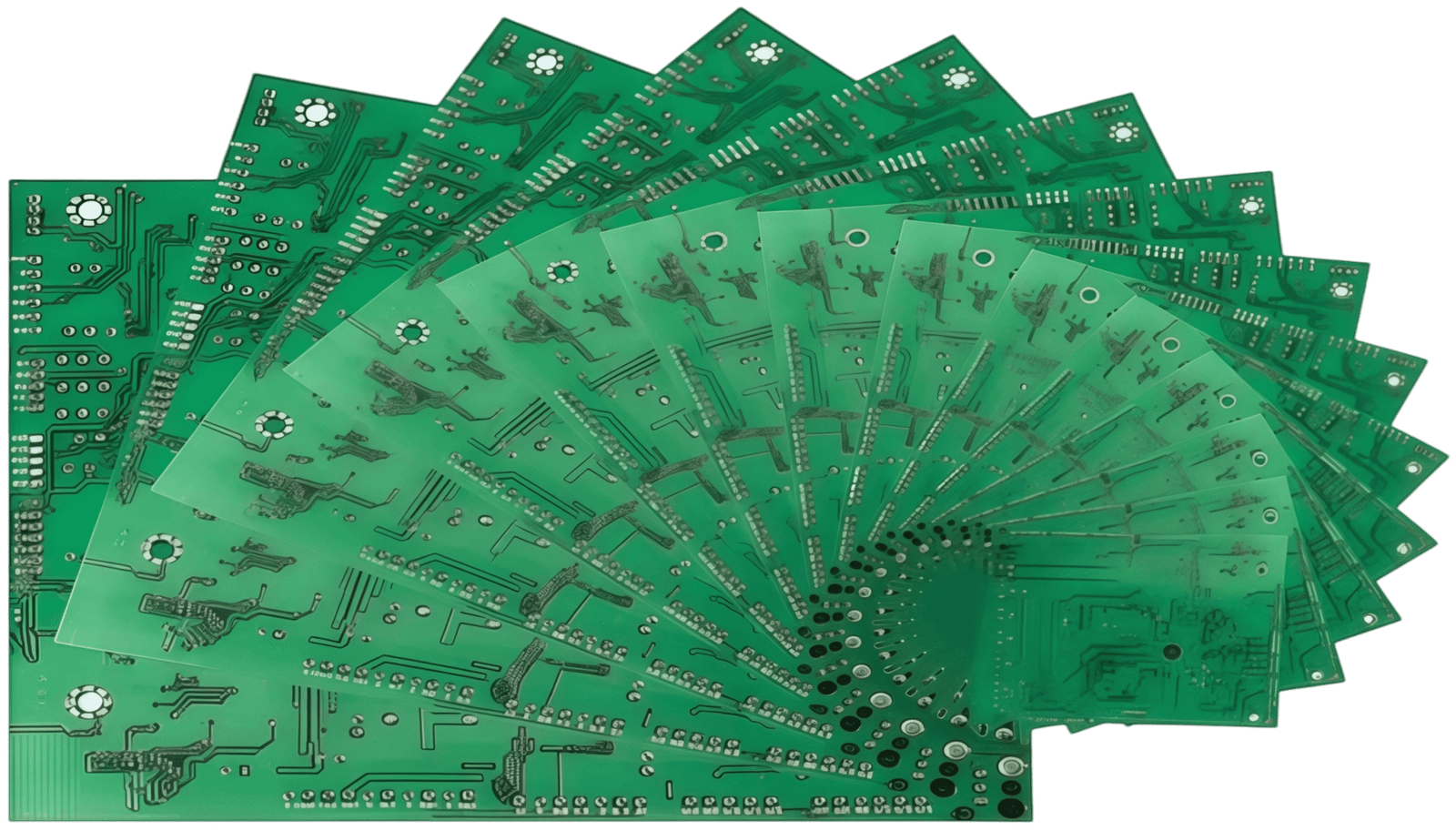
Smart rings, wearable activity monitors, and wireless sensor devices may use compact PCBs with components distributed across both sides. Their assembly sequence can require one surface to undergo solder paste printing, component placement, and reflow before the reverse surface becomes accessible for further processing. The Automatic PCB Flipper Inverter changes the board orientation by 180 degrees at the designated transfer stage, allowing the production line to continue with the opposite side facing upward. This mechanical function is particularly relevant when the PCB cannot be manually repositioned without interrupting automated material flow.
Controlled Inversion Within Automated Conveyance
Small wearable boards can have limited support areas, uneven component distribution, or connectors extending beyond the main PCB outline. These characteristics affect how an assembly moves through an inversion mechanism. The Automatic PCB Flipper Inverter must therefore be matched to the actual board envelope, component projection, and conveyor support conditions. Its position within the line should account for upstream discharge, downstream acceptance, and the clearance required during 180-degree rotation. For sensor boards carrying components on both sides, sample testing with fully populated assemblies helps verify mechanical compatibility before production deployment.
Reverse Side Access for Inspection and Rework
Wearable sensor electronics may require inspection of underside solder joints after reflow or access to components that cannot be examined from the initial board orientation. The Automatic PCB Flipper Inverter can reverse the board before an inspection or rework station when the subsequent process requires the opposite surface to face upward. The transfer sequence should reflect the receiving station’s operating direction and the physical restrictions imposed by mounted components. Correct positioning helps establish an orderly handoff between automated handling equipment and the next manufacturing operation.
Summary of Wearable Electronics Applications
The Automatic PCB Flipper Inverter provides a specific mechanical function in wearable sensor and wireless-device production: 180-degree PCB inversion for double-sided processing and reverse-surface access. Its suitability depends on the dimensions of the assembled board, component clearance, conveyor interfaces, and the required production cycle. Matching these parameters to the intended line allows the inverter to perform its orientation-change role without adding unnecessary handling steps.
Spezifikationen
| Modell | YF-350 | YF-460 |
| Abmessung (mm) | 500*725*1250 | 600*856*1250 |
| PCB Size(mm) | 50*50-445*350 | 50*50-550*460 |
| Cycle Time | Approx. 10 seconds | |
| Belt Type | Oblate Belt | |
| Stromversorgung | AC 1P 110V/220V; Max 150VA | |
| Air pressure | 4-6bar, 1.1 ltr/min Max | |
| Transport Height | 900±20mm(or customized) | |
| Transport Direction | From left to right or right to left | |
| Weight(KG) | 120 | 160 |
FQA
1.Q:How does the inverter coordinate with upstream equipment?
A:Its control sequence coordinates PCB entry with the preceding station’s discharge timing.
2.Q:How does the machine handle PCB entry detection?
A:Sensors identify board presence and trigger the programmed handling sequence.
3.Q:What factors affect inversion repeatability?
A:Mechanical alignment, board positioning, sensor response, and control settings.
4.Q:Does PCB thickness affect equipment selection?
A:Yes. Board thickness must comply with the selected model’s handling specifications.
5.Q:What maintenance items require routine attention?
A:Inspect moving assemblies, drive components, sensors, and mechanical fasteners.
Yinuo Electronics Co., Limited specializes in SMT and PCB assembly equipment, offering a range of solutions for electronics manufacturing. Our product portfolio supports different stages of the production process, helping manufacturers select suitable equipment for their operational needs. We are committed to providing practical products and professional assistance to customers worldwide.
Our website is: www.esmte.com | Contact email: info@allaismt.com | Video channel: https://www.youtube.com/@allaismt/videos | WhatsApp: +8613760481664